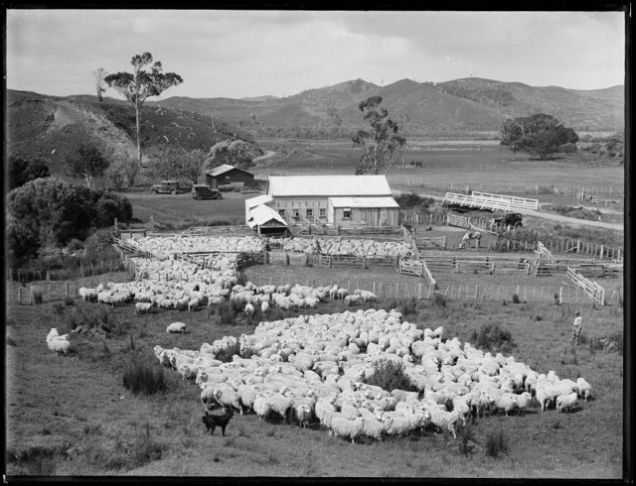
 I have been reading the recently published Seeds of Empire: the Environmental Transformation of New Zealand, and have made a few surprising discoveries. One was how much of an impact the Korean War had on the New Zealand rural landscape. The War led, in fact, to the last phase of geographical expansion of the productive rural landscape, or the “farming frontier”, as the authors put it. Continue reading
New Zealand

Map of “Middle Island” 1840
 I came across this map in Mick Strack’s essay “Bounding the Land: Cadastral framework on the Taieri” in the recently published “Making Our Place”, and it intrigued me.
It is a map of the South Island, sketched by Edmund Halswell around 1841 from an unidentified Ngai Tahu source. The map shows the South Island so elongated and distorted in shape, that is almost unrecognisable. But is precisely this cartographic inaccuracy which reveals valuable information about how Maori interacted and viewed the land before European colonisation. Continue reading
Share this:

A history of the lawn
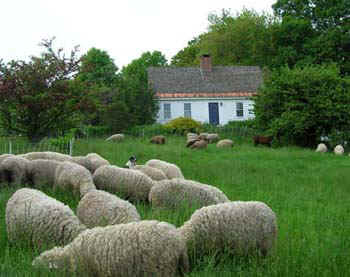 In a recent New Zealand Listener issue, garden columnist Xanthe White wrote about the fascinating history of the lawn, a ubiquitous feature of the New Zealand urban landscape.
White explains that the origins of the lawn can be found in agriculture; specifically the task of scything of fields for winter feed. The clearing of woods and undergrowth from around dwellings and settlements also kept these inner fields relatively free from snakes and other potentially harm-inflicting creatures lurking in long grass or in and around woodlands. Continue reading
Share this:

The “Kingdom of Taranaki” – is there truth behind the epithet?
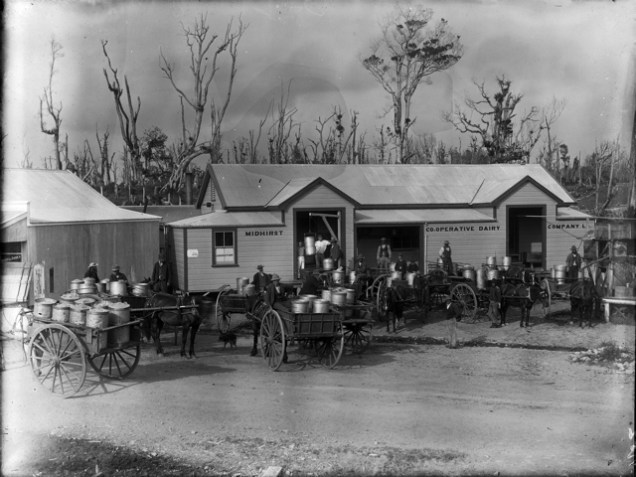 I have often heard the region of Taranaki referred to as the “Kingdom of Taranaki”, owing to the fierce independence displayed by its long-time residents – particularly farmers, and particularly in relation to property rights. While the epithet is used facetiously, it is often underpinned by a sense of admiration for this feisty independence. But is there a reality to this perceived feistiness, and if so, is there some historical reason for it? Continue reading
Share this:

Waikato: from dairy capital to wetland capital of the world?
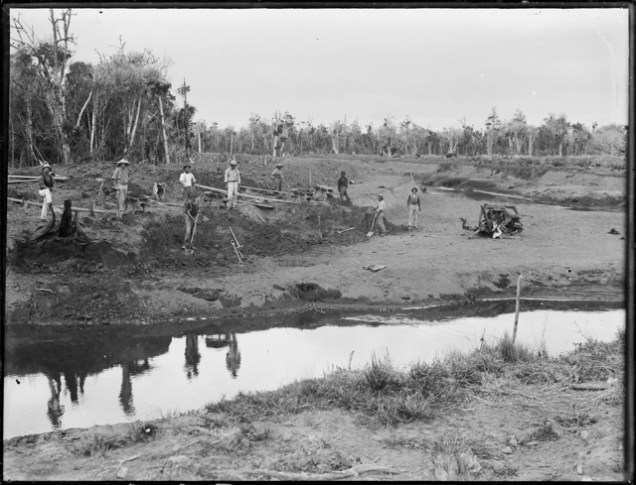 The Waikato was one of the original dairy farming regions of New Zealand, and its transformation from forested hills and swampy valleys to productive farmscapes was well underway by the late 19th century. So it would be ironic, but a satisfying example of the circular route environmental history often takes, if the region was one day to become known more for its wetlands than its “smiling farms”. Continue reading
Share this:

Seminar: how can environmental history shape the future?
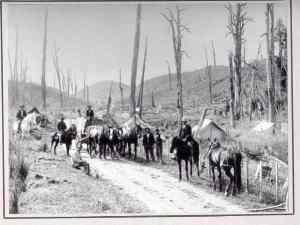
After a great session last week at University of Waikato, Hamilton, hosted by the History Department (see: How can environmental history shape the future?), Catherine will be doing the same talk at Massey in October. The Hamilton talk was attended by scholars of history (both faculty and students), ecologists, hydrologists, as well as environmental managers and practitioners, and stimulated some interesting discussion. Continue reading
Share this:

Forgotten streams, urban wetlands and Scandinavians: top posts for second quarter 2011
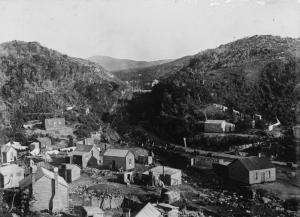 As anticipated, the top posts for the last quarter have been Christchurch-related, with Earthquake reveals the forgotten streams of Christchurch and Christchurch: a city haunted by its environmental past? being overwhelmingly the most popular (864 and 627 views respectively). Next was the post Waitangi Park – an urban wetland recreated, about the recently (re-)created wetland in central Wellington (376 hits). Continue reading
Share this:

Paekakariki: perch of the green parrot
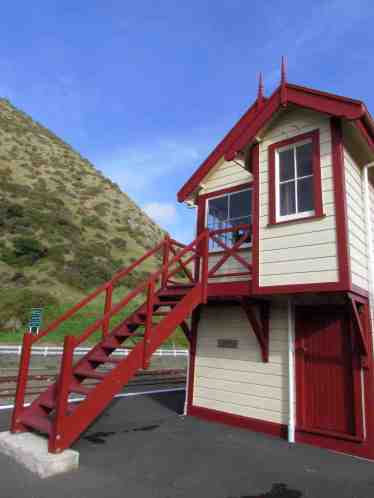 This signal box on the Paekakariki Railway Station platform tells of an illustrious history of a small coastal town intimately linked with the railway. The railway station dates from 1886 when the Wellington and Manawatu Railway Company’s line from Wellington to Longburn was completed. The railway runs alongside the state highway, the Paekakariki to Porirua segment of which was completed nearly four decades before, in 1849. Both transport links run through a narrow corridor of flat land wedged between steep hills to the east and the sea and old dune-lands to the west [click here to view map]. The town itself lies on a narrow band of undulating dune-lands, contributing to its slightly idiosyncratic character; its name, meaning “perch of the kakariki parrot” in Maori, seems particularly apt. Continue reading
Share this:

The end of whaling in New Zealand: the Soviet factor
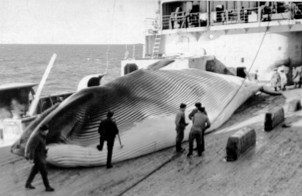 Like so many other industries based on a finite natural resource, whaling in New Zealand has a long history of over-use, leading to a collapse of that resource. The southern right whale was caught from shore-based stations in the early nineteenth century, but by 1850 their numbers had been so depleted that shore-based whaling was limited. Continue reading
Share this:

Opiki toll bridge: graceful relic of a thriving flax industry
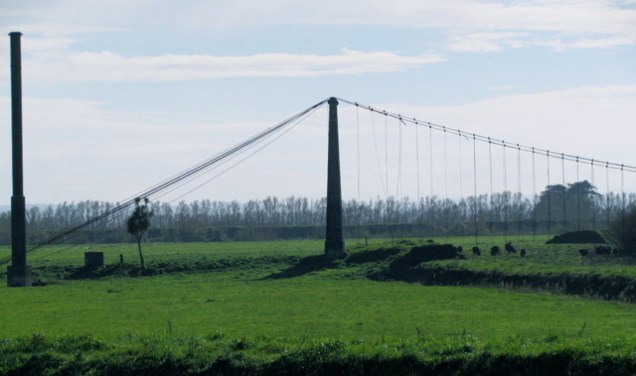 When driving north along State Highway 56 through the low-lying plains flanking the Manawatu River, a traveller cannot help but notice a suspension bridge to the north of the current road, a tall industrial chimney incongruously positioned at the western end of its span [click here to view map]. Now, its suspension wires dangle without purpose, as if suspended in time as well as space, but this graceful structure still strikes a dignified – if somewhat ghostly profile – on the landscape, hinting at an important role it played in the local economy in the not too distant past. Continue reading

 envirohistory NZ