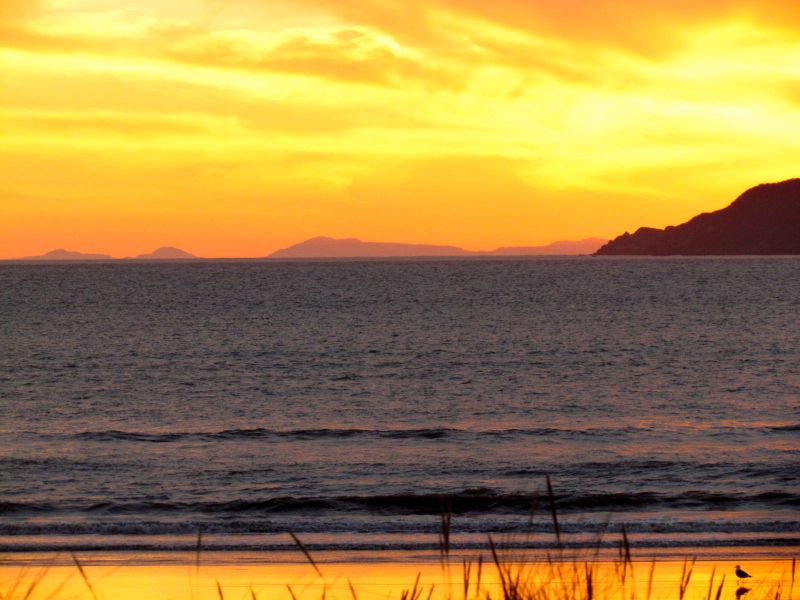
 This is another example of “it’s not really about environmental history“, but I couldn’t resist sharing this shot taken from Paraparaumu beach at sunset yesterday. In the foreground is Kapiti Island, and in the background is the top of the South Island – a reminder that a not insignificant amount of the South Island is in fact further north than the lower end of the North Island. This maybe highlights the perils of naming a place after a seemingly self-evident geographic characteristic – but then, “Mostly South Island” and “Mostly North Island” does seem a bit clumsy. Perhaps “Middle Island” was more accurate after all!
Catherine Knight

Creating a pastoral world through fire: bush burning in the Manawatu
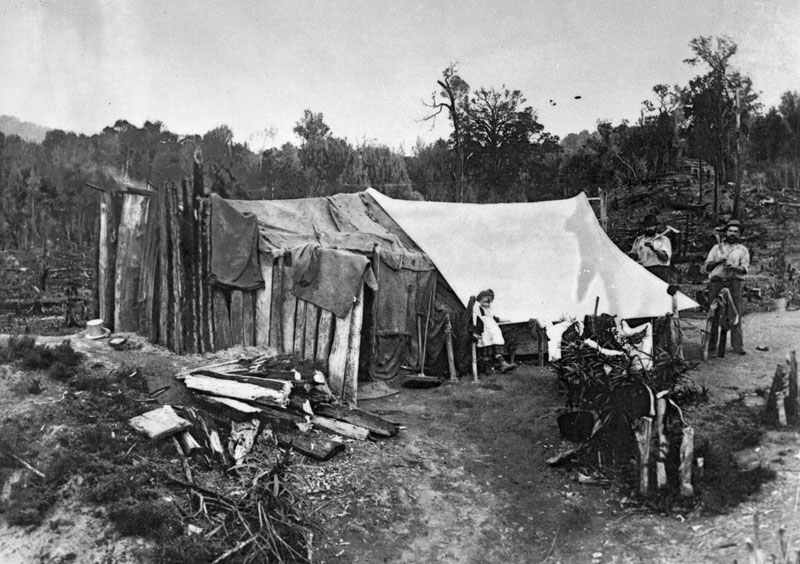 How did the Manawatu transform from a densely forested environment in 1870 to a pastoral landscape by the turn of the century?
The answer, which will be explored in a lunchtime talk on 8th November, as part of the 2012 Manawatu Local History Week, is “fire”. Continue reading
Share this:

Manawatu’s environmental past to be documented
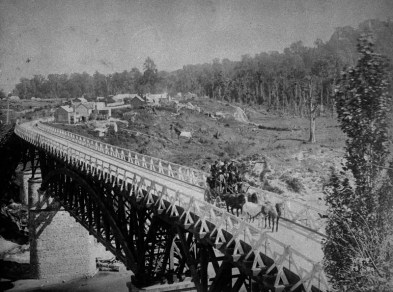
envirohistory NZ‘s founder and primary contributor, Catherine Knight, has been awarded a New Zealand History Research Trust Fund Award in History to research the environmental history of the Manawatū. The project, tentatively entitled “Forested hinterland to pastoral province: the environmental transformation of the Manawatū”, will ultimately result in a book. The research will canvass the region’s history from its Māori settlement through to the present day, and will make use not only of historical, archaeological and archival records, but also the latest palaeoenvironmental research. Continue reading
Share this:

History shaping the future – NZHA conference
 Next week’s New Zealand Historical Association Conference features a special four-person panel dedicated to environmental history. The panel is entitled: “History shaping the future: how environmental history research can inform environmental policy and management”, and will feature papers by Professors Katie Pickles and Eric Pawson (both from Canterbury University), Professor Tom Brooking (Otago University) and Dr Catherine Knight (envirohistory NZ). Continue reading
Share this:

How can environmental history shape the future?
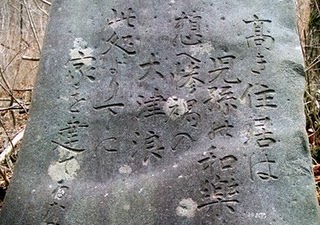 What do these three – seemly unrelated – photographs have in common? They all feature in an upcoming talk by Dr Catherine Knight exploring how environmental history research can shape the future, through policy and planning decisions which take account of the environmental past. This question has become increasingly topical both here and internationally, particularly in the wake of a series of natural disasters that have led to many questioning the wisdom of thinking that as humans we can control the forces of nature through engineering and technological solutions. (See for example: Is there such a thing as a natural disaster? The lessons of environmental history) Continue reading
Share this:

Undoing environmental history (with a spade)
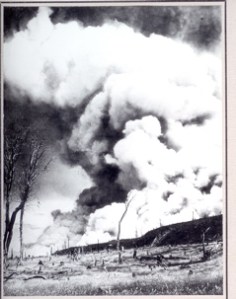 Though my implement of choice for environmental history is the pen (or more accurately, the keyboard), I am known to pick up a spade from time to time. Specifically, to plant native trees on land in the Pohangina Valley, about 40 kilometres north-east of the Manawatu provincial “capital” of Palmerston North [click here to view location].
When I do so, I am deeply conscious of the fact that I am undoing the toil of hardworking men who “broke the land in” only a century ago, transforming the Manawatu – at the time described in a government advertisement as “the waste land of the Colony” – into productive farmland. Continue reading
Share this:

Views of Kapiti 7: Morning mist over Hemi Matenga
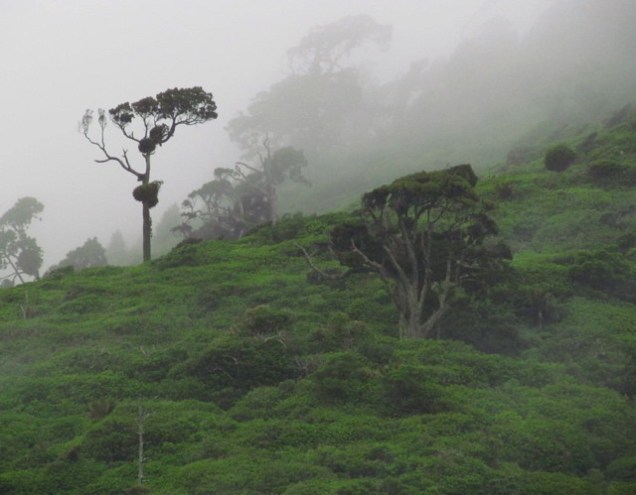 A view of the Hemi Matenga hills, which overlook the town of Waikanae, taken from Elizabeth Street, eastern Waikanae. Low morning cloud shrouds the hills, threatening rain, and creating a sense of drama and mystique. Continue reading
Share this:

Views of Kapiti 6 – Reikorangi farmscape
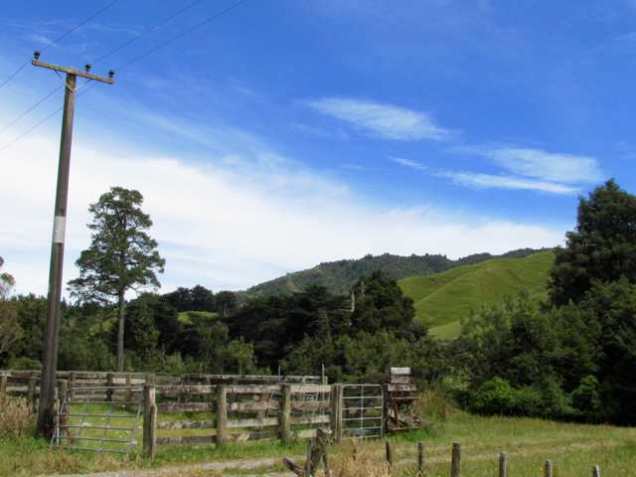 This landscape was taken from Mangaone South Road, Reikorangi [click here to view map]. Mangaone South Road largely follows the Waikanae River as it makes its way from the western foothills of the Tararua Ranges out to sea. In this shot, pasture-covered hills can be seen in the foreground, while regenerating bush-clad hills can be seen in the background. Continue reading
Share this:

Japanese satoyama – a model for sustainability?
 The United Nation’s 10th Conference of Parties to the Convention of Biological Diversity is due to be held in Japan in October, and the pictorial Kyoto Journal has issued a special biodiversity issue.*
In this special issue, Dr Catherine Knight, the convener of this website, explores the validity of the model of sustainable management, or satoyama, touted by Japanese officials and conference organisers in the lead-up to the conference.
Read or download the PDF version of the article here. Continue reading
Share this:

Mountains, bears and conservation in Japan and New Zealand
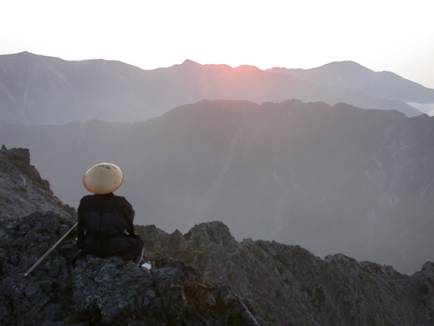 Mountains, bears and conservation in New Zealand and Japan are topics featured in an interview with envirohistory NZ founder, Catherine Knight on the latest episode of Exploring Environmental History.
From Exploring Environmental History: “On the podcast Cath briefly talks about the origins and topics of the blog before exploring her work on Japanese environmental history. Continue reading

 envirohistory NZ