A burning question: what is pastoralism?

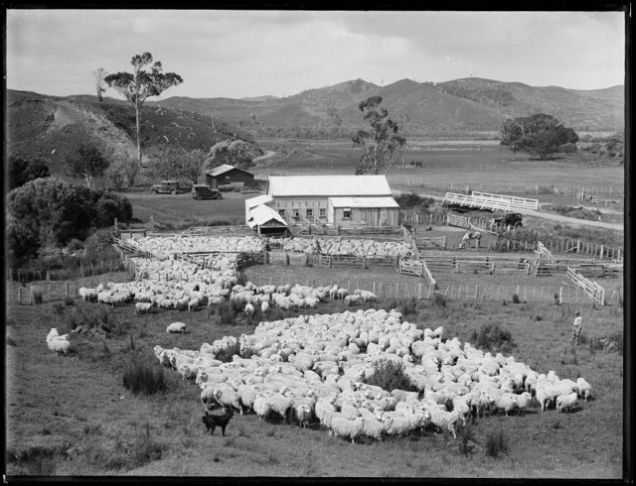
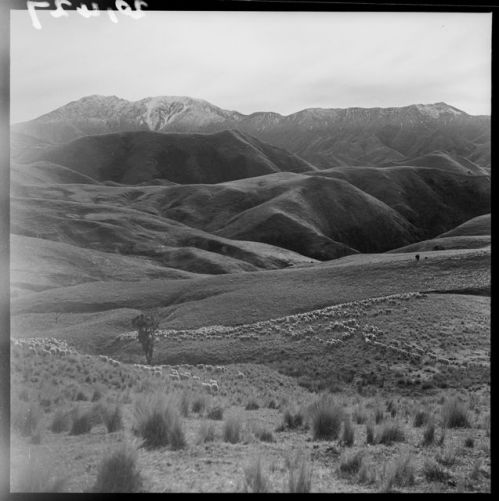
I have learned a few things while reading “Seeds of Empire”, by Tom Brooking and Eric Pawson, including the definitions of some terms that crop up a bit in environmental history literature (see also: How did the Korean War change the NZ landscape?). One example of this is in Robert Peden’s essay “Pastoralism and the transformation of open grasslands” (Chapter 5).

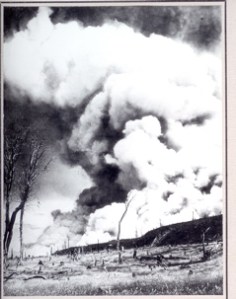
Using Mount Peel Station* in central Canterbury as a case study, Peden explains how pastoralism transformed much of the eastern hillcountry (or rangelands, as he refers to them) of the South Island, and seeks also to debunk a few myths about the impacts of pastoralism while he is at it (specifically, about the role of pastoralism in rabbit infestations and burning as a management tool). Continue reading

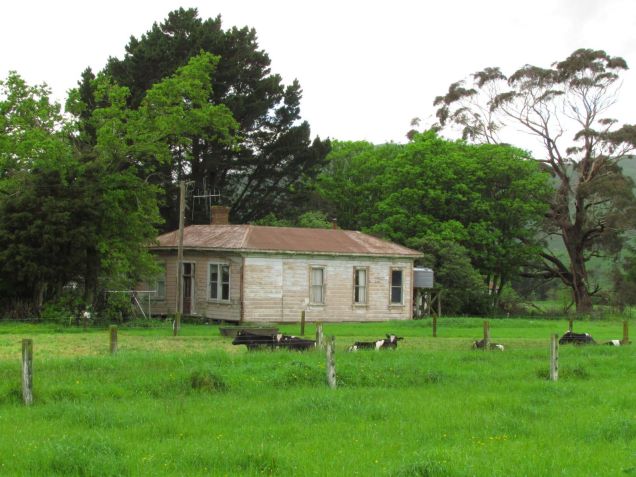
The ebb and flow of a rural township: Tokomaru

My last post How did the Korean War change the NZ landscape? and specifically the mention of the demise of local dairy factories in the post-Korean War years, led me to think about ex-dairy factory towns and villages within my immediate orbit. One such place is in the northen Horowhenua village of Tokomaru, on the western side of the Tararua Ranges [click here to view map]. Continue reading

How did the Korean War change the NZ landscape?

I have been reading the recently published Seeds of Empire: the Environmental Transformation of New Zealand, and have made a few surprising discoveries. One was how much of an impact the Korean War had on the New Zealand rural landscape. The War led, in fact, to the last phase of geographical expansion of the productive rural landscape, or the “farming frontier”, as the authors put it. Continue reading

Manawatu history talk: Totara Reserve

Dr Catherine Knight will be presenting a talk on November 2nd about the history of Totara Reserve as part of this year’s Manawatu Local History Week [click here to download programme]. Entitled “Totara Reserve: a window into Manawatu’s environmental history“, the talk will explore how Totara Reserve was preserved initially for its timber, but within a few decades, when lowland forest elsewhere in the Manawatu had all but vanished, became a prized scenic and recreational reserve. By tracing the history of the reserve, we can better understand the changing attitudes and values of New Zealanders towards our natural heritage. Continue reading

Map of “Middle Island” 1840

I came across this map in Mick Strack’s essay “Bounding the Land: Cadastral framework on the Taieri” in the recently published “Making Our Place”, and it intrigued me.

It is a map of the South Island, sketched by Edmund Halswell around 1841 from an unidentified Ngai Tahu source. The map shows the South Island so elongated and distorted in shape, that is almost unrecognisable. But is precisely this cartographic inaccuracy which reveals valuable information about how Maori interacted and viewed the land before European colonisation. Continue reading

A history of the lawn

In a recent New Zealand Listener issue, garden columnist Xanthe White wrote about the fascinating history of the lawn, a ubiquitous feature of the New Zealand urban landscape.

White explains that the origins of the lawn can be found in agriculture; specifically the task of scything of fields for winter feed. The clearing of woods and undergrowth from around dwellings and settlements also kept these inner fields relatively free from snakes and other potentially harm-inflicting creatures lurking in long grass or in and around woodlands. Continue reading

Waikato: from dairy capital to wetland capital of the world?

The Waikato was one of the original dairy farming regions of New Zealand, and its transformation from forested hills and swampy valleys to productive farmscapes was well underway by the late 19th century. So it would be ironic, but a satisfying example of the circular route environmental history often takes, if the region was one day to become known more for its wetlands than its “smiling farms”. Continue reading

Seminar: how can environmental history shape the future?

After a great session last week at University of Waikato, Hamilton, hosted by the History Department (see: How can environmental history shape the future?), Catherine will be doing the same talk at Massey in October. The Hamilton talk was attended by scholars of history (both faculty and students), ecologists, hydrologists, as well as environmental managers and practitioners, and stimulated some interesting discussion. Continue reading

Forgotten streams, urban wetlands and Scandinavians: top posts for second quarter 2011

As anticipated, the top posts for the last quarter have been Christchurch-related, with Earthquake reveals the forgotten streams of Christchurch and Christchurch: a city haunted by its environmental past? being overwhelmingly the most popular (864 and 627 views respectively). Next was the post Waitangi Park – an urban wetland recreated, about the recently (re-)created wetland in central Wellington (376 hits). Continue reading

Undoing environmental history (with a spade)

Though my implement of choice for environmental history is the pen (or more accurately, the keyboard), I am known to pick up a spade from time to time. Specifically, to plant native trees on land in the Pohangina Valley, about 40 kilometres north-east of the Manawatu provincial “capital” of Palmerston North [click here to view location].

When I do so, I am deeply conscious of the fact that I am undoing the toil of hardworking men who “broke the land in” only a century ago, transforming the Manawatu – at the time described in a government advertisement as “the waste land of the Colony” – into productive farmland. Continue reading