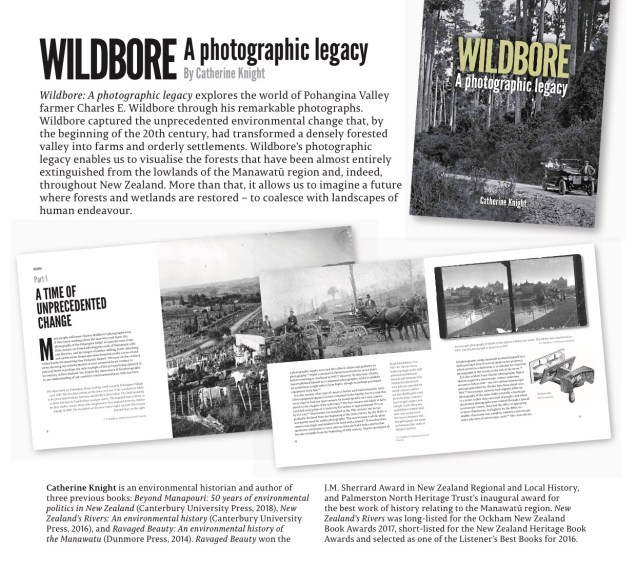
You are invited to the launch of “WILDBORE: A photographic legacy”


Totara Reserve is situated in the Pohangina Valley on the eastern side of the Pohangina River, in the Manawatu [click here to view location]. It encompasses an area of 348 hectares, much of it podocarp forest, made up of totara, matai, rimu and kahikatea, as well as some black beech.
Its history as a reserve began in 1886, when it was gazetted under the provisions of the State Forests Act (1885) as a ‘reserve for growth & preservation of timber and for river conservation purposes’. This at a time when the area was been ‘opened up’ for settlement – settlement in the Pohangina Valley area began with Ashhurst in March 1879.
In 1932, a portion of the Reserve was designated as a Scenic Reserve under the provisions of the Scenery Preservation Act 1908, and vested in the Pohangina County Council. Continue reading

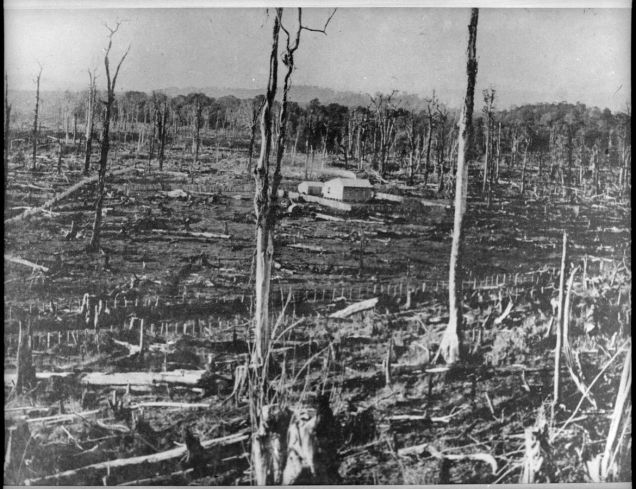
Number 7 in the Wildbore geocache series is on No. 1 Line on the eastern side of the Pohangina Valley. It was on No. 1 Line that Charles E. Wildbore took one of his earliest surviving landscape photographs, in 1896. The photograph starkly captures the brutal transformation of the landscape by fire. A farmhouse is surrounded by the incinerated limbs and trunks of the forest trees, that until only a few years previously covered the hills and river terraces of the entire valley. While we cannot see this from the photograph, this would likely have been a landscape of oppressive silence – any birds that were able to escape the conflagration would likely have taken refuge in the nearby Ruahine foothills, while introduced birds, such as the sparrow, thrush and blackbird were yet to colonise the valley in substantial numbers. Continue reading

Can anyone help us track down the original print (or even better, the negative) of this photograph? Continue reading
The fourth cache in the now “Wildly-Famous-in-Pohangina” Wildbore geocaching series is at the top of Church Hill, near the site of the eponymous church.
By the end of the 19th century, the population of Awahou, on the eastern side of Pohangina River, had grown to a healthy number, and the community felt it was high time for a church to service the Awahou community.
St. Aidan’s Church was opened in November 1902, a modest but attractive timber church accommodating 74 people. Continue reading

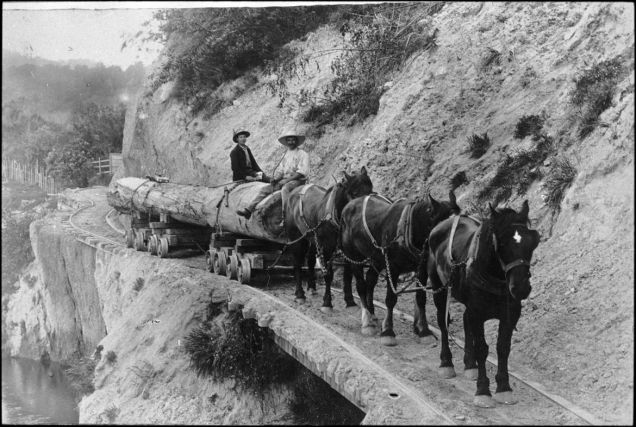
The third cache in the Wildbore geocache series is hidden near the site of this photograph, taken by Charles E. Wildbore, showing two Valley men pulling a milled log across the Te Awaoteatua Stream bridge at the bottom of Church Hill, Awahou.
The road down to the stream was realigned in the late 1960s/early 1970s, but it can still be seen in the face of the hill when looking north from the bridge (it is also visible as a contour in Google maps). Continue reading

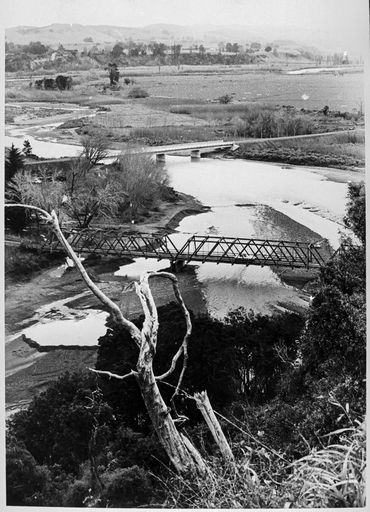
Those who have travelled up the eastern side of Pohangina Valley, to visit Totara Reserve, for example, will have crossed the Raumai Bridge. Those with more life experience may also the old Raumai Bridge, a bridge with a troubled past. Continue reading

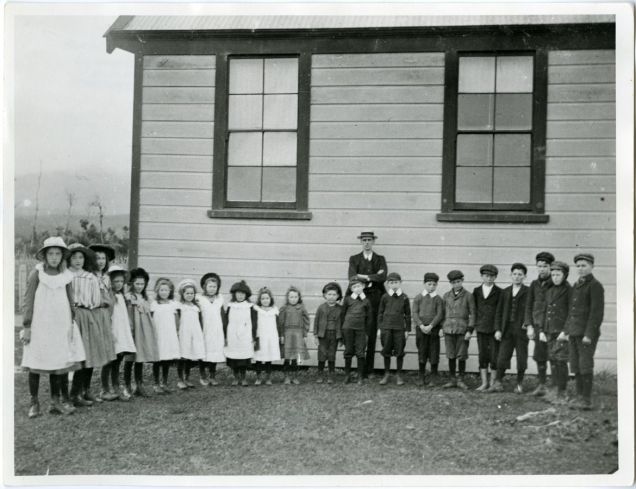
In 1977, an entire school house moved from its existing location on a country road in the shadow of the Ruahine Range in the Manawatu to the main street of Palmerston North City, nearly 30 kilometres away. To be fair, it was just a one-room school house, one of just over 40 square metres. The school was built in 1902, to take pupils within a 10-mile radius, who travelled to school by foot or pony. When it opened, it had a roll of 20, and by 1907, the number had increased to 32. Continue reading
Want to know more about WILDBORE: A photographic legacy, or pre-order a copy? Download an Information flyer.

In a post last week I talked about my next book project, a book entitled WILDBORE: A photographic legacy, showcasing the photographs of pioneering farmer and bee-keeper of the Pohangina Valley.
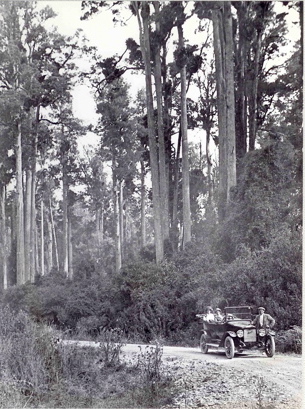
One of Charles E. Wildbore’s most evocative images (in a desolate kind of way) is this one of men getting ready to cart sleepers from Crown-owned reserve land in Pohangina Valley to the nearby railway station at Ashhurst. This road borders what is today known as Totara Reserve (originally set aside by the government for its timber), and is in fact not far from where I live. The other day, I drove up to the road in an effort to find the exact place he took the photograph – and was excited to locate it with relative ease. Well almost – judging from the terrain, the alignment of the road today is just to the south of its original route, on slightly higher ground.