Christchurch – a city built on buried forests?

I have been reading Kenneth B. Cumberland’s 1981 book Landmarks recently. The book, which was published in parallel with a television series of the same name,* is a colourful presentation (both in the literal and metaphorical sense)  of Cumberland’s views on New Zealand’s environmental history, supplemented by many photographs and illustrations. Some of the archaeological and palaoecological information is now somewhat outdated (for instance, the dates that humans first settled New Zealand and other radio-carbon dates), but it is nevertheless a highly worthwhile read – Continue reading

“Doing environmental history” on the Wairau Plain

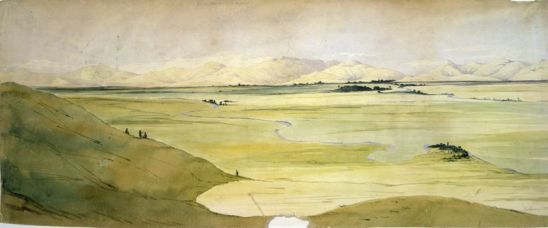
The Wairau Plain is a triangular-shaped plain which surrounds Blenheim, wedged between mountains and hills to the north and south, and ending with the sea to the east (click here to view map). It was once an extensive swamp, fed by the Wairau River, which originates in the northern ranges of the Southern Alps, and flows north-east into Cloudy Bay, in the Cook Strait. But the swamp has long since been drained, the river controlled to flow in a more “orderly” fashion, and the land turned to agriculture, horticulture and other “productive uses” – most notably, viticulture. Continue reading

Kimbolton and surrounds – “putting the small man on the land”

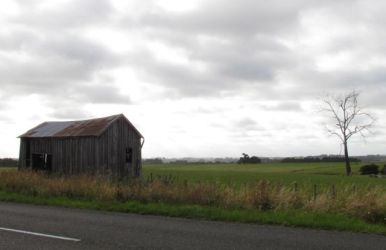
The area between Cheltenham and Kimbolton, north-east of the Manawatu town of Feilding, offers both interesting landscapes and history to the observant traveller [click here to view map]. But here, the history is not so much in what is there, but what isn’t there.

The area, once part of the Kiwitea County, is speckled with illustrious-sounding placenames, such as Almadale, Cheltenham, Beaconsfield and Kimbolton; names of soon-to-be thriving towns on surveyors’ meticulously laid plans, but towns which never grew beyond small villages. Continue reading

Did tsunami cause resource wars in prehistoric New Zealand?

Archaeologists have conventionally divided New Zealand prehistory into two chronological phases: “Archaic Maori” and “Classic Maori”. These phases are defined by the distinctive assemblages of artefacts (such as adzes, fishing implements and ornaments) that are associated with each phase. But they also largely coincide with the centrality of big game to Maori subsistence. During the earlier phase, moa and seals were central to people’s diet. However, as moa became extinct (by around 1500 AD), and seal populations seriously depleted, Maori had to rely more heavily on other sources of food. Continue reading

Lichen-covered fences and other miscellaneous ramblings

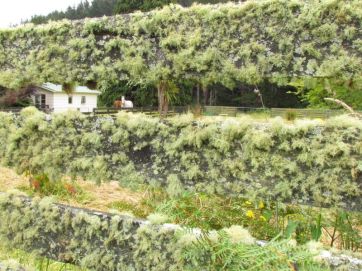
This post makes no pretensions of being a serious essay about environmental history; it is more an excuse to post a few pictures from the little Reikorangi expedition my son undertook a few days ago (see: Views of Kapiti 8: the kahikatea of Ngatiawa and The bridge between two counties: Ngatiawa Bridge).

This first picture was taken on Rangiora Road (click here to view map). The fence literally dripping with lichen was extremely enticing, and the horse peeking through the slats was an added bonus. Continue reading

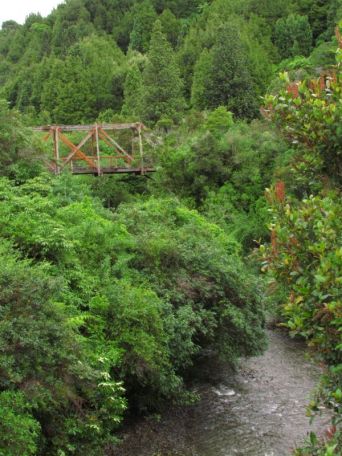
The bridge between two counties: Ngatiawa Bridge

After our first excursion to Reikorangi on the last day of 2011 [see: Views of Kapiti 8: the kahikatea of Ngatiawa], I couldn’t resist another outing there with my son the next day.

I find the landscapes of Reikorangi so alluring; the natural environment itself is varied and interesting, both in its contours and mix of indigenous and exotic vegetation, but I also like the fact that its history is so palpable in the landscape. Even from the road, an observant visitor will spot old buildings, lichen-covered fences, abandoned machinery and other infrastructure. Continue reading

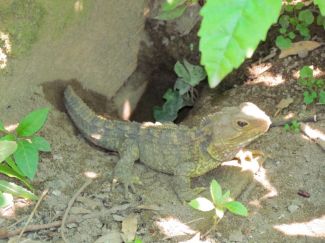
Welcome to Year of the Dragon: a New Zealand “dragon” story

Not being an avid follower of the Chinese zodiac, I was not aware that 2012 was the Year of the Dragon until yesterday, when I read a post of a favourite blogsite of mine. So, I thought it would be an opportune time to write about a New Zealand “dragon”.

The tuatara represents 225 million years of history on four scaly (and rather wrinkly) legs; it is the only survivor of an ancient group of reptiles that roamed the earth at the same time as dinosaurs. Its relatives became extinct 60 million years ago – and for this reason it is often referred to as a ‘living fossil’. Continue reading

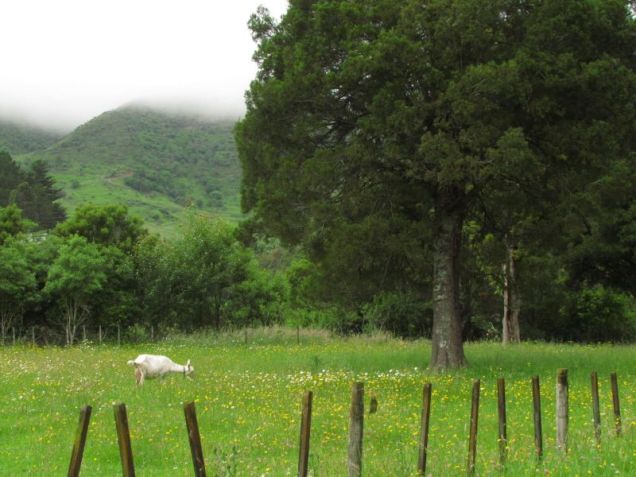
Views of Kapiti 8: the kahikatea of Ngatiawa

It was a rainy afternoon on the last day of 2011, so the family and I went out on a drive into the countryside to get out of the house. We ventured into the Reikorangi hills to the east of Waikanae, and just at the junction of Ngatiawa and Kents Road [click here to view map], came across this paddock with a few scattered kahikatea in it. The trees are too small to be original, but are likely to have spontaneously regenerated after the forest that clothed the hills here was cleared. Continue reading

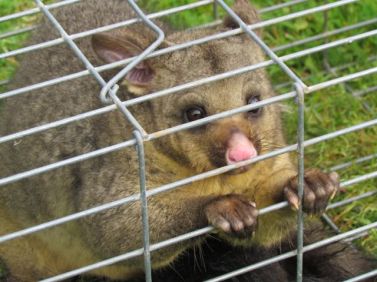
What is cute, furry and ecologically devastating?

Answer: a possum.

Even this little fellow, still not fully grown, would wreak havoc on vegetables and fruit trees, and in an indigenous forest environment, shrubs, trees, bird young and eggs.

Recently, we stayed at our friends’ lifestyle block near Tokomaru, nestled in the foothills of the Tararua Ranges [click here to view map]. Continue reading

Omarupapaku “Old Mother Parker”: the forest that was

“Round Bush”, an unassuming reserve near the coastal town of Foxton, Manawatu, is a place of great significance – though a casual passer-by would barely notice it, let alone have any sense of this significance.

A description of this remnant swamp forest is thought to be the first recorded account of the botany of the Manawatu. The account was made by E. J. Wakefield, when he passed the mouth of the Manawatu River by ship in February 1840.

He wrote:  “As we ran along within two miles of the shore I saw a remarkable grove of high pine trees, near the mouth of a river called Manawatu, or ‘hold breath’, which flows into the sea about twenty-five miles from Kapiti.” Continue reading