Last week, I did a talk at Palmerston North City Library Bringing history alive. I promised to publish a post with my top tips for blogging about history. And so here they are: Continue reading

Last week, I did a talk at Palmerston North City Library Bringing history alive. I promised to publish a post with my top tips for blogging about history. And so here they are: Continue reading

In anticipation of my talk on Friday, I thought I would gain some insights into envirohistory NZ’s most popular posts. Fittingly, given that my talk is in the Manawatu, the most popular post (by far) has been The Scandinavian settlers of the Manawatu.
The next most popular posts have been Maori gardening in pre-European NZ and Earthquake reveals the forgotten streams of Christchurch.
Perhaps you might want to check them out.

I will be presenting a lunchtime talk on Friday 16th October at the Palmerston North City Library called Bringing history alive. I will be talking of my experience blogging about New Zealand’s environmental history – how I came to do it (this is quite an interesting story, and has to do with a certain expressway), and what I have gained from it. Continue reading

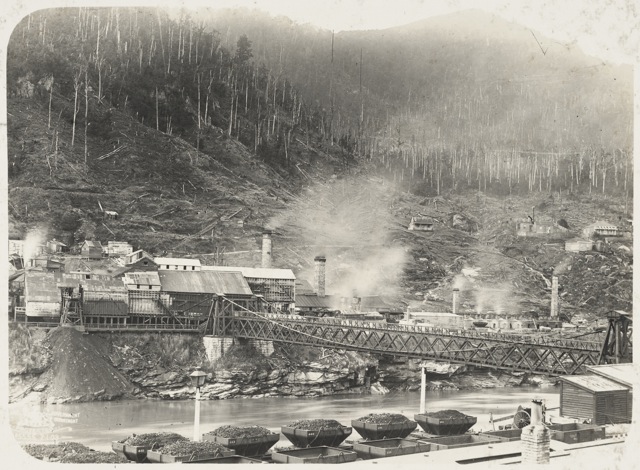
This is a photo of the mining settlement of Brunner, perched on the side of the Grey River, on the West Coast of the South Island. The photo is interesting in itself. The mine can be seen in the middle ground, with houses on the deforested flanks of the hills behind the mine. Coal ready for transport by rail can be seen in the foreground. Tailings can also be seen spilling into the river. Continue reading

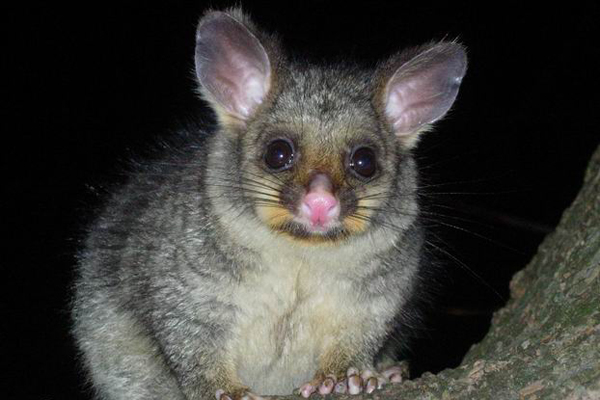
In my search for an image for the previous post, I stumbled across this photographic treasure from 1957: a possum in the care of the Society for the Prevention of Cruelty to Animals.
Knowing what we know today about the destructive impact of these furry marsupials, it is easy to dismiss this image as a quaint artefact of a misguided era.
But perhaps this caring woman knows better.
A possum is an animal worthy of the same humane treatment that any household pet deserves – it is only by virtue of being in the wrong place (through our actions) that it has become a ‘pest’ of such magnitude.

In a similar vein to my previous post about the little German owl, I found another insightful gem about possums, from the official report of the 15th national conference of acclimatisation societies in 1926:
“The Government had appointed Professor Kirk to inquire into opossums and the Forestry Department had also appointed an independent man. Both had come to the conclusion, namely, that opossums did no damage to Native trees. [The President] knew himself that the boards looking after certain scenic reserves had been able to obtain quite a large revenue from the opossums,* and had been thus able to fence the reserves, so that in that way the opossums were doing good in the bush.” Continue reading

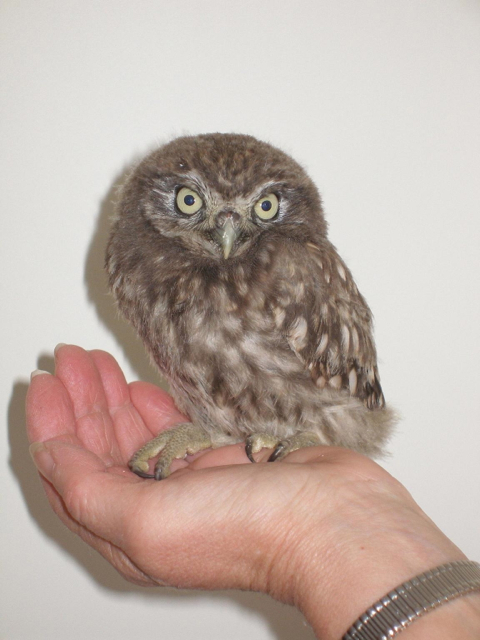
While perusing historical minute books of the New Zealand acclimatisation societies, I came across this gem, from the ‘Presidential address’ at their national conference in 1932:
“The German owl was killing out a tremendous number of native birds, and it should be the duty of the societies to wage war upon it. There was a division of opinion concerning the magpie, which was useful to farmers, but his society considered that only definitely proved killers should be destroyed.” Continue reading

The storm that visited Wellington last week was dramatic. It left countless homes and businesses flooded, one man dead, and transport links paralyzed. In Kapiti, where I live, we had one month’s worth of rain in one day.
The storm had another dramatic, and revealing, effect. It left Kapiti’s beaches smothered in a deluge of debris, washed down streams and waterways swollen by the heavy rain. Continue reading

In a recent trip to Golden Bay (named for its goldfields, discovered near Collingwood in 1857, though it could equally be named for its golden sand beaches), I had the privilege of visiting a wild river. Continue reading