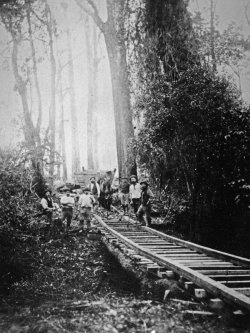
The Scandinavian settlers of the Manawatu

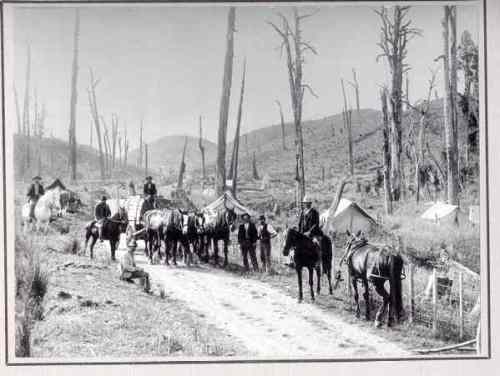
In 1870, Colonial Treasurer Julius Vogel introduced a public works and immigration scheme, under which suitable immigrants would be settled along the projected lines of the road and railway. The idea was that the construction work for this infrastructure would support the settlers until they could develop farms on the blocks of land allotted to them.

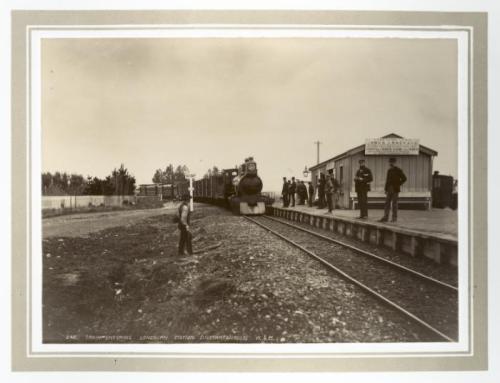
At this time, the Manawatu and western Hawkes Bay was still largely undeveloped, in most part covered in dense impenetrable forest. For these areas, Vogel was keen to recruit settlers from Scandinavia, who were reputed for their skill as foresters and axemen. It also appears that he may have also been influenced by an early, and rather illustrious settler in the Manawatu – Ditlev Gothard Monrad, former premier of Denmark. Monrad had immigrated to New Zealand, along with his family, in 1866, in a kind of self-imposed exile. Clearly not afraid of hard work, he found a small clearing on the banks of the Manawatu River, in Karere (near Longburn) and, using timber from the surrounding thick forest, built a home and then went on to develop a farm. Continue reading

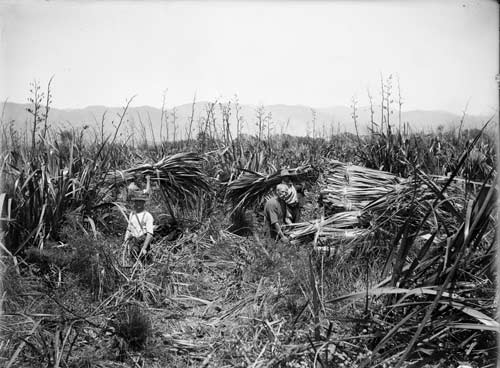
Flaxmilling in the Manawatu

Now, the Manawatu region of New Zealand’s North Island [click here for map] is known for its farming and wind turbines, but for a few decades from the late 19th to early 20th centuries, flaxmilling was one of the region’s most important industries. When farmers began to drain the swampland to establish pasture in the late 19th century, they found the process stimulated the growth of the flax already growing naturally in the area.  From this chance discovery, flaxmilling grew from the 1870s and continued until the 1930s. Continue reading

“This sacrifice will bring retribution” – deforestation and its consequences

The following excerpts about deforestation  in New Zealand are from the Evening Post, 29 March 1910. They are just as relevant today as they were 100 years ago.

“This sacrifice will bring retribution,” was a recent comment of The Times in relation to the shortsighted Australasian practice of “improving” forest land by wholesale destruction of the native woods. The process is so gradual that it does not impress as it should the resident who sees it year after year going on before his eyes; but there are those who can look back forty or fifty years and recall the aspect of wooded hills, vocal with the song of native birds, now waste and barren, scarred with landslips, not even affording pasture — an eyesore instead of a beauty… Continue reading

The opening up of the Manawatu – the “waste land of the Colony”

As Lois Hall outlines in her history of the Pohangina Valley, large areas of open grassland such as those found in Canterbury and eastern Hawkes Bay had been quickly settled in the 1840s and 1850s, mainly by more wealthy settlers. But by the latter part of the nineteenth century, the government turned its focus to the provision of land for the settlement of those of lesser means and the descendants of the original settlers who sought to own their own farms. Attention turned to regions that were still forested and undeveloped, such as the Manawatu and western Hawkes Bay. Continue reading

Totara Reserve: from exploitation to conservation

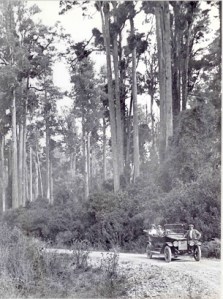
Totara Reserve is situated in the Pohangina Valley on the eastern side of the Pohangina River, in the Manawatu [click here to view location]. It encompasses an area of 348 hectares, much of it podocarp forest, made up of totara, matai, rimu and kahikatea, as well as some black beech.

Its history as a reserve began in 1886, when it was gazetted under the provisions of the State Forests Act (1885) as a ‘reserve for growth & preservation of timber and for river conservation purposes’. This at a time when the area was been ‘opened up’ for settlement – settlement in the Pohangina Valley area began with Ashhurst in March 1879.

In 1932, a portion of the Reserve was designated as a Scenic Reserve under the provisions of the Scenery Preservation Act 1908, and vested in the Pohangina County Council. Continue reading

Why is understanding our environmental history so important?

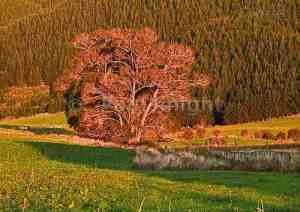
When we travel through New Zealand’s countryside, very few of us recognise that much – if not most – of the “nature” we see around us is not “natural” to this land. The grass pastures of our farms, the ubiquitous stands of macracarpa or poplars, the willows along our river banks, and the vast expanses of radiata pine forest – all of these landscapes have been created by our forebears using introduced exotic species. But, irrespective of whether the trees and plants that make up the landscape are indigenous or exotic, many people find our rural landscapes attractive and a source of pleasure – so why should it matter? Continue reading