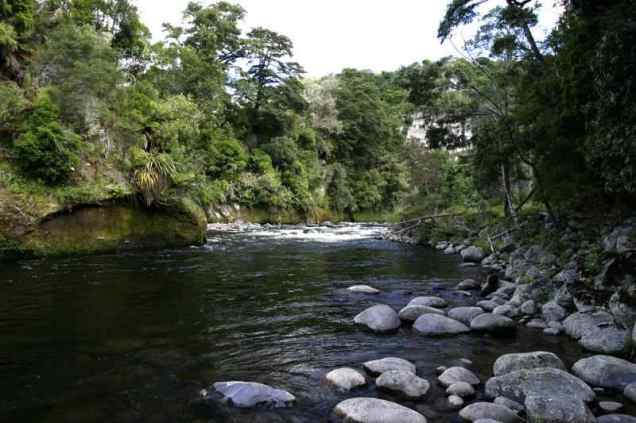
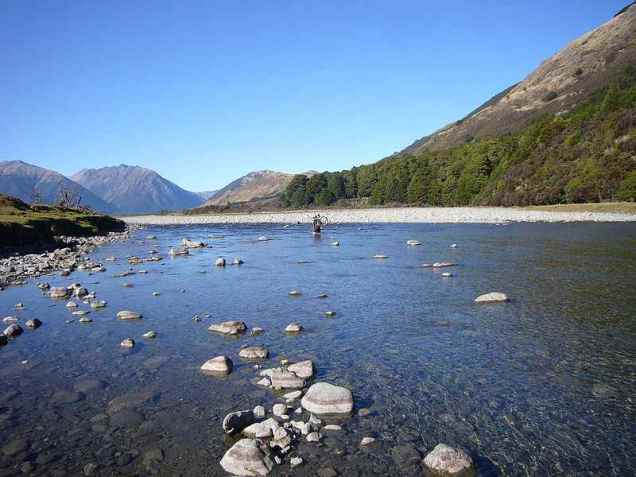
The Hurunui, born in a nest of shale…

I have just finished reading The Water Thieves by Sam Mahon. Sam Mahon is an artist who lives in renovated flour mill in Waikari, North Canterbury. He was recently in the news for his bust of Environment Minister Nick Smith, made entirely of cow dung. The bust was created as part of a campaign to stop the Hurunui River from being dammed for irrigation. Continue reading

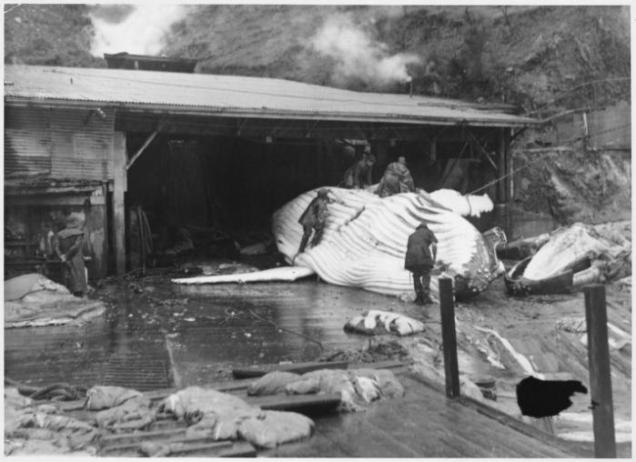
Perano – the last whaling station in New Zealand

Today, we pride ourselves as being a fervently anti-whaling nation.  And while most New Zealanders know that whaling also occurred in our coastal seas and on our shores, many would also assume that whaling in this country ended sometime in the late 19th or early 20th century. In fact, this is not the case – the last whaling station in New Zealand closed down only in 1964. Continue reading

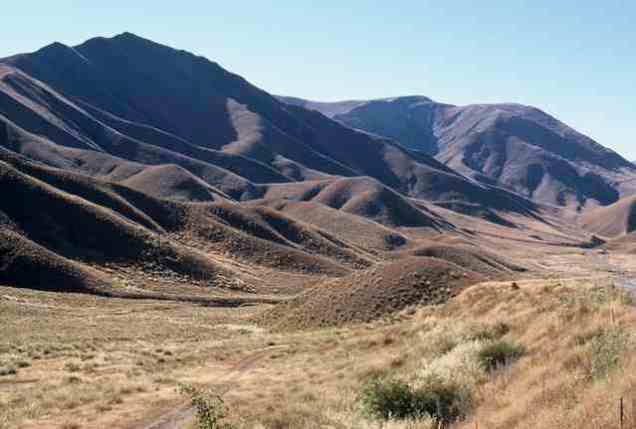
What is natural? – the tussocklands of Otago

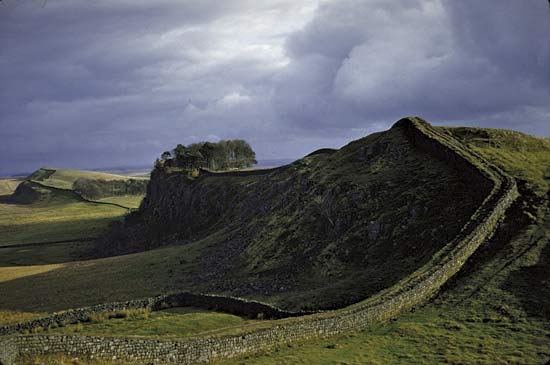
The dramatic tussock-lands of Lindis Pass are one the iconic landscapes of the South Island, and much admired by the traveler on their way from Canterbury to Queenstown or beyond. So iconic has this landscape become, it is hard to believe that while the tussock vegetation is “indigenous”, it is not “natural”. Rather, it is a human-induced landscape.

Lindis Pass is part of an extensive “dryland zone” which extends along much of the eastern part of the South Island [see map below right]. Continue reading

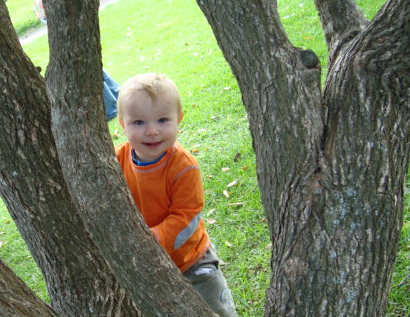
In praise of boys (and intergenerational learning)

This post differs from most of the other posts on this site, in that it is a lot more personal in nature. It acknowledges two very important “men” in my life – my husband, Clive, and my son, Carter.

My husband is the inspiration and the one-man technical support team behind this website. Clive knows how important thinking and communicating about environmental history and related subjects is to me, and felt that this would be an ideal mechanism to enable me to express myself and engage with others on this topic. If it was not for his initial idea, and his ongoing support and encouragement, this site would not exist. Clive is also a school teacher and has been involved in Enviroschools and other initiatives to encourage student learning about the environment through direct experience. Continue reading

The history of WCOs – the “national parks” of our rivers

Water Conservation Orders have been in the news lately, with the passing in March of the Environment Canterbury (Temporary Commissioners and Improved Water Management) Bill, which environmental and recreational groups claim fundamentally undermines Water Conservation Orders (WCO) in Canterbury, by giving the newly appointed ECan Commission the decision-making power on WCO applications, placing a greater emphasis on “sustainable management” rather than protection, and removing the right to appeal the decision (except on points of law).

So, what is the history and origins of the WCO, the so-called “national park” of rivers? Continue reading

envirohistory NZ podcast – episode 3 out now!

Episode 3 of the envirohistory NZ podcast series is now out. This episode explores three environmental histories – one local, one national and one international. The first story is of Wharemauku Stream, a small stream which runs through Kapiti, but which tells a story that extends beyond its geographical bounds. The second is former Green Party co-leader Jeanette Fitzsimons’ review of the last 35 years and what shifts she has observed in New Zealanders’ attitudes towards the environment. The third story is of Canadian forester – Leon MacIntosh Ellis, who immigrated to New Zealand to take up the first Director of Forests position in the new colony, and shape forestry in this country for years to come.

16 April 10   Episode 3 – Three environmental histories – local, national and international (12: 35 mins)

Music creditPolly’s song by Donnie Drost, available from CCmixter.

What is environmental history?

So, what exactly do we mean by environmental history, and why is it so important?

As part of a newly established MSc in Landscape, Environment and History at the University of Edinburgh, Prof. Chris Smout, emeritus professor of history at the University of St Andrews, Scotland, is interviewed about what environmental history is and why it is important.* He argues that the subject area is like a stage on which various subjects come together. The difference with conventional history is that environmental history is not only concerned with people but also with nature, the landscape and the environment as a whole. However, it is not just the history of nature but more the history of human interaction with the environment.

Click here to watch this interview with Prof. T.C. Smout introducing environmental history (7 mins approx). Continue reading

It’s not easy being green – on being a frog in New Zealand

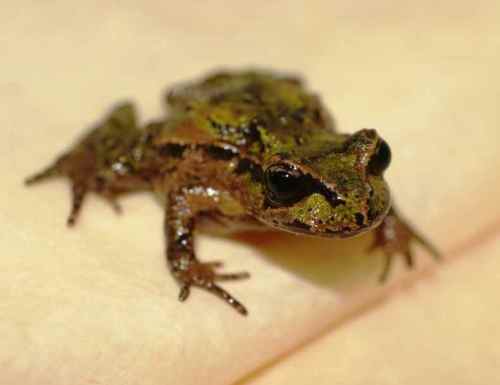
On top of struggling for their own survival, New Zealand’s native frogs have an additional responsibility on their very little shoulders – being a barometer of forest health. Like other frogs around the world, our frogs are barometers of overall environmental health. That is because frogs breath through very sensitive skin and are more susceptible to disease, pollution and environmental changes. A decline in frog populations is usually an early signal of something awry in the environment – and potential threats to other animals, including people. But in New Zealand, three of our four remaining indigenous frogs are forest-dwellers – preferring shady, moist and undisturbed forests. Therefore, they also act as a measure of the health and distribution of our indigenous forest environments. Continue reading

Bridge to nowhere – a battle with nature lost

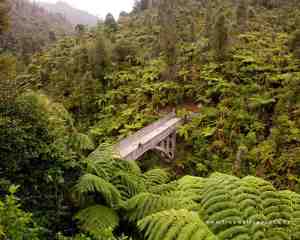
Not all struggles to tame the land in New Zealand have been successful ones. The failed attempt to settle Mangapurua, (now part of the Whanganui National Park) is a battle that nature won – and the Bridge to Nowhere is a poignant symbol of human defeat.

Under the Discharged Soldiers Settlement Act 1915 and further legislation in 1917, over 10,000 veterans of the First World War were assisted onto land. Some 3,000 of these were settled on Crown land, much of it marginal and remote central North Island land. Over 5,000 veterans took up government loans to buy and develop properties, while others took up leases of Crown land under various forms of tenure.

Mangapurua (click here to view map) was one of the settlements opened up for soldiers returning from the war. The land was infertile, steep and prone to erosion because the bush had been cleared. A slow migration of soldier settlers out of the district began after the 1921 crash in agricultural prices, with the last settlers leaving in 1942. A bridge – known as ‘the bridge to nowhere’ – over the Mangapurua Gorge is one of the few traces of the former settlement. [Source: Te Ara Encyclopedia of New Zealand]

Watch a TV6 video about the Bridge to Nowhere (including spectacular forest scenery) here.
The ultimate paradox?

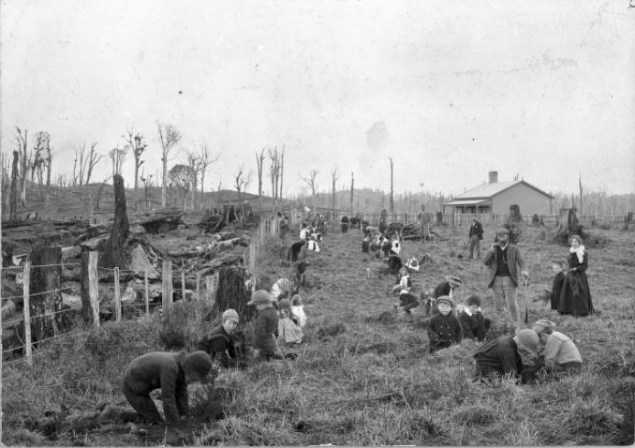
Children at Toko Primary School, Taranaki, planting trees on Arbor Day 1900. In the fields around them, the devastating effects of the milling and burning of forest that was occurring throughout the country can clearly be seen. [Photo not to be reproduced without the permission of Alexander Turnbull Library, ref 1/2-003378-F. Acknowledgments to David Young for sharing this poignant photo in Our Islands Our Selves.]