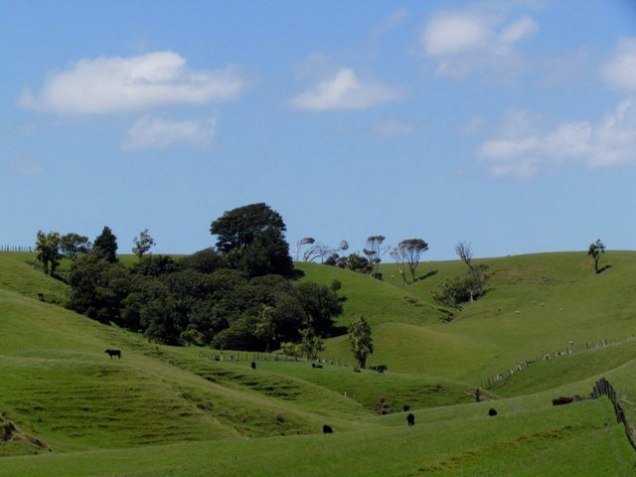
 Though I am not entirely sure what it is, there is something about the landscape south of Wanganui that I find quite alluring: perhaps the sculpted curves of the hilly terrain, which is largely pasture, but scattered with clusters of indigenous bush. My attraction to this landscape was explored in another post Drama and history in a southern Wanganui farmscape. This photo was taken just south of the southern Wanganui town of Turakina [click here to view location]. Continue reading
Environmental History

Upper Hutt: the valley of many struggles
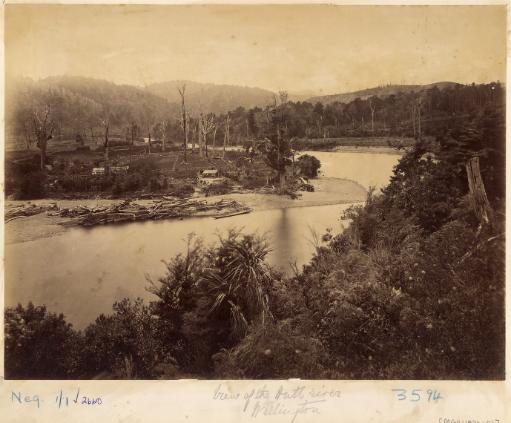 Following on from the post on the environmental history of Lower Hutt/Petone – the valley of disappointment, this post focuses on the Upper Hutt area, and in particular, the history of the river. This post is in response to a special request by one of envirohistory NZ‘s readers; one of a group of Upper Hutt Valley residents who are concerned about the effects of an application to lower the minimum flow of the Hutt River. Continue reading
Share this:

Why were stoats and ferrets introduced to New Zealand?
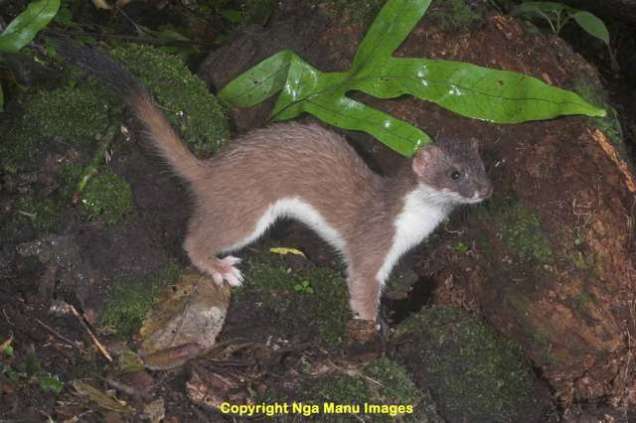 The other day, a colleague of mine asked: “Why were stoats and ferrets introduced into New Zealand? Do you know?”. I put on my best “all-knowing” face, and said “To control rabbits”. But even as I said it, I wavered with uncertainty, because it seemed so preposterous – a bit like the old lady who swallowed the spider (to eat the fly). Continue reading
Share this:

Vanishing forests: pre-European transformation of the South Island
 When we encounter the extensive tussocklands of the eastern South Island [see below right], it is hard to imagine any other landscape in that place – so much a part of the “natural” New Zealand landscape have they become. Yet, as explored in a previous post What is natural? The tussocklands of Lindis Pass, this is in fact a human-induced landscape; the tussocklands have replaced podocarp and beech forest [see left] that once covered the South Island. However, this occurred long before any written history was established, and this environmental history has had to be pieced together through painstaking paleoenvironmental research.
New ground-breaking research, undertaken by an team of both New Zealand and international scientists, has determined how, to what extent, and over what time-frame large tracts of South Island forest were destroyed. Continue reading
Share this:

Sometimes it’s not about environmental history
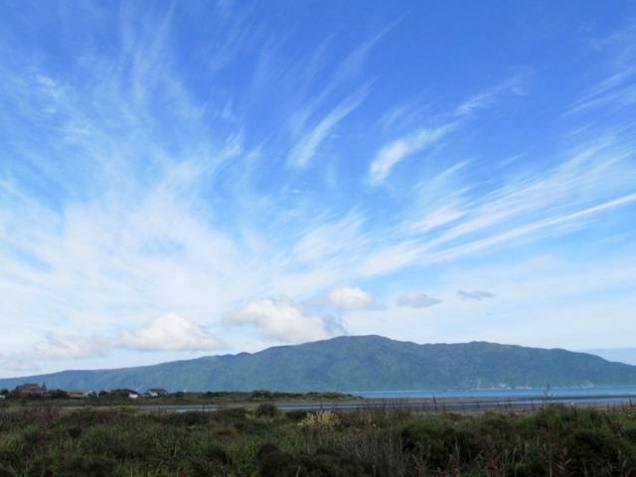
I am not going to pretend this post is about environmental history – it is more about gratuitous self-indulgence (one of the many benefits of having a blog!), and pure enjoyment of the landscape (not a bad thing in itself, after all).
This morning, Carter and I set out on a Wednesday “environmental history” adventure (about which there will be a later post) and, driving down Mazengarb Road, I noticed some interesting cloud formations over Kapiti Island. Continue reading
Share this:

Views of Kapiti 4: Maungakotukutuku Valley
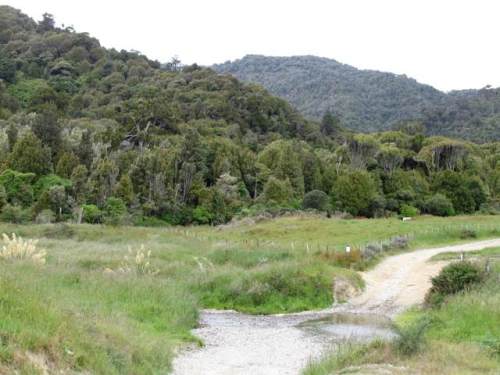 This morning, Carter and I had some time to kill before his first ever appointment with the dental nurse, so we went for a drive up Maungakotukutuku Road,* south-east of Paraparaumu [click here to view location]. This is narrow, windy road, best taken very slowly and carefully (especially in a Kia Picanto!), so it was a good time of day to explore it. The low cloud and light, misty rain added to the sense of mystery and adventure. Continue reading
Share this:

Discovering environmental history in unexpected places…
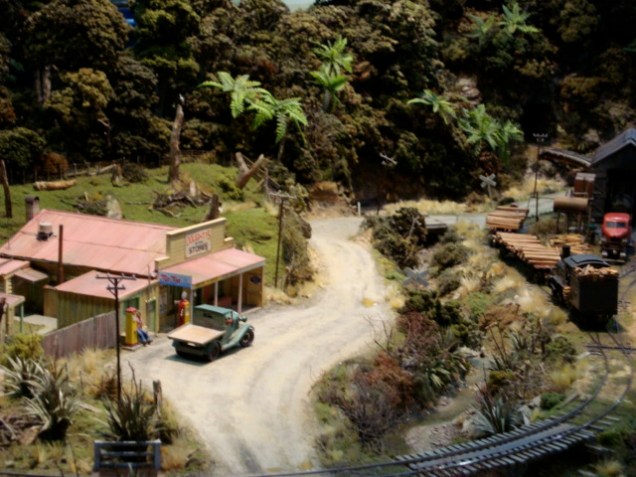
A mother and son outing today was a reminder that environmental history can be discovered in unexpected places. Carter and I went to Wellington this morning to check out the RailEx Model Train Show. As soon as he entered the expo room, his eyes lit up, in unison with the eyes of all the other little boys (and girls – but mainly boys) who ran excitedly from one exhibit to another. Continue reading
Share this:

The valley of disappointment
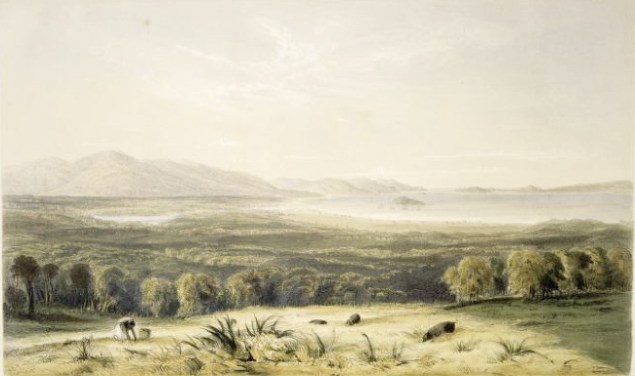 Today, the Petone and Lower Hutt area is an intense conglomeration of industrial, commercial and residential buildings and infrastructure – interconnected by motorways, roads and railways – concentrated within the confines of the sea to the south and the steeply rising hills of the valley to the west and east. Within this landscape of steel, glass, concrete and asphalt, it is hard to believe that only 170 years ago, this was thickly forested floodplain and estuary, rich with teeming birdlife – including the now extinct huia, and the endangered kokako. Continue reading
Share this:

Top posts for the third quarter
 This post reviews the top posts of the third quarter of 2010. Our favourite Californian again proves very popular, this quarter overtaking A tale of mining, which was very topical earlier in the year. The others in the top 5 traverse a diverse range of themes: Maori horticulture, a rare inner-city oasis of ancient forest, the surprisingly recent history of whaling in New Zealand, and eels – which have figured so large both in our streams, rivers and estuaries as well as our cultural history. Continue reading
Share this:

The slaying of our kahikatea forests: how Jurassic giants became butter boxes
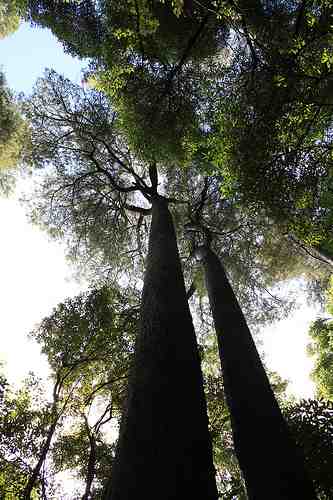 New Zealand’s tallest forest tree, the kahikatea (Dacrycarpus dacrydioides), once dominated the forests that covered much of New Zealand’s swampy lowland areas. Far from a solitary tree, the kahikatea groups closely with other kahikatea, intertwining its buttressed roots with its neighbours for support in the unstable swampy ground. (It is perhaps for this reason that the kahikatea has evolved with such a tall, straight trunk with no lower branches, to enable it to “huddle” with others for stability). In autumn, throughout the lowlands of New Zealand, numerous forest birds chattered noisily in its canopy, feeding on its abundant red berries. These berries, called koroī, were also a valued food source for Māori, who skillfully climbed up the smooth branchless trunks to harvest them. Continue reading

 envirohistory NZ