The history of WCOs – the “national parks” of our rivers

Water Conservation Orders have been in the news lately, with the passing in March of the Environment Canterbury (Temporary Commissioners and Improved Water Management) Bill, which environmental and recreational groups claim fundamentally undermines Water Conservation Orders (WCO) in Canterbury, by giving the newly appointed ECan Commission the decision-making power on WCO applications, placing a greater emphasis on “sustainable management” rather than protection, and removing the right to appeal the decision (except on points of law).

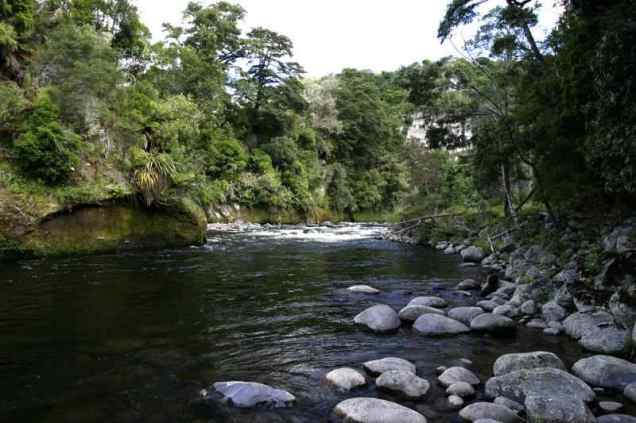
So, what is the history and origins of the WCO, the so-called “national park” of rivers? Continue reading


Wildlife and wild places in New Zealand – photography exhibition

Downtown Wellington is hosting a photography exhibition by a “wildly talented” (in more ways than one) Sam O’Leary this month. Sam’s photographs of New Zealand’s wildlife and wild places will be on show from the 23 April (opening night) through to May 14 at Conservation House (Department of Conservation), Manners Street, Wellington. (Exhibition open Monday through to Friday.)

Sam’s photographs can be viewed at Sam O’Leary’s website.

Photographs (A2 size and framed in black with white matt border) will also be available for sale at the exhibition for $400 each.

As well as being a talented photographer, Sam works for the Department of Conservation, and runs their Conservation Blog.

[Photo: Green gecko in friend’s garden (Wellington), by Sam O’Leary]

A short history of regional government in NZ

The recent government intervention in Canterbury, which led to the replacement of the Environment Canterbury’s elected council with government-appointed commissioners [click here to read more], has brought regional councils into the spotlight. Regional councils are responsible for the bulk of environmental management and regulation in New Zealand. But what is their history and does their history provide any clues to the plight that ECan finds itself in? Continue reading

envirohistory NZ podcast – episode 3 out now!

Episode 3 of the envirohistory NZ podcast series is now out. This episode explores three environmental histories – one local, one national and one international. The first story is of Wharemauku Stream, a small stream which runs through Kapiti, but which tells a story that extends beyond its geographical bounds. The second is former Green Party co-leader Jeanette Fitzsimons’ review of the last 35 years and what shifts she has observed in New Zealanders’ attitudes towards the environment. The third story is of Canadian forester – Leon MacIntosh Ellis, who immigrated to New Zealand to take up the first Director of Forests position in the new colony, and shape forestry in this country for years to come.

16 April 10   Episode 3 – Three environmental histories – local, national and international (12: 35 mins)

Music creditPolly’s song by Donnie Drost, available from CCmixter.

Lindsay Gow’s thoughts on the RMA: 20 years on

Following on from his earlier contribution, Two decades of environmental policy – then and now, former Ministry for the Environment Deputy Secretary Lindsay Gow also shared his thoughts on the efficacy of the Resource Management Act since it was enacted in 1991, and on what tasks remain to be tackled in the area of environmental policy:

The Resource Management Act has been with us for nearly twenty years.  It was one of my biggest jobs.  I consider that, on balance, it has worked successfully.  It’s interesting to hear both pro and anti development people referring to the RMA as a legitimate means of making difficult resource decisions.

The RMA’s central notion of integrated resource management was ahead of its time in 1990.  Thanks to the establishment of regional authorities administering it on a whole catchment basis, the RMA has delivered some notable results. Continue reading

Views of Kapiti 3: Wharemauku Stream

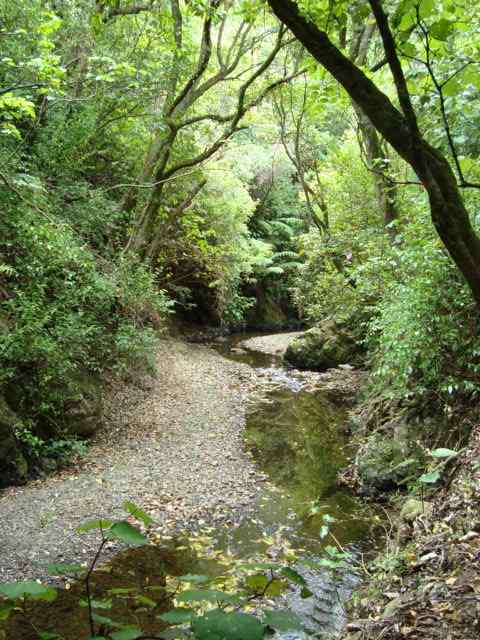
The Wharemauku Stream is notable to visitors and residents of Paraparaumu alike for the fact that it runs underneath the Coastlands Mall, built in 1969 [see photo below, right]. Seeing it straightened, stripped of its indigenous ecology and thrust into such a jarring constructed landscape, many might mistake it for a man-made drain; few would be able to imagine how it might have looked in its natural state before this area was developed for farmland and settlements 150 years ago.

The source of the Wharemauku Stream is in the Maungakotukutuku valley, from where it flows westwards through the Paraparaumu and Raumati Beach areas, before reaching the Tasman Sea on the northern side of Raumati Marine Gardens [see photo below left]. Continue reading

Lindsay Gow: two decades of environmental policy – then and now

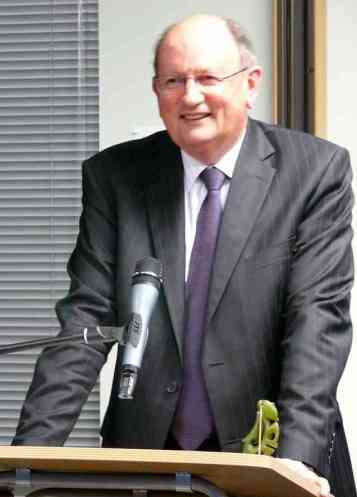
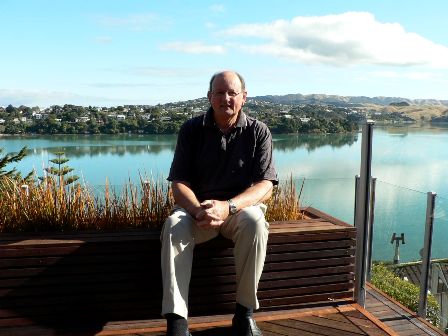
Last year, Lindsay Gow retired from his position as Deputy Secretary of the Ministry for the Environment after more than two decades leading environmental policy work in New Zealand. envirohistory NZ asked Lindsay to share his thoughts on how New Zealanders’ attitudes towards the environment and environmental issues have changed over this period:

The first change has been in public and political opinion.

20 years and more ago environmental policy was very much the junior partner in the both government and public eyes.  Although the establishment of the Ministry for the Environment and the Department of Conservation came out of a reaction to the rapacious “think big” developments, it was not easy to get policy issues and ideas launched.  We found that the onus of proof was against, not in favour of environmental protection. Continue reading

Top posts for the quarter

We are approaching the end of March, so it must be time for the top five posts of the first quarter. Coming in at number one – by a healthy margin – is Our favourite Californian – the history of Radiata pine forestry in NZ … who would have thought? At number 2, there continues to be huge interest around our most polluted river – the Manawatu – with only the rare day passing without at least a few hits on this post. Few surprises about the next most popular posts … lawnmowers, Nga Manu Nature Reserve and Jeanette Fitzsimons – perhaps an unlikely combination anywhere else, but not here! Click on the links below to read the posts.

1. Our favourite Californian – the history of Radiata pine forestry in NZ

2. Manawatu River – pollution concerns date back to 1890

3. The lawnmower – the great New Zealand love affair

4. A Kapiti environmental history – Nga Manu

5. Jeanette Fitzsimons: how our attitudes towards the environment have changed 1974 -2010

The eternal dilemma – development versus preservation

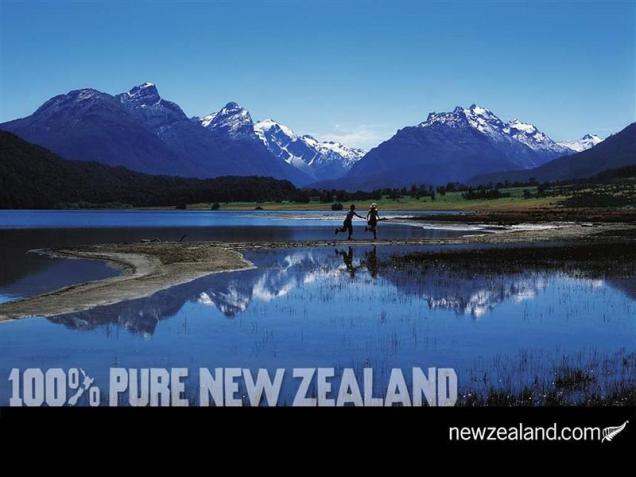
This is the dilemma highlighted in the Economist’s March 23 article “It’s not easy seeming green“, which exposes the ever-widening divide between New Zealand’s projected image of “clean and green” or “100% pure”, and the reality – of a nation, which like any other, is perpetually struggling to find the balance between economic development and preservation of our precious natural heritage. This fissure between projected image and reality has for many become a gaping chasm since the government’s announcement that it is considering opening up high-value conservation land for mining exploration. Continue reading

Resource management law in NZ – a potted history

Whether we like it or loathe it, the Resource Management Act (RMA) is so much part of our social fabric and the way we make decisions about the environment today, it is hard to believe that only 20 years ago it was considered revolutionary, and groundbreaking by international standards. When it was enacted in 1991, the RMA repealed 78 statutes and regulations, and amended numerous others, to provide a single piece of legislation for the management of land, water, soil and air throughout New Zealand.

It came at a time of great change in local and central governance in New Zealand, particularly in relation to environmental management. Up until 1986, most policy and legislation relating to the environment was developed or administered by the monolithic Ministry of Works or the Forest Service, the key pieces of environmental management legislation being the Town and Country Planning Act 1977 and the Soil Conservation and Rivers Control Act 1941 (not to be confused with the Water and Soil Conservation Act, enacted in 1967) . But by the 1980s, there was a growing recognition that these pieces of legislation had become outdated and were in need of review. Continue reading