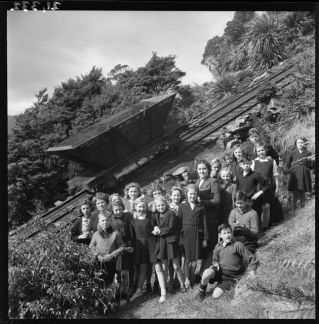
 In a recent issue of Education Today, Bill Clarkson, a veteran teacher and environmental educator, wrote about nature study in New Zealand and reviewed some of the pioneering literature which influenced how nature study was taught in New Zealand. These books include “New Zealand Nature Study” by W. Martin (1947) and “Nature Study: handbook for teachers”, by D. Beggs (1966). [Click here to read the full article.] Continue reading
commentary

Happy 2nd birthday, envirohistory NZ!
 envirohistory NZ turns two today, having been launched two years ago on 15 November 2009. In the last year it has doubled its hits, getting nearly 40,000 over the last 12 months, compared to 20,000 in its first 12 months of life. Just like a small child, it is growing and learning all the time.
A big THANK YOU to all our subscribers, regular visitors and occasional visitors. Without your visits, comments and feedback, this website would have no purpose. Please accept a virtual piece of birthday cake from the team at envirohistory NZ
Share this:

History shaping the future – NZHA conference
 Next week’s New Zealand Historical Association Conference features a special four-person panel dedicated to environmental history. The panel is entitled: “History shaping the future: how environmental history research can inform environmental policy and management”, and will feature papers by Professors Katie Pickles and Eric Pawson (both from Canterbury University), Professor Tom Brooking (Otago University) and Dr Catherine Knight (envirohistory NZ). Continue reading
Share this:

A burning question: what is pastoralism?
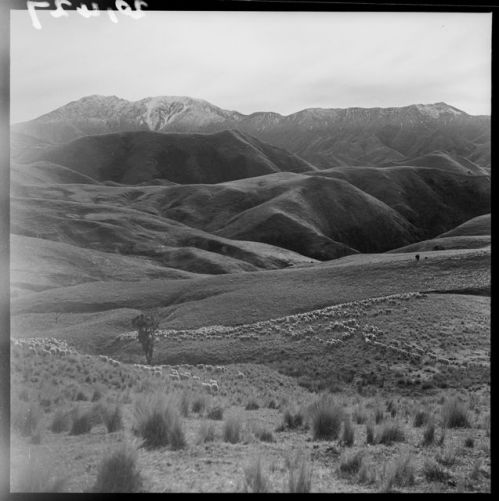 I have learned a few things while reading “Seeds of Empire”, by Tom Brooking and Eric Pawson, including the definitions of some terms that crop up a bit in environmental history literature (see also: How did the Korean War change the NZ landscape?). One example of this is in Robert Peden’s essay “Pastoralism and the transformation of open grasslands” (Chapter 5).
Using Mount Peel Station* in central Canterbury as a case study, Peden explains how pastoralism transformed much of the eastern hillcountry (or rangelands, as he refers to them) of the South Island, and seeks also to debunk a few myths about the impacts of pastoralism while he is at it (specifically, about the role of pastoralism in rabbit infestations and burning as a management tool). Continue reading
Share this:

Food basket to floodway: the story of Awapuni Lagoon and Mangaone Stream
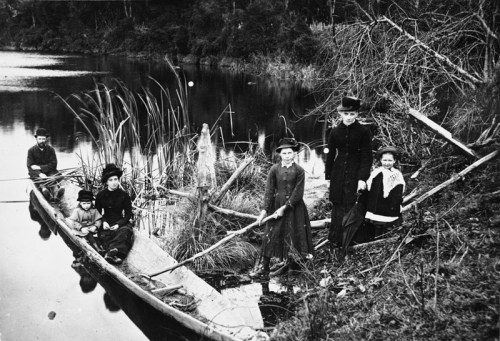 A few months ago, I posted the story, The city of hidden lagoons: Palmerston (of the north), which explored the watery history of the Manawatu city of Palmerston North, where I grew up. In particular, the post told a little of the story of the long-forgotten Awapuni Lagoon, which once lay in the south-west corner of the city. This post will add to that story, with the history of the Mangaone Stream, which fed into the Manawatu River in the same area of the lagoon. Continue reading
Share this:

The ebb and flow of a rural township: Tokomaru
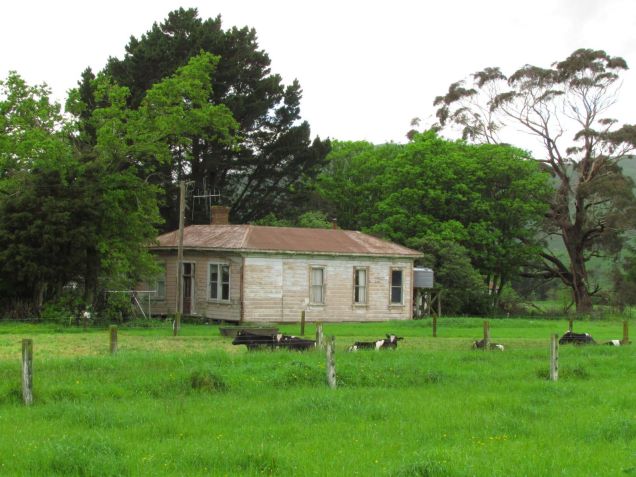
My last post How did the Korean War change the NZ landscape? and specifically the mention of the demise of local dairy factories in the post-Korean War years, led me to think about ex-dairy factory towns and villages within my immediate orbit. One such place is in the northen Horowhenua village of Tokomaru, on the western side of the Tararua Ranges [click here to view map]. Continue reading
Share this:

How did the Korean War change the NZ landscape?
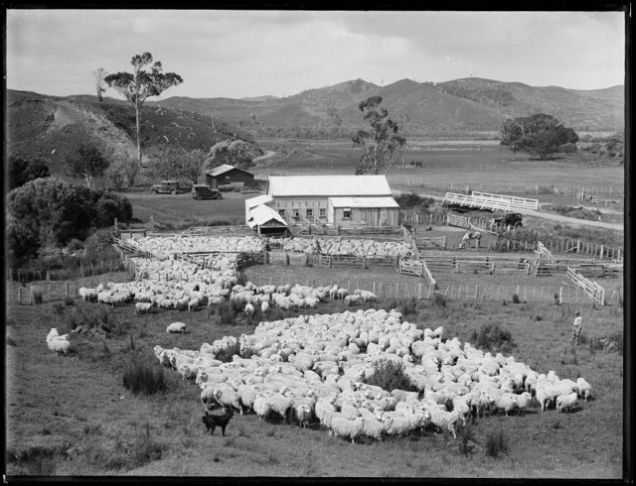 I have been reading the recently published Seeds of Empire: the Environmental Transformation of New Zealand, and have made a few surprising discoveries. One was how much of an impact the Korean War had on the New Zealand rural landscape. The War led, in fact, to the last phase of geographical expansion of the productive rural landscape, or the “farming frontier”, as the authors put it. Continue reading
Share this:

Manawatu history talk: Totara Reserve
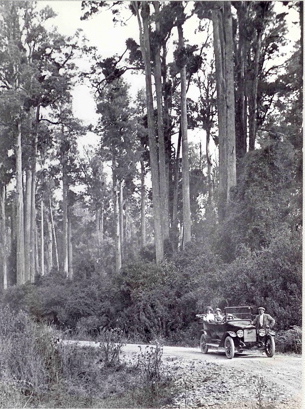 Dr Catherine Knight will be presenting a talk on November 2nd about the history of Totara Reserve as part of this year’s Manawatu Local History Week [click here to download programme]. Entitled “Totara Reserve: a window into Manawatu’s environmental history“, the talk will explore how Totara Reserve was preserved initially for its timber, but within a few decades, when lowland forest elsewhere in the Manawatu had all but vanished, became a prized scenic and recreational reserve. By tracing the history of the reserve, we can better understand the changing attitudes and values of New Zealanders towards our natural heritage. Continue reading
Share this:

Map of “Middle Island” 1840
 I came across this map in Mick Strack’s essay “Bounding the Land: Cadastral framework on the Taieri” in the recently published “Making Our Place”, and it intrigued me.
It is a map of the South Island, sketched by Edmund Halswell around 1841 from an unidentified Ngai Tahu source. The map shows the South Island so elongated and distorted in shape, that is almost unrecognisable. But is precisely this cartographic inaccuracy which reveals valuable information about how Maori interacted and viewed the land before European colonisation. Continue reading
Share this:

A history of the lawn
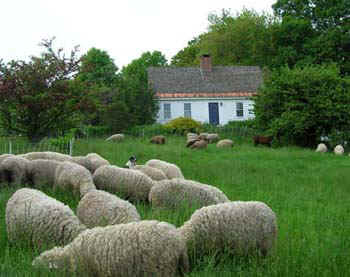 In a recent New Zealand Listener issue, garden columnist Xanthe White wrote about the fascinating history of the lawn, a ubiquitous feature of the New Zealand urban landscape.
White explains that the origins of the lawn can be found in agriculture; specifically the task of scything of fields for winter feed. The clearing of woods and undergrowth from around dwellings and settlements also kept these inner fields relatively free from snakes and other potentially harm-inflicting creatures lurking in long grass or in and around woodlands. Continue reading

 envirohistory NZ