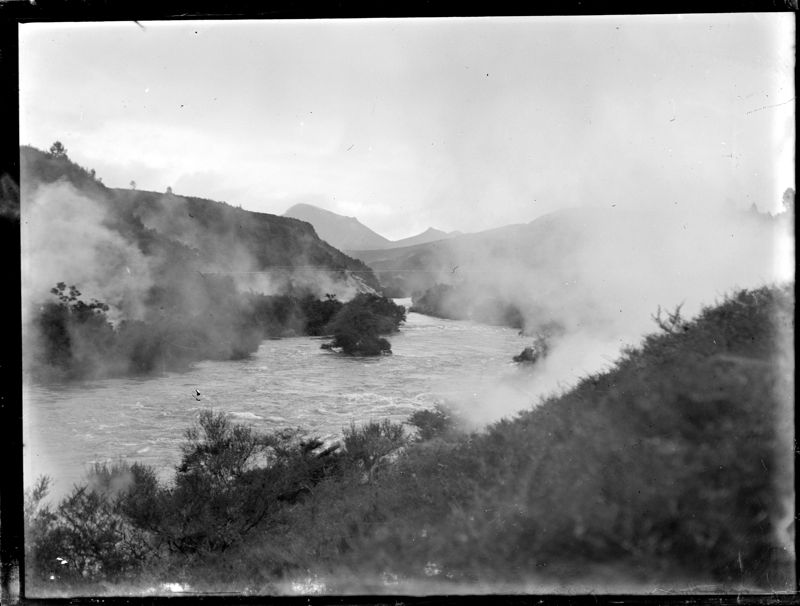
 In her recent report exploring the in the way choices between generating hydroelectricity and preserving wild and scenic rivers are made, the Parliamentary Commissioner for the Environment highlights the case of the Ohakuri Dam, which was built on the Waikato River in 1961. This was the site of the spectacular Orakei Korako geothermal area, known as “Geyserland”. Continue reading
commentary

Totaranui: the many totara of Te Horo
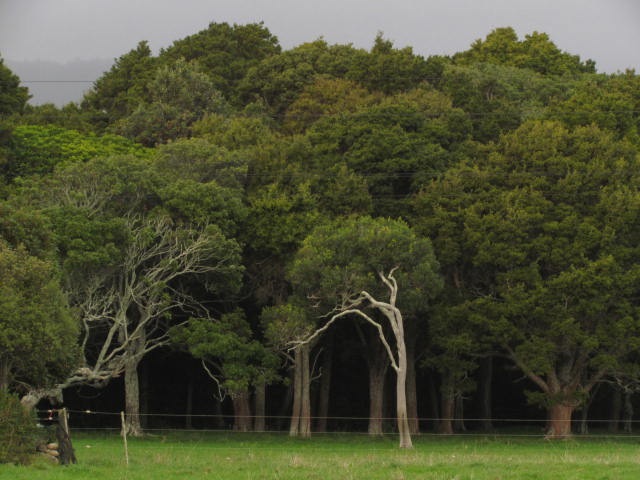 In the last post, The “Hautere Turnips” of Te Horo, the origin and history of the stone walls, cairns and piles characteristic of this area was discussed. Another unusual feature of Te Horo is the large number of totara groves that can be seen in the fields. Continue reading
Share this:

The “Hautere Turnips” of Te Horo
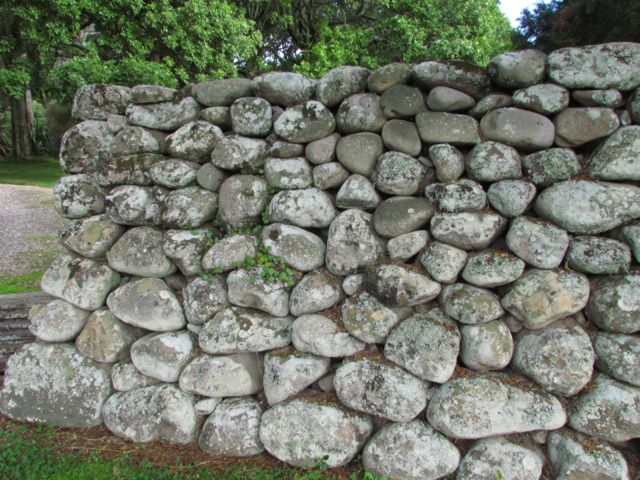 Driving through Te Horo recently, on the Kapiti Coast, I was fascinated by the number of stone walls, stone cairns, and stone piles evident in the locality – more reminiscent of my image of the English countryside, than of typical rural New Zealand. I sensed there must be a story there, and I was not disappointed. Continue reading
Share this:

Bush adventures in Hokowhitu
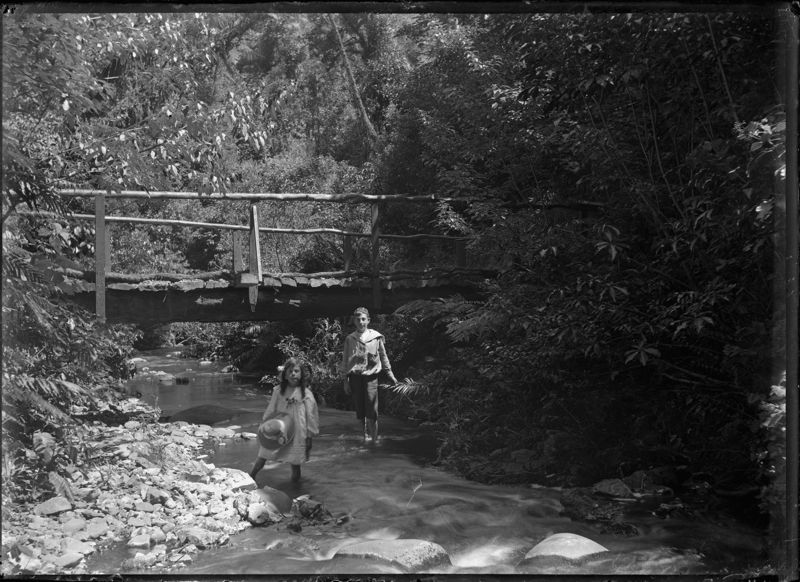 In her 1954 reminiscences of pioneering life in the Manawatu town of Palmerston North, Charlotte Warburton writes about childhood adventures in the bush in the Hokowhitu area, adjoining the Manawatu River.
I grew up in Hokowhitu in the 1970s, not far from the River, but by then there was little sign that anything but the exotic had ever thrived there. Continue reading
Share this:

Rainbow over Linton, Manawatu
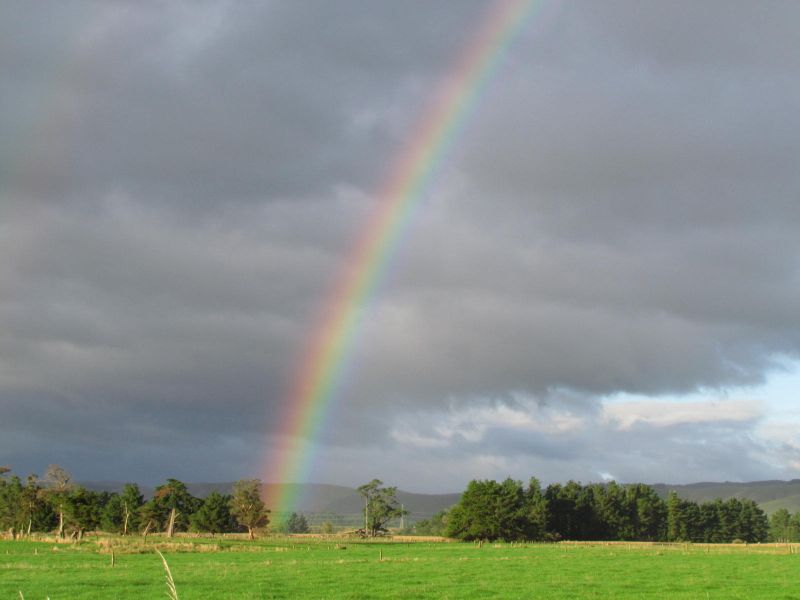 Driving back from the Manawatu today, we were lucky enough to encounter our second rainbow of the day. This one was particularly spectacular, set against the dusky blue-grey of the Tararua Ranges, and the dark rain cloud-filled sky. This one “ended” among a cluster of regenerating indigenous trees (possibly totara) on fields on the Manawatu River terraces just south of the Linton Army Camp turn-off [click here to view location]. Continue reading
Share this:

What is a groyne? (And what’s it got to do with environmental history?)
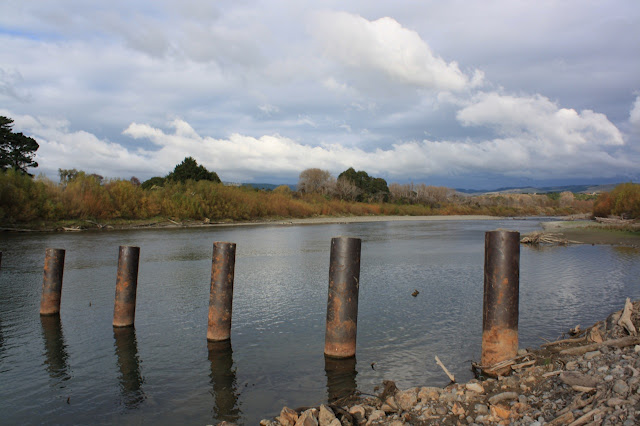 Living in Christchurch, I was always vaguely aware of a park in the north-east of the city called “The Groynes”. It seemed an odd, and rather un-illustrious name for a park (given its homonymity with that particular part of the body), but I never took the time to find out what its origin was.
Had I had the curiosity to investigate, I would have found out that “The Groynes” derives its name from large blocks, made from concrete filled woolsacks, which were placed in the Continue reading
Share this:

When did the moa become extinct?
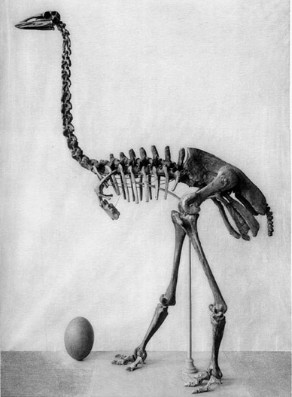 The previous post Prehistoric revelations of a Manawatu flood made me curious about other signs of moa habitation in the Manawatu area. I came across an intriguing article in a 1908 newspaper which reports on a find of moa bones in Kimbolton, and the controversy the find created.
The question it raises is, were moa still roaming the densely forested hinterlands of the North Island even as Europeans were first arriving on these shores?
But let the discoverer of those bones tell the story. In a letter to the Feilding Star in July 1908, Mr Thomas A. Bryce, a farmer from Kiwitea (see: Kimbolton and surrounds – “putting the small man on the land”), wrote:
“What time has elapsed since the moa became extinct? Continue reading
Share this:

Prehistoric revelations of a Manawatu flood
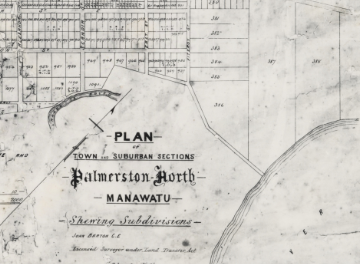 When surveyors laid out the Manawatu town of Palmerston North, they were a little optimistic.
An 1878 [see left] and later 1895 survey map shows sections in the suburbs of Terrace End and low-lying Hokowhitu running right up to – and in some cases beyond – the banks of the meandering Manawatu River. However, the multitude of lagoons in the district showed that the Manawatu River must have flooded, and changed its course, many times throughout the centuries, leaving these “cut-off meander” lagoons as evidence. Continue reading
Share this:

Volcanoes and farming
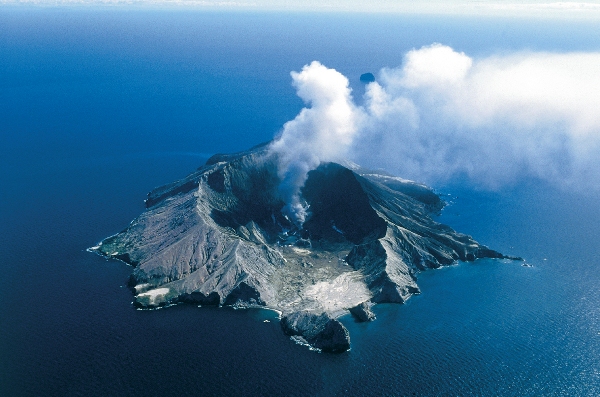 How do volcanoes relate to farming?
The early settler-farmers of New Zealand soon recognized the limitations of the fertility of the land which they farmed, particularly when it came to arable crops such as wheat. In regions such as the Manawatu, the “black soils” of burnt-off bush country at first produced prolific crops, owing to the minerals contained within the ashes of the burnt bush. However, quite rapidly, this fertility declined. Continue reading
Share this:

Road-building in the Manawatu, 1868
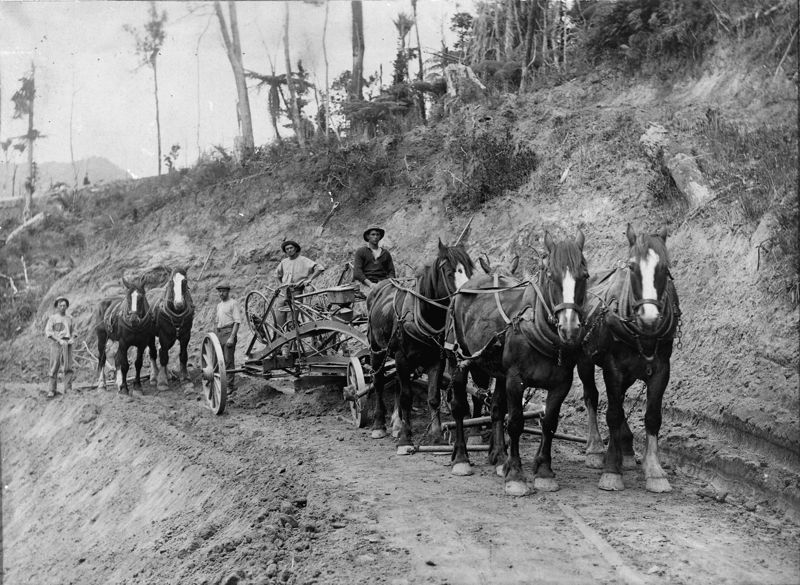 One of the many joys of doing historical research is reading the editorials and letters to the editor in historical newspapers (see also: Manawatu’s environmental past to be documented). People seemed to have been very free with their opinion on all kinds of things – not least of which the doings of government – and used sarcasm, dry wit and irony liberally and adeptly.
One letter I came across recently dates from 1868, and contains the correspondent’s observations on road and bridge-building around the fledgling Manawatu settlement of Palmerston. Continue reading

 envirohistory NZ