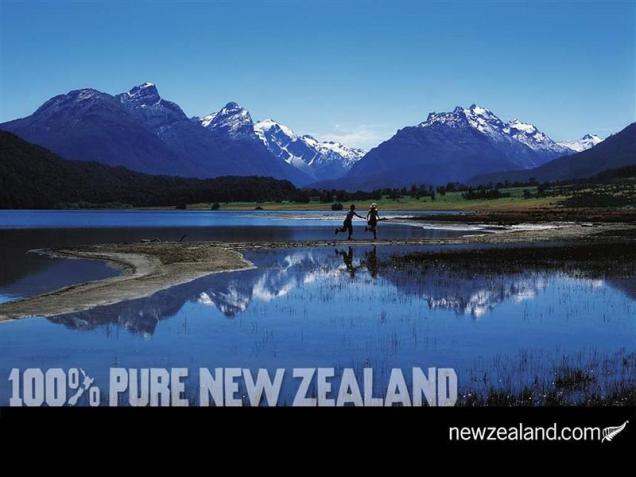
 This is the dilemma highlighted in the Economist’s March 23 article “It’s not easy seeming green“, which exposes the ever-widening divide between New Zealand’s projected image of “clean and green” or “100% pure”, and the reality – of a nation, which like any other, is perpetually struggling to find the balance between economic development and preservation of our precious natural heritage. This fissure between projected image and reality has for many become a gaping chasm since the government’s announcement that it is considering opening up high-value conservation land for mining exploration. Continue reading
Author: envirohistory NZ

Resource management law in NZ – a potted history
 Whether we like it or loathe it, the Resource Management Act (RMA) is so much part of our social fabric and the way we make decisions about the environment today, it is hard to believe that only 20 years ago it was considered revolutionary, and groundbreaking by international standards. When it was enacted in 1991, the RMA repealed 78 statutes and regulations, and amended numerous others, to provide a single piece of legislation for the management of land, water, soil and air throughout New Zealand.
It came at a time of great change in local and central governance in New Zealand, particularly in relation to environmental management. Up until 1986, most policy and legislation relating to the environment was developed or administered by the monolithic Ministry of Works or the Forest Service, the key pieces of environmental management legislation being the Town and Country Planning Act 1977 and the Soil Conservation and Rivers Control Act 1941 (not to be confused with the Water and Soil Conservation Act, enacted in 1967) . But by the 1980s, there was a growing recognition that these pieces of legislation had become outdated and were in need of review. Continue reading
Share this:

Views of Kapiti 2 – Waikanae River wetland restoration
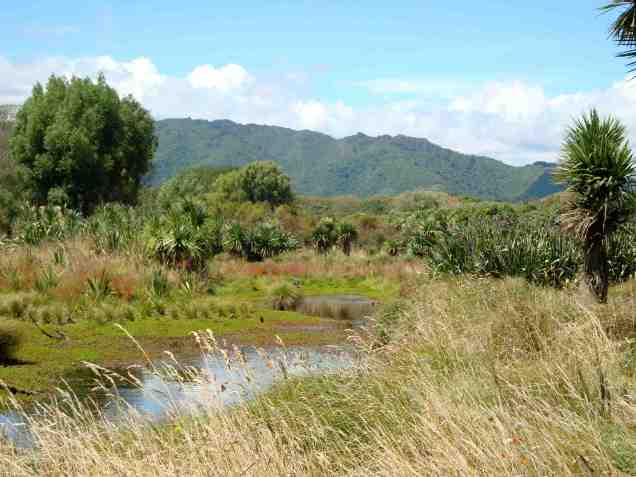
This view, facing east along the Waikanae River just east of the Otaihanga Domain, is of a restored wetland – part of a wider regeneration project along this part of the Waikanae River. Viewed from this angle, with the bush-covered Waikanae hills in the background, it is possible to get some sense of how this part of Kapiti would have looked before it was cleared for farms and settlements in the late 19th century. Continue reading
Share this:

What is environmental history?
 So, what exactly do we mean by environmental history, and why is it so important?
As part of a newly established MSc in Landscape, Environment and History at the University of Edinburgh, Prof. Chris Smout, emeritus professor of history at the University of St Andrews, Scotland, is interviewed about what environmental history is and why it is important.* He argues that the subject area is like a stage on which various subjects come together. The difference with conventional history is that environmental history is not only concerned with people but also with nature, the landscape and the environment as a whole. However, it is not just the history of nature but more the history of human interaction with the environment.

Click here to watch this interview with Prof. T.C. Smout introducing environmental history (7 mins approx). Continue reading
Share this:

Challenging assumptions – what is natural?
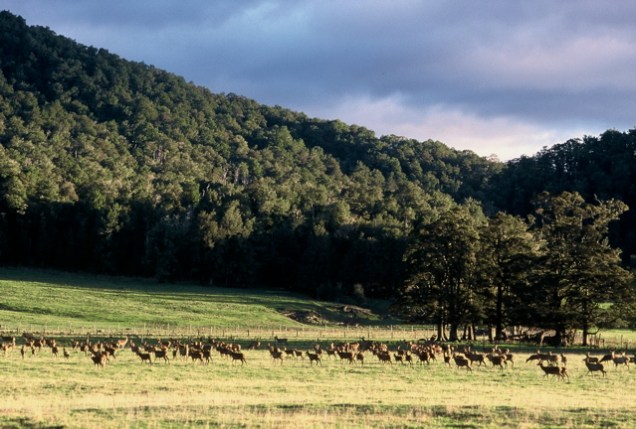
Herds of deer in virtually treeless fields is a common sight in New Zealand, but to many Europeans, who are used to seeing deer in their natural habitat – the forest – it appears incongruous, and even cruel, to keep these forest animals in open fields, particularly on a hot summer’s day. Continue reading
Share this:

Jeanette Fitzsimons: How our attitudes towards the environment have changed 1974 – 2010
Jeanette Fitzsimons, former co-leader of the Green Party, resigned from Parliament in February this year, after a long and influential political and academic career. envirohistory NZ thought it would be a good opportunity to ask Jeanette about the major shifts she has observed over the last four decades in the way we as New Zealanders view our environment.
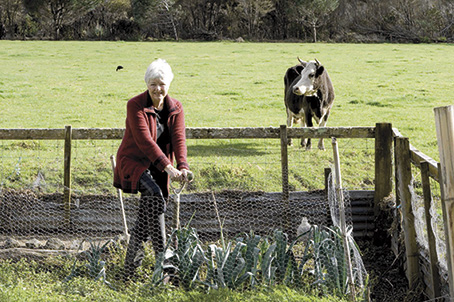
In her response to this question, Jeanette highlights three themes: attitudes towards nuclear power, indigenous forestry and farming.
Share this:

Kapiti Island – an environmental history “microcosm” – Part 2
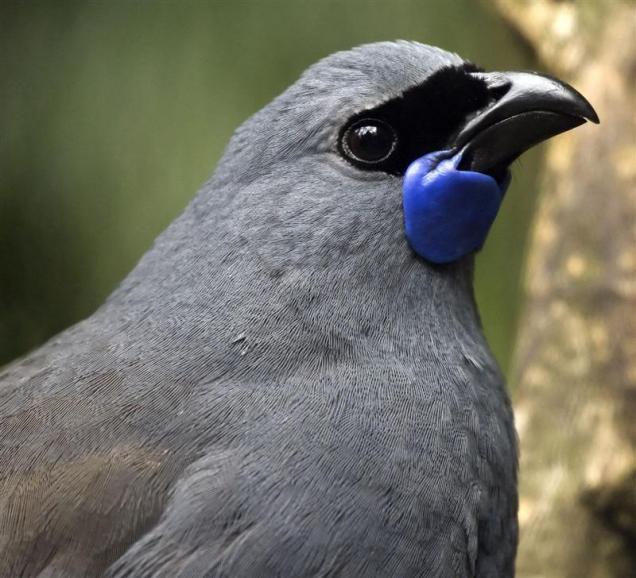 In 1870, Kapiti was identified by naturalists as a possible site for a bird sanctuary. But it was over a quarter of a century before the Kapiti Island Public Reserve Act (1897) was passed, and the island became a reserve.
Remnant forest, scrubland and previously farmed land was left to regenerate (except for one remaining farm at Waiorua, which continued to be farmed until the 1950s). However, nothing was done to eradicate the introduced species – cattle, goats, sheep, and possums (which had been introduced in 1893 – only four years before Kapiti became a reserve), and these animals kept regeneration of the forest in check through their constant browsing. Continue reading
Share this:

Kapiti Island – an environmental history “microcosm” – Part 1
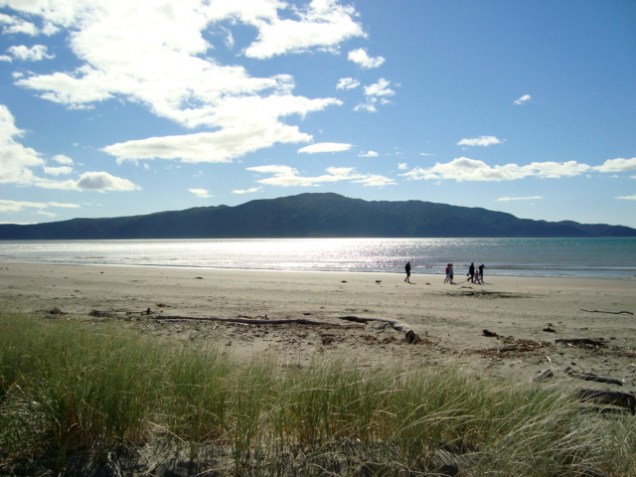 Kapiti Island is the summit of a submerged mountain range created by seismic activity 200 million years ago. It is 10 km long and about 2 km wide, covering an area of 1,965 hectares. The highest point, Tuteremoana, is 521 metres above sea-level.
The history of Kapiti Island neatly encapsulates – both geographically and temporally – the key phases of New Zealand’s environmental history. In a relatively short space of time it has been the object of intensive exploitation that saw its natural resources stretched to their limits, before entering a new phase as a predator-free haven for our rarest native birds. As such, it is now on the forefront of New Zealand’s battle to preserve its natural heritage. But, a lesser known part of its environmental history is the hundreds of years that it sustainably supported a small Maori population. Continue reading
Share this:

Memories of hunting – Te Urewera and Hawkes Bay
The earlier post on Hunting in New Zealand prompted one of our regular contributors, Paul Knight (now 74), to reminisce about his own hunting days:
When I was a chil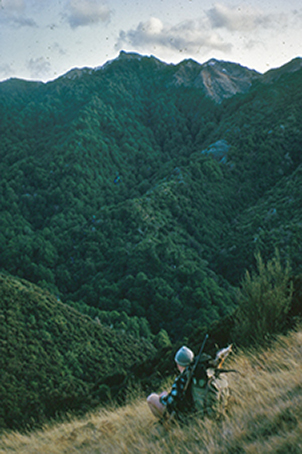 d, my father used to take me fishing in Whangaroa Harbour and hunting for rabbits and hares, ducks and swans. By my early teens I had graduated to hunting deer. The purpose of both the fishing and the hunting was to keep an old freezer stocked for the family of 6. By the time I was a university student in the 1950s, I went hunting for deer by myself, traveling by motorbike with sidecar (Triumph 500 Speed Twin), mostly to Minginui Forest, west of Te Urewera National Park.
Hunting at Minginui was always successful. There was no need to get up at dawn. Even in the middle of the day you could creep up on clearings in the kanuka scrub or forest with a good chance of finding a herd of anything up to about 20 deer resting in the sun. They would make off in panic and not infrequently ran straight at me in the confusion. Continue reading
Share this:

A rare survivor – Taupo swamp
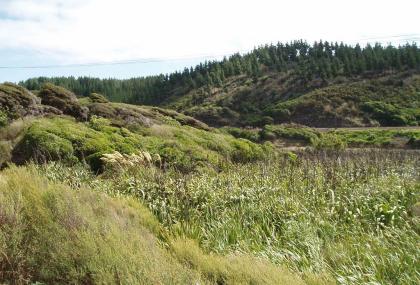 Our environmental history is littered with the stories of wetlands that were drained to make way for farmland or settlements. But in the Wellington region, there is a rare example of a substantial wetland that survived this onslaught. It is an example of how – paradoxically – an environment’s utility as a source of a commercial resource can sometimes provide for its preservation.
Over the last 150 years there were a number of attempts to drain the swamp for farming, but these attempts succeeded in only partially draining the swamp. Continue reading

 envirohistory NZ