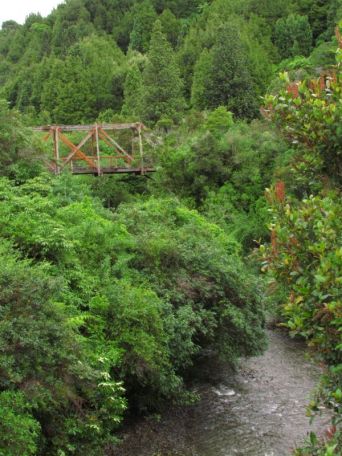
 After our first excursion to Reikorangi on the last day of 2011 [see: Views of Kapiti 8: the kahikatea of Ngatiawa], I couldn’t resist another outing there with my son the next day.
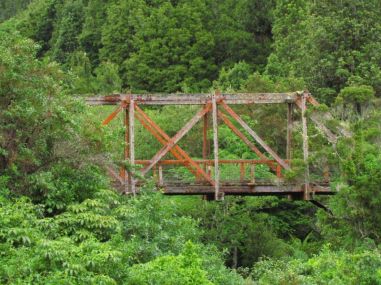
I find the landscapes of Reikorangi so alluring; the natural environment itself is varied and interesting, both in its contours and mix of indigenous and exotic vegetation, but I also like the fact that its history is so palpable in the landscape. Even from the road, an observant visitor will spot old buildings, lichen-covered fences, abandoned machinery and other infrastructure. Among the historical relics to be “discovered” is the old Ngatiawa Bridge, built in 1913, which spans the Ngatiawa River immediately above its junction with the Waikanae River.
 Coast and beyond. In 1884, the year he settled in Waikanae, Campbell established a sawmill on an a ncient river terrace below the village, called the “Pit” by locals (this is where the Bunnings timber yard now stands, click here to view map). However, in 1897, an explosion in the mill boiler wrecked the mill and killed Campbell’s nephew, Norman McKay, and putting 30 men out of work.
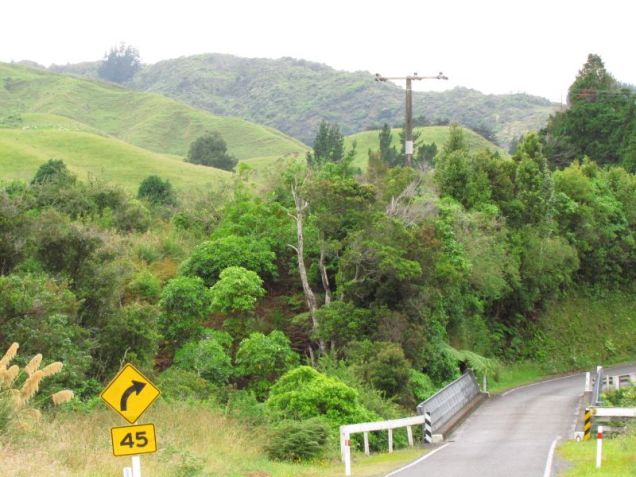 The bridge was closed in about 1980 when the new bridge was constructed [see photo above]. Today the road bypasses the bridge, and crosses the Ngatiawa River 100 metres upstream where there is a modern concrete bridge. (Photos: C. Knight.)
See also: Views of Kapiti 8: the kahikatea of Ngatiawa; Views of Kapiti 6 – Reikorangi farmscape
Sources/further reading: Waikanae – Past & Present (1988), by Chris and Joan Maclean. Historic Bridges Report for the Wellington Region (2010) (available online).

 envirohistory NZ