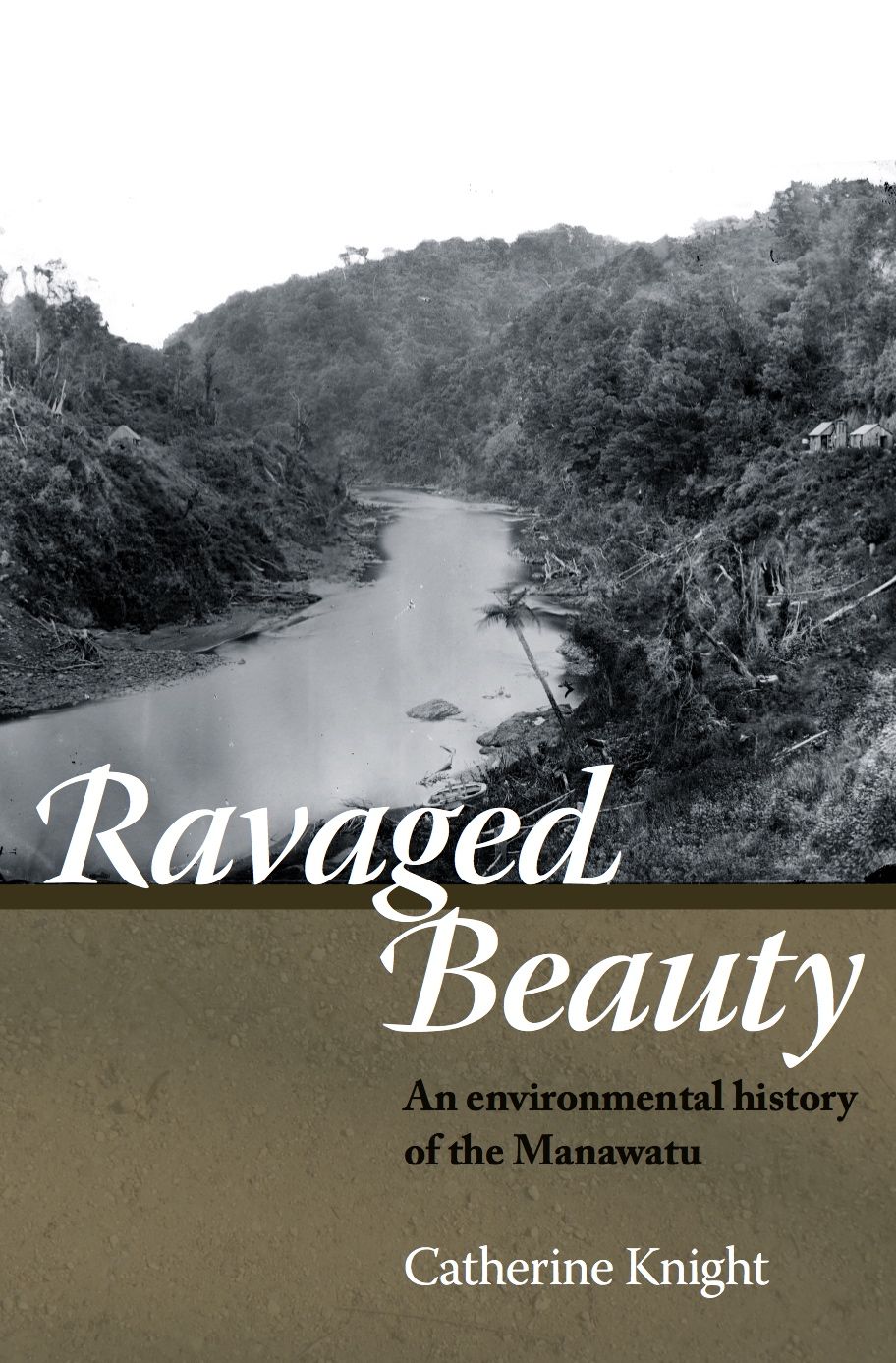
Readers familiar with my first book, Ravaged Beauty, will know that I was born and grew up in Palmerston North. This book traced the environmental history of the Manawatu region from geological origins through to today. So really, I should have known a bit more about the origins of my hometown’s name.
Palmerston North – and the South Island’s Palmerston – was named in honour of Viscount (or Lord) Palmerston, Prime Minister of the United Kingdom (twice) between 1855 and 1865. His real name was Henry John Temple; Viscount Palmerston was his ‘peerage’ name, after the town in Ireland ‘Palmerstown’. (A peer is someone who holds one or more titles of nobility – duke, marquess, earl, viscount, baron – inherited from an ancestor or bestowed upon him by the monarch.)
So far, so … dull…
But anyone with Irish heritage (or just a sense of common humanity) will likely shudder to know that Viscount Palmerston was culpable for the suffering and death of hundreds of starving, sick and destitute people sent away on the notorious ‘coffin ships’ during the Great Irish Famine.
In her 1962 classic ‘The Great Hunger’, British historian Cecil Woodham-Smith describes the indignation of one member of the Canadian government who wrote a furious open letter in protest of the forced emigration of starving and diseased tenant farmers and their families by wealthy English landlords in Ireland.
‘Hordes of half-naked, starving paupers, including aged, infirm, beggars and vagrants had been shipped off to this young and thinly populated country [Canada] without regard to humanity or even to common decency,’ he thundered in his 1847 letter.
Our man, Viscount Palmerston, was singled out as one of the worst offenders. His family owned a huge estate in County Sligo, in northern Ireland. During the famine, in which about one million Irish perished, landlords – most of whom were English – became increasingly ‘inconvenienced’ by the masses of starving and diseased tenants on their land. The British government, which believed strongly in non-intervention of the state (laissez-faire) wanted landlords to help provide relief to the starving masses. But this was an anathema to many of the wealthy landed.
Fortunately, a solution was at hand for these vexed landlords, because this was also a time when British colonisation was at its height. All that was required was a privately-owned vessel that was vaguely seaworthy (though this turned out not to be a stringent criterion either), and a crew willing to make the journey for a bit of cash.
In all, 2,000 tenants and their families were forcibly emigrated by Lord Palmerston from his estates, leaving on vessels from Sligo and Liverpool. One of these ships, arriving in Quebec, carried 477 passengers, 174 of them were almost naked and had to be clothed by charity before they could disembark the ship. One passenger on the brig Richard Watson was completely naked on arrival and had to have a sheet wrapped around her to go ashore.
Most notorious of Lord Palmerston’s ‘coffin ships’ was the Aeolus, which landed at St John, Newfoundland in the brutal winter. The passengers were ‘… almost in a state of nudity… they were widows and helpless young families, decrepit old woman, and men riddled with disease’. The small town was unequipped to deal with the level of hardship and distress, and its officials sent a letter of protest to Lord Palmerston, whose agent responded on his behalf in what Woodham-Smith describes as ‘curiously insolent language’.
The bother of having to respond to peevish complaints from the colonies was a minor inconvenience in the big picture though. The emigrations were a great success from Lord Palmerston’s perspective. By 1849, four years into the famine, the number of people receiving relief on his Sligo estates had dropped to just two percent. Result!
And not only that, he continued to be honoured and celebrated by British colonies, New Zealand among them, his name emblazoned over the maps and signs of not one but two towns in our fair isles.
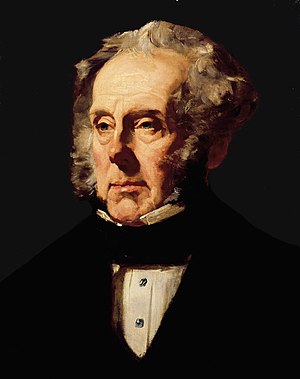
“Jolly good show – getting those dreadful dependents on welfare down to two percent!” (Sounds vaguely familiar …) A portrait Lord Palmerston at the height of his powers.
We might like to think that his cruel legacy – his callous disregard for human suffering fuelled by self-interest and greed – was not known at the time. But this is simply untrue – as so carefully documented by Woodham-Smith – it was called out by his contemporaries. This is sheer, wilful blindness to our own history – and yes, this is our own history because many New Zealanders are such because our Irish ancestors chose to emigrate here – many in the wake of the Great Famine.
So what’s in a name? Quite a lot as it turns out. And in my view, it would be kind of nice if our place names embodied values associated with a common sense of humanity and decency – or at the very least, had some relevance to the history of the place. Because it is useful to remember that – setting aside his inhumane treatment of hundreds of Irish destitute – this chap Lord Palmerston had absolutely no connection with the town of Palmerston North or its southern counterpart, and Palmerston wasn’t even his actual name! At the very least, being more aware of our history – including the origins of place names – might perhaps be a fruitful seed for discussion around what we value as a society in the 21st century.
The origins of the Great Irish Famine and its implications, which still reverberate today, are traversed in my upcoming book An uncommon land.










 envirohistory NZ