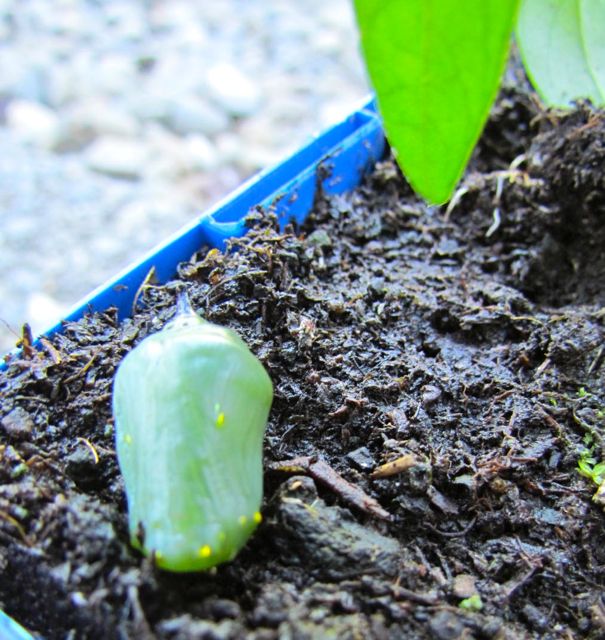
 Since my last post, Little wonders (of nature), I have become even more convinced of nature’s amazing capacity to enrapture and surprise. But, this story begins with sadness. Only a day after writing the last post, our household was visited by misfortune. My son misguidedly picked up the now rather plump Sofia, obviously deciding that she needed some more “contact” time. I sternly advised against doing this again, and taking Sofia, carefully returned her to a leaf. However, she remained in a curled-up position, and kept on falling off the leaf. I returned her to a leaf a couple of times before giving up, and carefully placed her on the soil in the pot, where I thought she would at least not incur any injury from further falls. My hope was that she would recover, and climb back up the plant to resume munching. Continue reading
New Zealand

Little wonders (of nature)
 This was going to be a story about the introduction of a small exotic species by European settlers to New Zealand, and the possible motivations for it (since this species provides no economic benefits, as a honey bee or a sheep does, for example). However, somewhat inconveniently, I have been thwarted from doing so – by the facts!
The little creature I am talking about is the monarch butterfly (kahuku in Maori), which apparently reached New Zealand shores – not by human hand – but of its own accord, about 100 years ago. This is tremendous achievement given its size, and the distance from its native homeland, North America. Continue reading
Share this:

Land slips, Kenneth Cumberland, & bitter irony
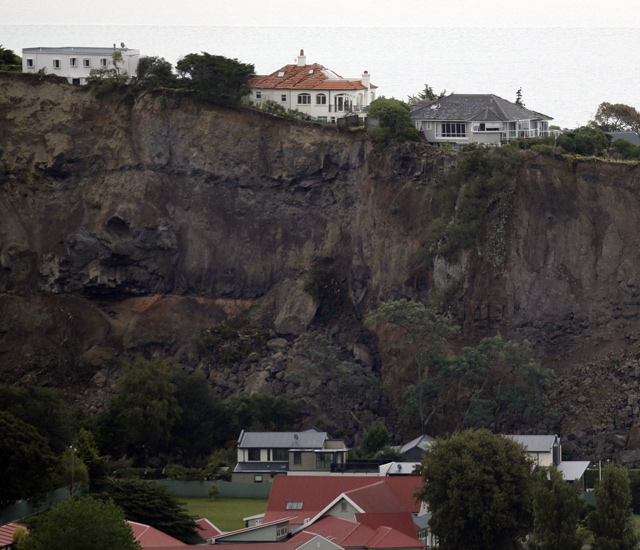 In 1944, Kenneth Cumberland, a recently emigrated British geographer published Soil Erosion in New Zealand, a geographical survey of what was fast becoming known as the “erosion epidemic”. Refreshingly, Cumberland does not shrink from expressing strong opinions. In the introduction to his book, he writes:
[New Zealand’s] cultural youth has been characterised to a large extent by the pioneer destruction of the resources of a little known environment…
The people of New Zealand have been reared in the midst of unnecessary losses of soil and become so accustomed to their presence as to take little heed of them. They often come to consider soil erosion as a “normal”, unavoidable occurrence…
Share this:

Environmental histories of New Zealand – Making a New Land
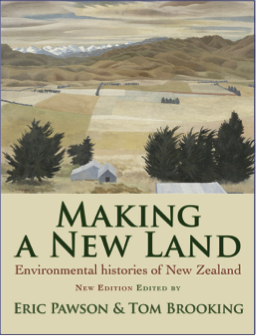 A new edition of the New Zealand environmental history classic, Environmental Histories of New Zealand, is out this month. Entitled Making a New Land, it has six new chapters with the existing ones revised. (You can read more about the book here.) I have put my order in for my copy already (and for my local library too).
This book (well, not this exact one – I haven’t got it yet!) is close to my heart. I discovered it when I was writing my Masters thesis about the Japanese treatment of nature through history (see publications page – it’s near the bottom). Continue reading
Share this:

What’s in a title? Your ideas please!
It’s been a bit quiet on the blogging front lately, as I have been busy getting as much writing done on my book as I can before the Claude McCarthy Fellowship I was so fortunate to receive finishes. The book examines the environmental history of the Manawatu Region, in the lower North Island of New Zealand, from pre-history through to today (see: Manawatu’s environmental past to be documented), and I have been working on it (between work, family and life) for a couple of years now. (See: A racy title is one thing, but what’s the book actually about? for a synopsis of the book.)
Making progress on writing has been further challenged by the arrival earlier this year of our baby girl, Caitlyn. Caitlyn is known to make her feelings very clear when I spend too much time staring at the screen of my laptop, rather than gazing at/playing with/talking to her. Continue reading
Share this:

The “turbulent” history of wind farms in the Manawatu
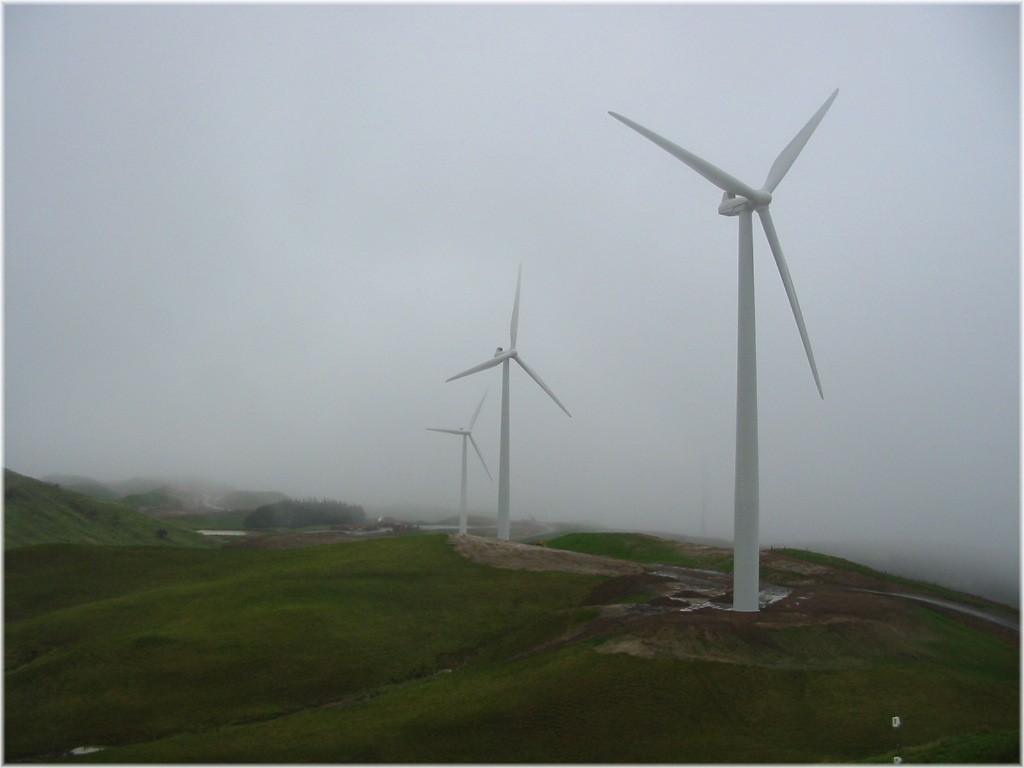
One of the topics I have been researching for my book documenting the environmental history of the Manawatu Region (see: Manawatu’s environmental past to be documented) are wind farms. This is a fascinating story, not so much because of the wind farms themselves, but in terms of the clear evolution in thinking around wind farms. The contrast between the public response to the early wind farms in the Manawatu and the later ones could not be more dramatic. Continue reading
Share this:

Discovering our own “sacred groves”

When I lived in Japan, I took great pleasure from visiting Shinto shrines. Though I am not a religious person, there was something very spiritual and calming about these places. They were a place of solace and quietude. Shrines were sometimes only very small and simple affairs – often hidden in an unexpected corner of a bustling urban landscape. Continue reading
Share this:

A precious forest remnant of the Taonui basin
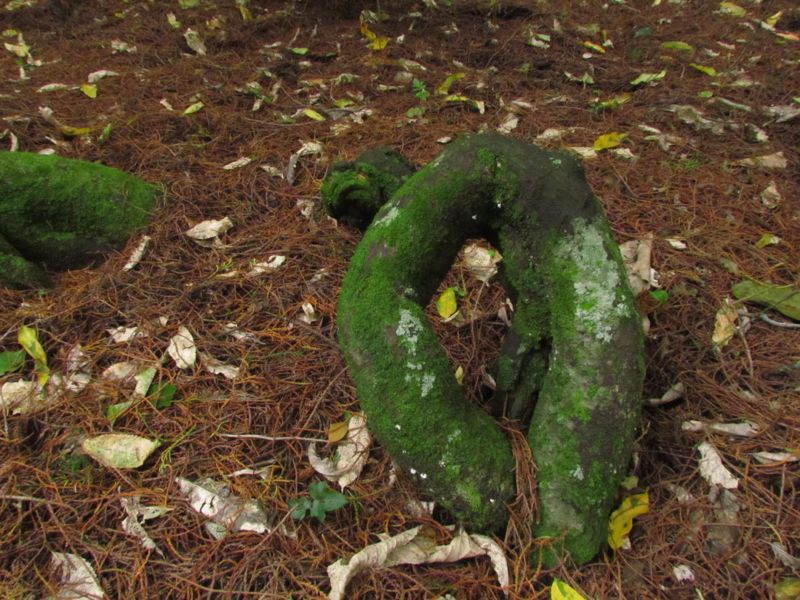 Like intriguing fibrous sculptures emerging out of the forest floor, these are parts of the buttressed roots of a kahikatea, or white pine. Kahikatea is one of the main canopy species of the semi-swamp forest which once grew on the flood plains of the Manawatu and throughout the country [see also: The slaying of our kahikatea forests: how Jurassic giants became butter boxes]. Continue reading
Share this:

More about seasonal change (fungi)
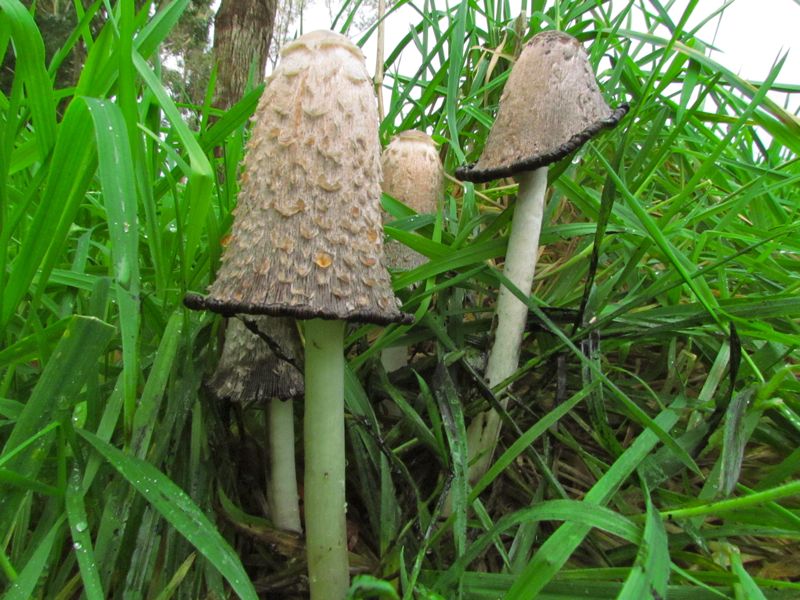 On the subject of seasonal markers, fungi are another sign of the arrival of autumn. Both my four-year old son and I have been delighted by the fungi that seemingly appear overnight under a copse of pine trees near our home. Continue reading
Share this:

The influence of seasons on culture and environmental perceptions
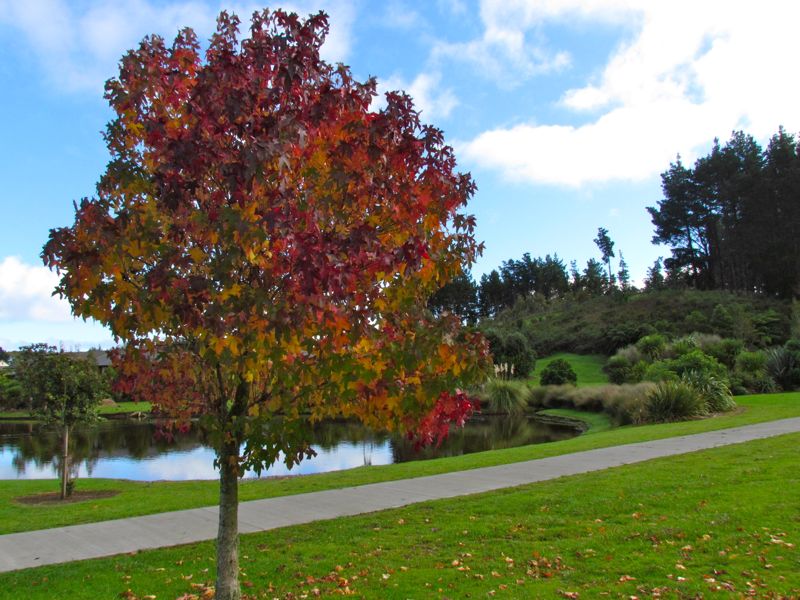
Something that envirohistory NZ‘s northern hemisphere readers may not realise is that in New Zealand’s indigenous landscape there are fewer seasonal markers, particularly on a wider landscape scale. Most of our indigenous forest trees are evergreen rather than deciduous, and few have leaves which change colour with the seasons. Even the flowers of indigenous trees plants tend to be small and rather less showy than their international counterparts.

 envirohistory NZ