envirohistory NZ hits 10,000!

Today, the day before World Environment Day, the envirohistory NZ website got its 10,000th hit. The website – the first of its kind in New Zealand – was launched on November 15 last year, and since then has received attention from over 60 countries around the world.
This is a good opportunity to say a big thank you to all our subscribers, visitors and contributors for your ongoing support.

From cesspits to sewers: a tale of wastewater treatment

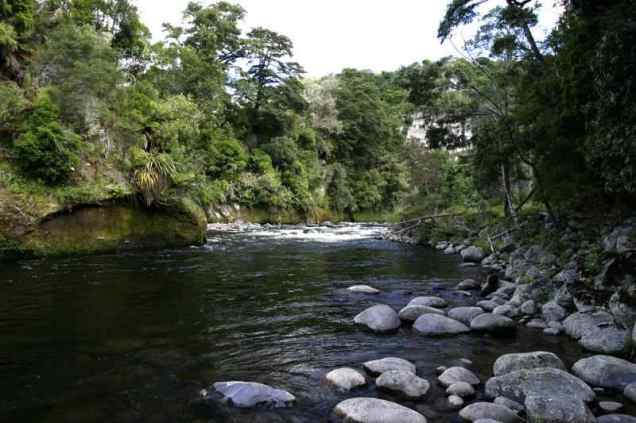
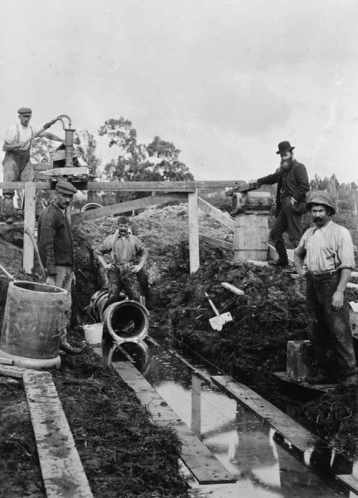
The post on the history of pollution in the Manawatu River has been one of the most popular posts on this website. This post adds to that story with a history of Palmerston North’s sometimes beleaguered sewerage system.

In the 1870s, the early years of the township, there was no sewage network. Instead, households had “long-drops”, while hotels and boarding houses built cesspits to bury “nightsoil”. By 1877, the odour from these was becoming unbearable in some locations, and in 1879, the borough council prohibited the digging of open cesspits, instead creating a ten acre “sanitary reserve” for the burial of nightsoil and household refuse.

Continue reading

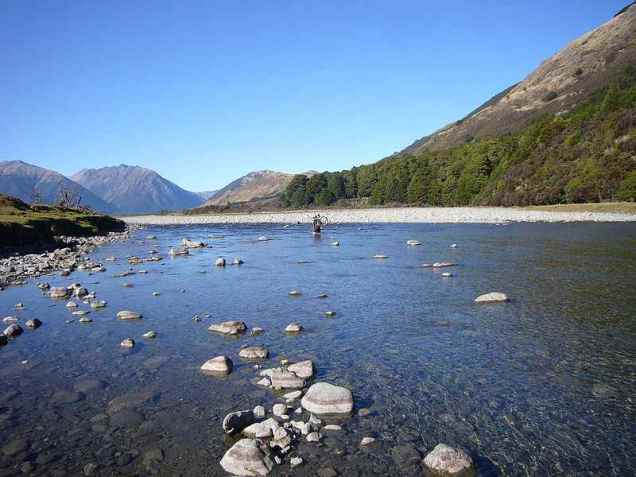
The Hurunui, born in a nest of shale…

I have just finished reading The Water Thieves by Sam Mahon. Sam Mahon is an artist who lives in renovated flour mill in Waikari, North Canterbury. He was recently in the news for his bust of Environment Minister Nick Smith, made entirely of cow dung. The bust was created as part of a campaign to stop the Hurunui River from being dammed for irrigation. Continue reading

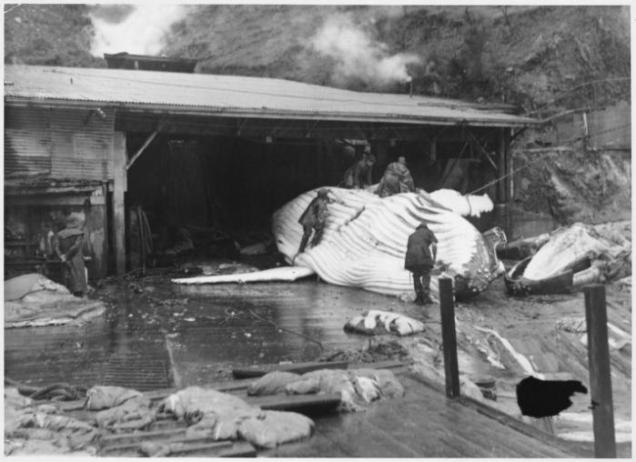
Perano – the last whaling station in New Zealand

Today, we pride ourselves as being a fervently anti-whaling nation.  And while most New Zealanders know that whaling also occurred in our coastal seas and on our shores, many would also assume that whaling in this country ended sometime in the late 19th or early 20th century. In fact, this is not the case – the last whaling station in New Zealand closed down only in 1964. Continue reading

What is natural? – the tussocklands of Otago

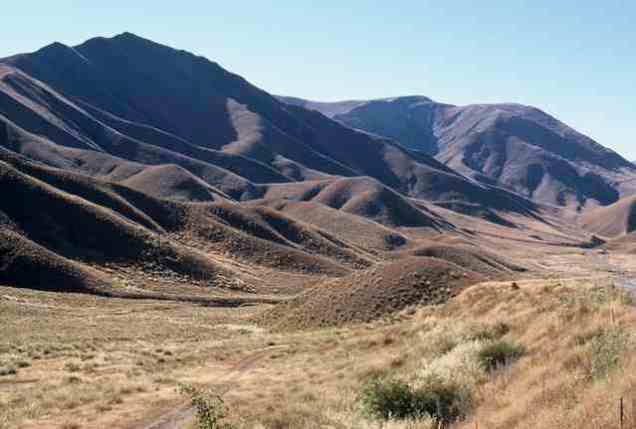
The dramatic tussock-lands of Lindis Pass are one the iconic landscapes of the South Island, and much admired by the traveler on their way from Canterbury to Queenstown or beyond. So iconic has this landscape become, it is hard to believe that while the tussock vegetation is “indigenous”, it is not “natural”. Rather, it is a human-induced landscape.

Lindis Pass is part of an extensive “dryland zone” which extends along much of the eastern part of the South Island [see map below right]. Continue reading

In praise of boys (and intergenerational learning)

This post differs from most of the other posts on this site, in that it is a lot more personal in nature. It acknowledges two very important “men” in my life – my husband, Clive, and my son, Carter.

My husband is the inspiration and the one-man technical support team behind this website. Clive knows how important thinking and communicating about environmental history and related subjects is to me, and felt that this would be an ideal mechanism to enable me to express myself and engage with others on this topic. If it was not for his initial idea, and his ongoing support and encouragement, this site would not exist. Clive is also a school teacher and has been involved in Enviroschools and other initiatives to encourage student learning about the environment through direct experience. Continue reading

The history of WCOs – the “national parks” of our rivers

Water Conservation Orders have been in the news lately, with the passing in March of the Environment Canterbury (Temporary Commissioners and Improved Water Management) Bill, which environmental and recreational groups claim fundamentally undermines Water Conservation Orders (WCO) in Canterbury, by giving the newly appointed ECan Commission the decision-making power on WCO applications, placing a greater emphasis on “sustainable management” rather than protection, and removing the right to appeal the decision (except on points of law).

So, what is the history and origins of the WCO, the so-called “national park” of rivers? Continue reading

The eternal dilemma – development versus preservation

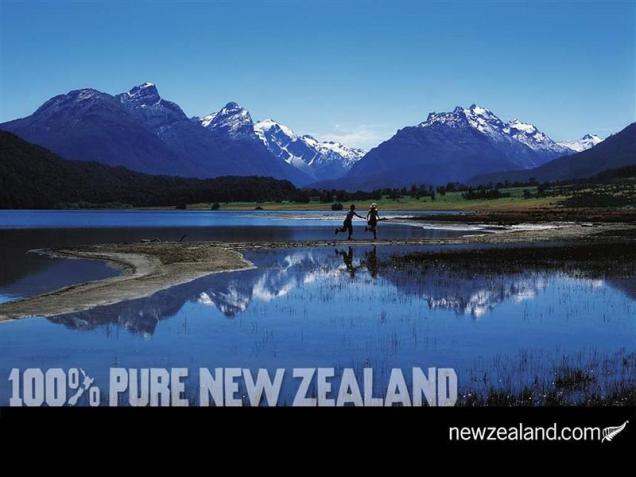
This is the dilemma highlighted in the Economist’s March 23 article “It’s not easy seeming green“, which exposes the ever-widening divide between New Zealand’s projected image of “clean and green” or “100% pure”, and the reality – of a nation, which like any other, is perpetually struggling to find the balance between economic development and preservation of our precious natural heritage. This fissure between projected image and reality has for many become a gaping chasm since the government’s announcement that it is considering opening up high-value conservation land for mining exploration. Continue reading

It’s not easy being green – on being a frog in New Zealand

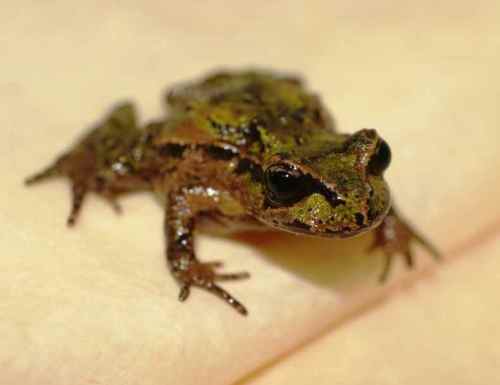
On top of struggling for their own survival, New Zealand’s native frogs have an additional responsibility on their very little shoulders – being a barometer of forest health. Like other frogs around the world, our frogs are barometers of overall environmental health. That is because frogs breath through very sensitive skin and are more susceptible to disease, pollution and environmental changes. A decline in frog populations is usually an early signal of something awry in the environment – and potential threats to other animals, including people. But in New Zealand, three of our four remaining indigenous frogs are forest-dwellers – preferring shady, moist and undisturbed forests. Therefore, they also act as a measure of the health and distribution of our indigenous forest environments. Continue reading

The lawnmower – the great New Zealand love affair

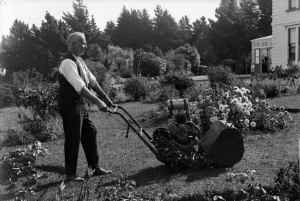
A lawnmower was an indispensable piece of equipment for the New Zealand homeowner for much of the 20th century, and a piece of equipment for which New Zealand men in particular have formed a kind of reluctant affection – perhaps more so than any other country in the world. (Though we as New Zealanders take our lawn for granted, many people in even the developed world have only a court-yard garden at most.) The traditional quarter-acre section, ubiquitous until the 1980s, but now subdivided into near-oblivion, was comprised largely of lawn, and the lawn mower was an essential tool for keeping the lawn (or perhaps more accurately in many cases – grass and weeds) under control. Lawn-mowing was the obligatory weekend task that could not be overlooked – even if Dad (because, lets face it, it was generally his job) was able to avoid the other tasks and sneak off to the rugby/cricket/fishing. Continue reading