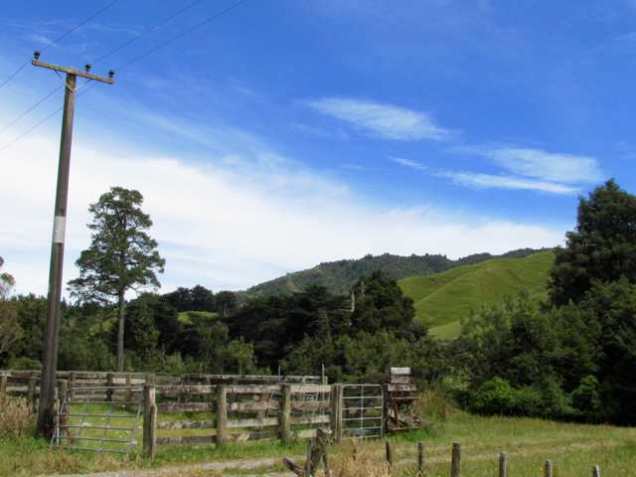
 This landscape was taken from Mangaone South Road, Reikorangi [click here to view map]. Mangaone South Road largely follows the Waikanae River as it makes its way from the western foothills of the Tararua Ranges out to sea. In this shot, pasture-covered hills can be seen in the foreground, while regenerating bush-clad hills can be seen in the background. Continue reading
New Zealand

Turakina – does the Celtic tradition live on in the landscape?
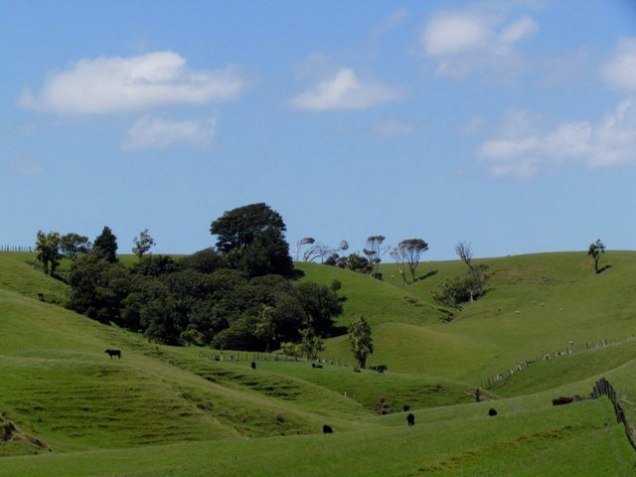 Though I am not entirely sure what it is, there is something about the landscape south of Wanganui that I find quite alluring: perhaps the sculpted curves of the hilly terrain, which is largely pasture, but scattered with clusters of indigenous bush. My attraction to this landscape was explored in another post Drama and history in a southern Wanganui farmscape. This photo was taken just south of the southern Wanganui town of Turakina [click here to view location]. Continue reading
Share this:

Sunset over the channel of the swimming heroine
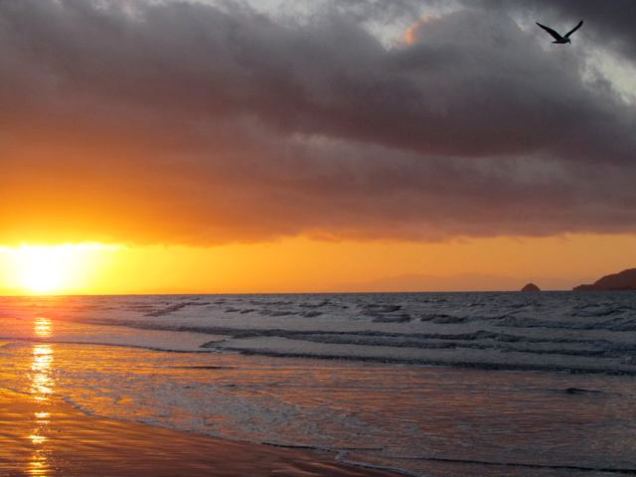 Taken on the penultimate evening of 2010, this is a landscape that has probably changed little over the last few hundred years. This is taken from Waikanae beach [click here to view location], looking south-east over the Rauoterangi Channel, towards Kapiti Island. The small island to the left of Kapiti Island is Tokomapuna Island (or Aeroplane Island). The top of the South Island can be seen faintly in the background. Continue reading
Share this:

Why were stoats and ferrets introduced to New Zealand?
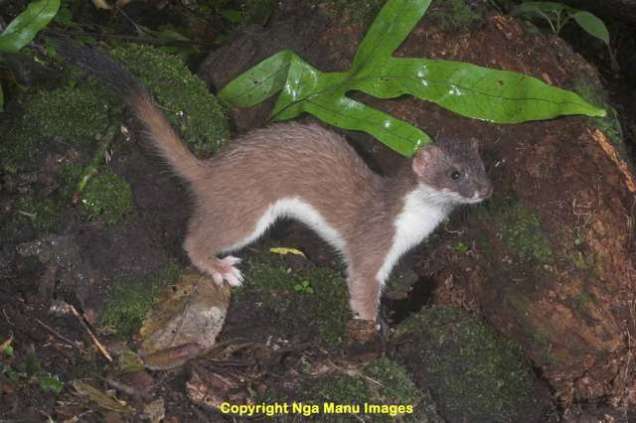 The other day, a colleague of mine asked: “Why were stoats and ferrets introduced into New Zealand? Do you know?”. I put on my best “all-knowing” face, and said “To control rabbits”. But even as I said it, I wavered with uncertainty, because it seemed so preposterous – a bit like the old lady who swallowed the spider (to eat the fly). Continue reading
Share this:

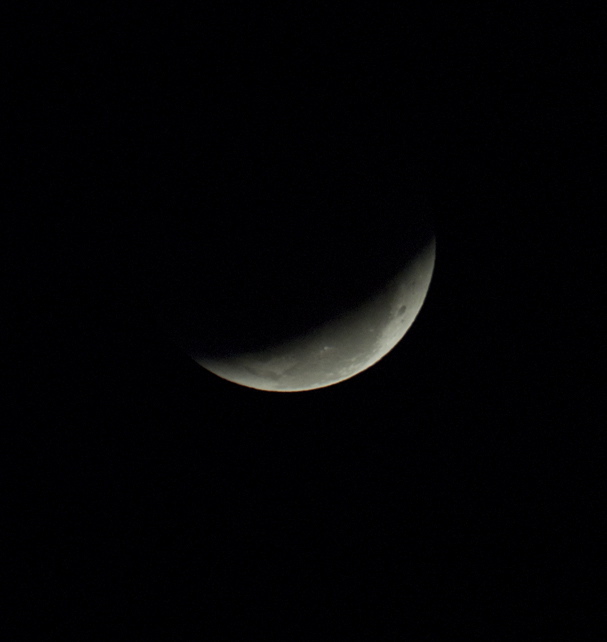
Photos of lunar eclipse from Horowhenua, New Zealand
Like my earlier post with interesting cloud formation photos, this post is not – strictly speaking – about environmental history either, but I expect most readers will not quibble much, because these photos are very cool! Taken from veteran photographer Paul Knight’s back-yard, in Levin, Horowhenua, they capture the moon’s eclipse, which was visible in our skies on 21 December. It was, apparently, the first total lunar eclipse visible in New Zealand in three years. A total lunar eclipse only occurs when there is a full moon. The eclipse coincided with summer solstice – the shortest night/longest day in the year.
Share this:

Vanishing forests: pre-European transformation of the South Island
 When we encounter the extensive tussocklands of the eastern South Island [see below right], it is hard to imagine any other landscape in that place – so much a part of the “natural” New Zealand landscape have they become. Yet, as explored in a previous post What is natural? The tussocklands of Lindis Pass, this is in fact a human-induced landscape; the tussocklands have replaced podocarp and beech forest [see left] that once covered the South Island. However, this occurred long before any written history was established, and this environmental history has had to be pieced together through painstaking paleoenvironmental research.
New ground-breaking research, undertaken by an team of both New Zealand and international scientists, has determined how, to what extent, and over what time-frame large tracts of South Island forest were destroyed. Continue reading
Share this:

Views of Kapiti 4: Maungakotukutuku Valley
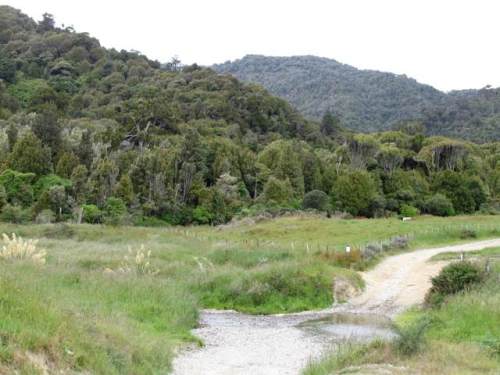 This morning, Carter and I had some time to kill before his first ever appointment with the dental nurse, so we went for a drive up Maungakotukutuku Road,* south-east of Paraparaumu [click here to view location]. This is narrow, windy road, best taken very slowly and carefully (especially in a Kia Picanto!), so it was a good time of day to explore it. The low cloud and light, misty rain added to the sense of mystery and adventure. Continue reading
Share this:

The role of semi-managed nature in supporting biodiversity
 Hot off the press today is Catherine’s article on satoyama, the semi-managed nature in rural Japan, which has been published in the latest issue of Asian Studies Review. The article is highly topical, because satoyama was a prominent theme in this year’s Conference of Parties to the Convention on Biological Diversity, which was just held in Nagoya, Japan last month. Continue reading
Share this:

Discovering environmental history in unexpected places…
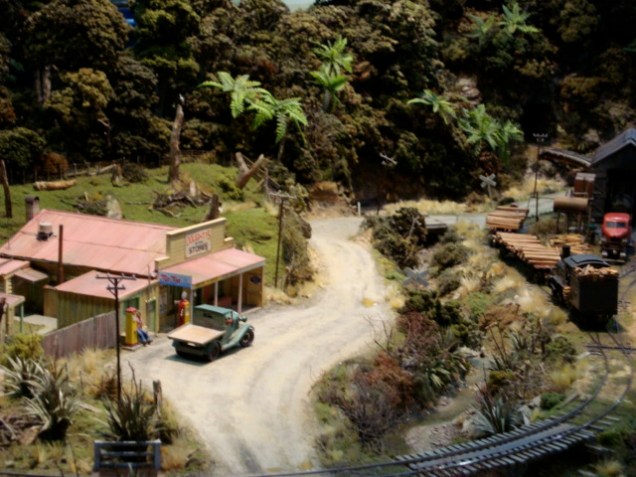
A mother and son outing today was a reminder that environmental history can be discovered in unexpected places. Carter and I went to Wellington this morning to check out the RailEx Model Train Show. As soon as he entered the expo room, his eyes lit up, in unison with the eyes of all the other little boys (and girls – but mainly boys) who ran excitedly from one exhibit to another. Continue reading
Share this:

The valley of disappointment
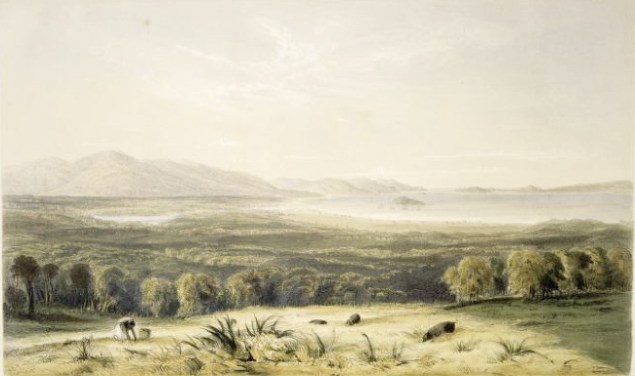 Today, the Petone and Lower Hutt area is an intense conglomeration of industrial, commercial and residential buildings and infrastructure – interconnected by motorways, roads and railways – concentrated within the confines of the sea to the south and the steeply rising hills of the valley to the west and east. Within this landscape of steel, glass, concrete and asphalt, it is hard to believe that only 170 years ago, this was thickly forested floodplain and estuary, rich with teeming birdlife – including the now extinct huia, and the endangered kokako. Continue reading

 envirohistory NZ