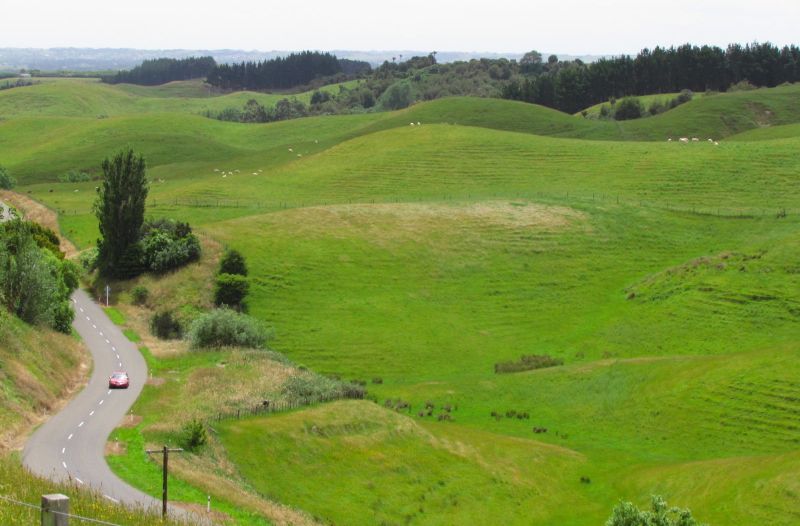
“Rolling hill country” of the Manawatu, a landscape created by fire. Photo: C. Knight
This article, published in the lastest issue of the Journal of New Zealand Studies, examines the role of fire in the opening up of bush country in the region of Manawatu for pastoral farming. Within only a few decades, bush burns had transformed a densely forested environment into one of verdant pasture – leaving only the charred stumps and limbs of incinerated trees as evidence of the dense, impenetrable forest that once harboured moa and other ancient forest creatures. Continue reading →
Yesterday, we ventured out on a photography expedition for my near-complete book exploring the environmental history of the Manawatu. (See:A racy title is one thing, but what’s the book actually about?) Many adventures awaited us, including an amorous kunekune pig and his similarly friendly ostrich companion, residents of a historic farm at Karere.
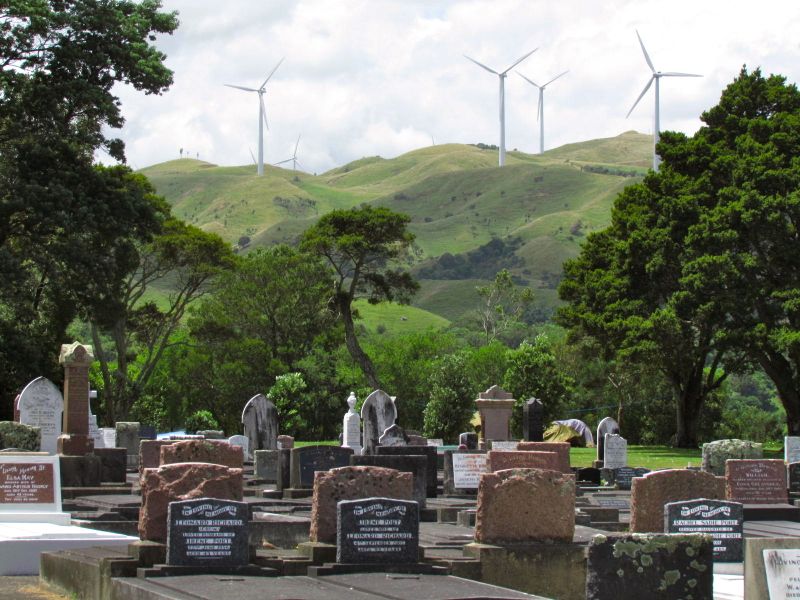
At Ashhurst, I was unable to resist this landscape – a poignant juxtaposition between old and new. Continue reading →
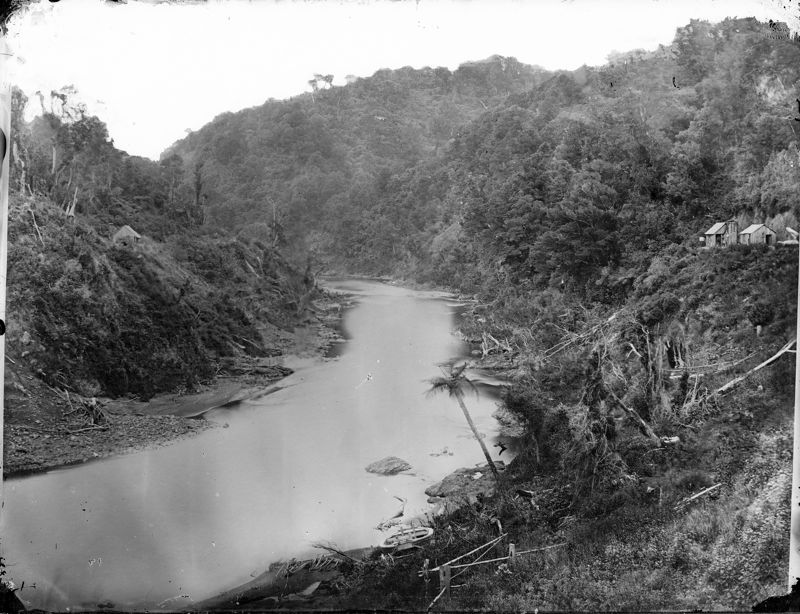
Manawatu River, ca 1870. Note shacks on flanks of the river. Photograph taken by William James Harding 1826-1899. Ref: 1/1-000339-G. Alexander Turnbull Library, Wellington, New Zealand.
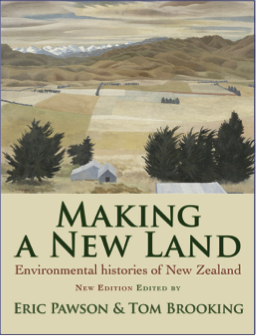
I have been dipping into my recently acquired copy of Making a New Land, the revised edition of Environmental Histories of New Zealand (see: Environmental histories of New Zealand – Making a New Land). In particular, the conclusion really resonates with me:
Environmental history can and should be more than history with nature added in. Continue reading →
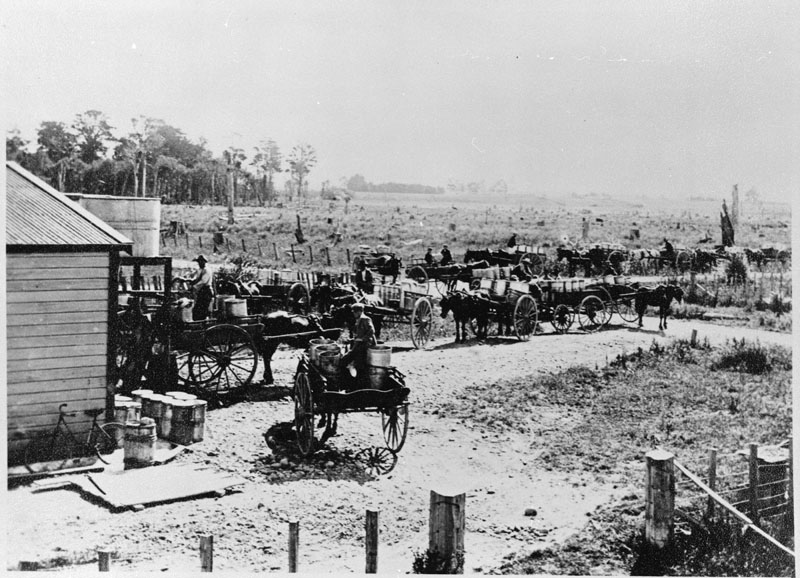
A skimming station on the corner of Roberts’s Line and the Bunnythorpe-Kairanga Road, Manawatu. This photograph shows the long line of carts which was a typical sight at a skimming station in the early years of that century. Source: Palmerston North City Library.
Reading a 1977 paper reviewing farming in the Manawatu, by soil scientist J. Cowie and farming advisor W. Osborn, I was interested to read the following passage:
Dairy farming no longer predominates [in the Manawatu] as it has lost a great number of units in recent years. Twenty-six small dairy companies existed in the billycan and horse and cart days.Continue reading →
A new edition of the New Zealand environmental history classic, Environmental Histories of New Zealand, is out this month. Entitled Making a New Land, it has six new chapters with the existing ones revised. (You can read more about the book here.) I have put my order in for my copy already (and for my local library too).
This book (well, not this exact one – I haven’t got it yet!) is close to my heart. I discovered it when I was writing my Masters thesis about the Japanese treatment of nature through history (see publications page – it’s near the bottom). Continue reading →
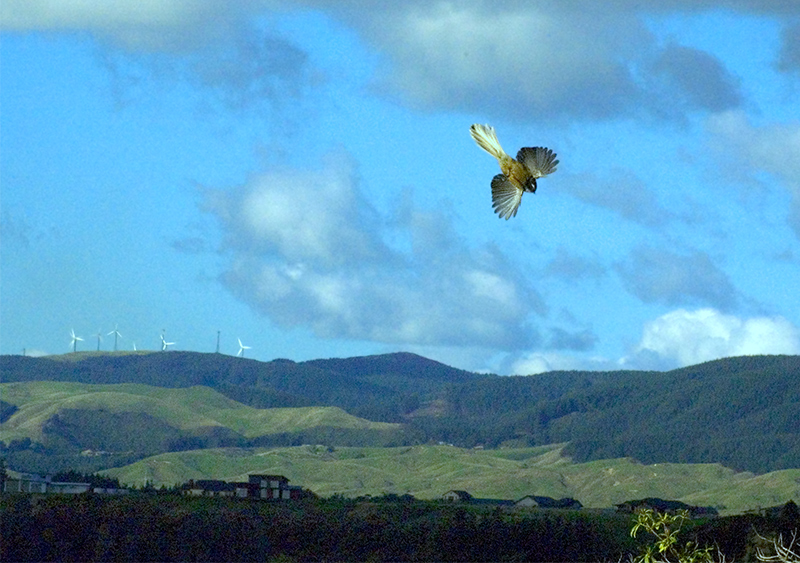
A fantail doing some of the aerial acrobatics it is known for at Anzac Park, Palmerston North. Wind turbines can be seen on the Tararua Ranges in the background. Anzac Park is a significant – but little celebrated – historical site; known as Motu o Poutoa, it was a strategically important Rangitane pa before it was destroyed by an invading tribe. Photo by Paul Knight.
Few today would describe the Manawatū as spectacular or iconic – it is unlikely to adorn a tourist brochure promoting New Zealand. But behind this domesticated landscape is a story of transformation so dramatic that few could even imagine how “wild” – primeval, even – this landscape was only a little more than a century ago. Continue reading →
I am getting super-sophisticated now! I realised that there is a poll function in WordPress, and thought, what better opportunity to try it out! This should make it easy for everyone. And, it also allows you to give me your fantastic ideas. (Feel free to post your comments too.) Please see previous post What’s in a title? Your ideas please! for background.
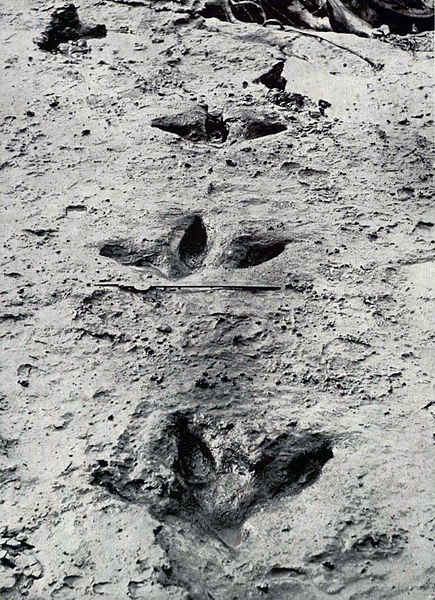
The moa footprints discovered in 1912 on the banks of the Manawatu River. This photograph was included in the report of the discovery, published in the Transactions and Proceedings of the Royal Society of New Zealand.
It’s been a bit quiet on the blogging front lately, as I have been busy getting as much writing done on my book as I can before the Claude McCarthy Fellowship I was so fortunate to receive finishes. The book examines the environmental history of the Manawatu Region, in the lower North Island of New Zealand, from pre-history through to today (see: Manawatu’s environmental past to be documented), and I have been working on it (between work, family and life) for a couple of years now. (See: A racy title is one thing, but what’s the book actually about? for a synopsis of the book.)
Making progress on writing has been further challenged by the arrival earlier this year of our baby girl, Caitlyn. Caitlyn is known to make her feelings very clear when I spend too much time staring at the screen of my laptop, rather than gazing at/playing with/talking to her. Continue reading →
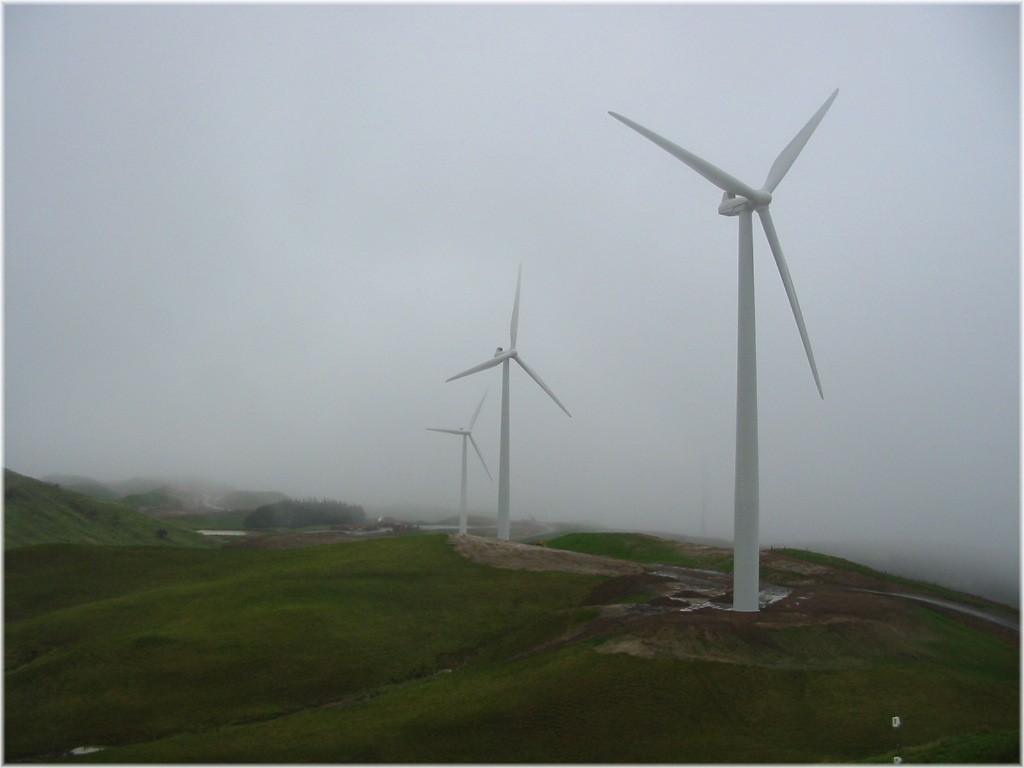
Te Apiti wind farm, near Ashhurst. Photo by Ashhurst.org.
One of the topics I have been researching for my book documenting the environmental history of the Manawatu Region (see: Manawatu’s environmental past to be documented) are wind farms. This is a fascinating story, not so much because of the wind farms themselves, but in terms of the clear evolution in thinking around wind farms. The contrast between the public response to the early wind farms in the Manawatu and the later ones could not be more dramatic. Continue reading →
When I lived in Japan, I took great pleasure from visiting Shinto shrines. Though I am not a religious person, there was something very spiritual and calming about these places. They were a place of solace and quietude. Shrines were sometimes only very small and simple affairs – often hidden in an unexpected corner of a bustling urban landscape. Continue reading →











 envirohistory NZ