Possums “doing good in the bush”

possum
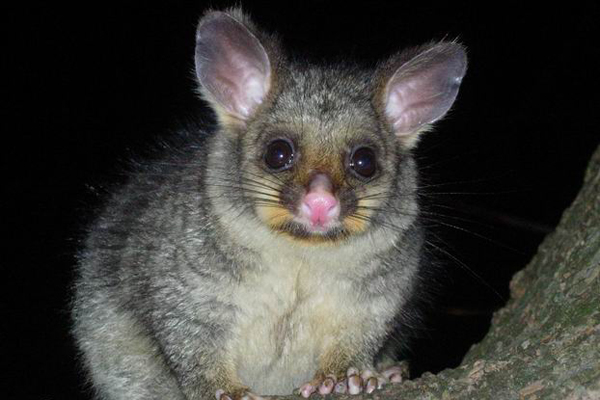
The opossum. A ground berry-eater, that helps build fences!

In a similar vein to my previous post about the little German owl, I found another insightful gem about possums, from the official report of the 15th national conference of acclimatisation societies in 1926:

“The Government had appointed Professor Kirk to inquire into opossums and the Forestry Department had also appointed an independent man. Both had come to the conclusion, namely, that opossums did no damage to Native trees. [The President] knew himself that the boards looking after certain scenic reserves had been able to obtain quite a large revenue from the opossums,* and had been thus able to fence the reserves, so that in that way the opossums were doing good in the bush.” Continue reading

Was the little German owl really a ruthless killer, or was this a case of ‘ecological racism’?

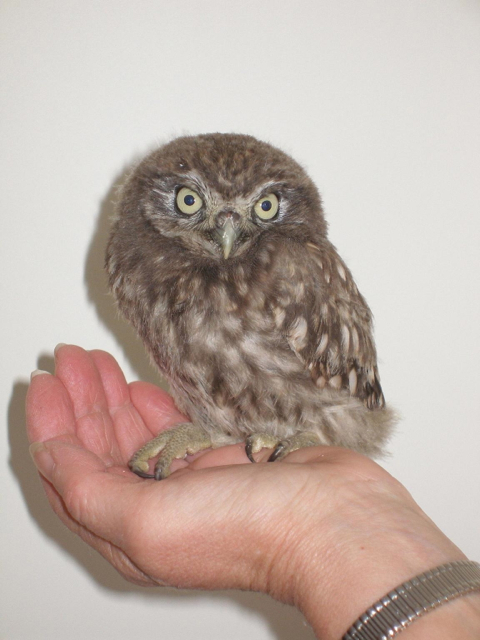
A German owl. Looks pretty harmless to me!

While perusing historical minute books of the New Zealand acclimatisation societies, I came across this gem, from the ‘Presidential address’ at their national conference in 1932:

“The German owl was killing out a tremendous number of native birds, and it should be the duty of the societies to wage war upon it. There was a division of opinion concerning the magpie, which was useful to farmers, but his society considered that only definitely proved killers should be destroyed.” Continue reading

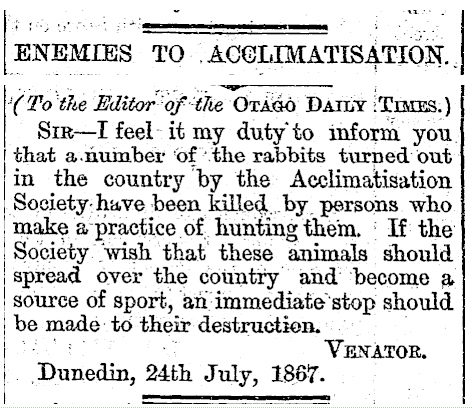
Enemies to acclimatisation

While on a hunt for early accounts of acclimatisation societies in New Zealand, I found this gem – a letter to the editor of the Otago Daily Times in 1867.

Enemies of AcclimatisationHow times have changed!

(And anyone know who a “Venator” is?)

The river as a metaphor

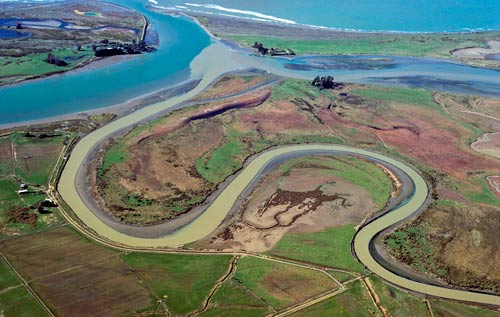
wairau-riverMy call out for poems about New Zealand rivers got an immediate response! Thank you to a certain olive farmer of Awatere Valley, who alerted me to this poem by Eileen Duggan. Certainly one from the “river as a metaphor” file – for love, in this case. The metaphors come thick and fast in this one! Continue reading

Poems about New Zealand rivers

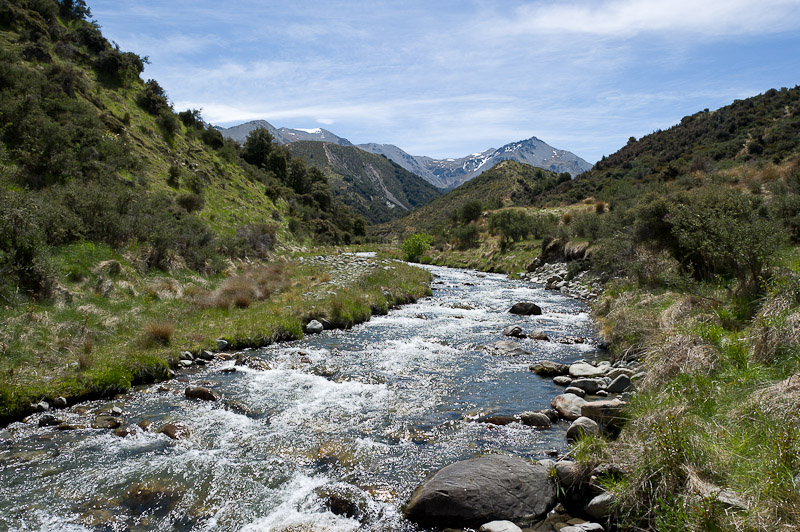
riverI am on a hunt … for poems about New Zealand rivers.

I have found a few by some of our well-known poets:

“The river in you” by Brian Turner

“Rangitikei River song” by Sam Hunt

Clutha V” by Denis Glover

And I am sure there are many others, though I am not sure how to find them, apart from searching through endless anthologies, or asking people much more widely read than I am (hint!). Continue reading

“Birmingham River” – a powerful environmental history in a poem

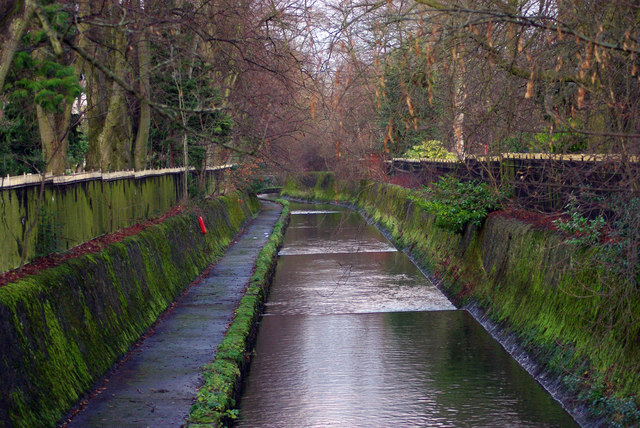
This image courtesy of www.geograph.org.uk, has a caption that reads: The River Rea alongside Cannon Hill Park, Birmingham This section of the Rea is canalised, and has a walkway alongside that nobody uses, people preferring to walk through the park instead.
This image courtesy of http://www.geograph.org.uk, has a caption that reads: The River Rea alongside Cannon Hill Park, Birmingham
This section of the Rea is canalised, and has a walkway alongside that nobody uses, people preferring to walk through the park instead.

In my exploration of different ways of writing about our relationship with the environment, I embarked on a search for poems about rivers. First and foremost, my interest was in poems describing New Zealand rivers, but then I stumbled across a poem by English poet Roy Fisher. Entitled “Birmingham River”, it is the story of the rivers (the River Tame and the River Rea) that run through the highly industrialised city of Birmingham.

This poem is an environmental history. Continue reading

Ikawai: a revelation

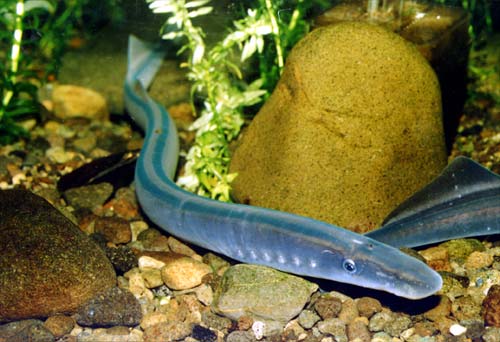
lamphrey
A lamprey or pirahau. Photo by Stephen Moore, Department of Conservation

I came to the world of Ikawai rather late. I had dipped into the hefty 800 page volume some time back. What I read was very interesting, but thinking that it was basically an encyclopedia about fish, I had not ventured much further than the introductory chapters.

Recently, my interest in the impact of acclimatisation on Maori led me back to the book. What a revelation! Well actually a series of them. Continue reading

Wild rivers

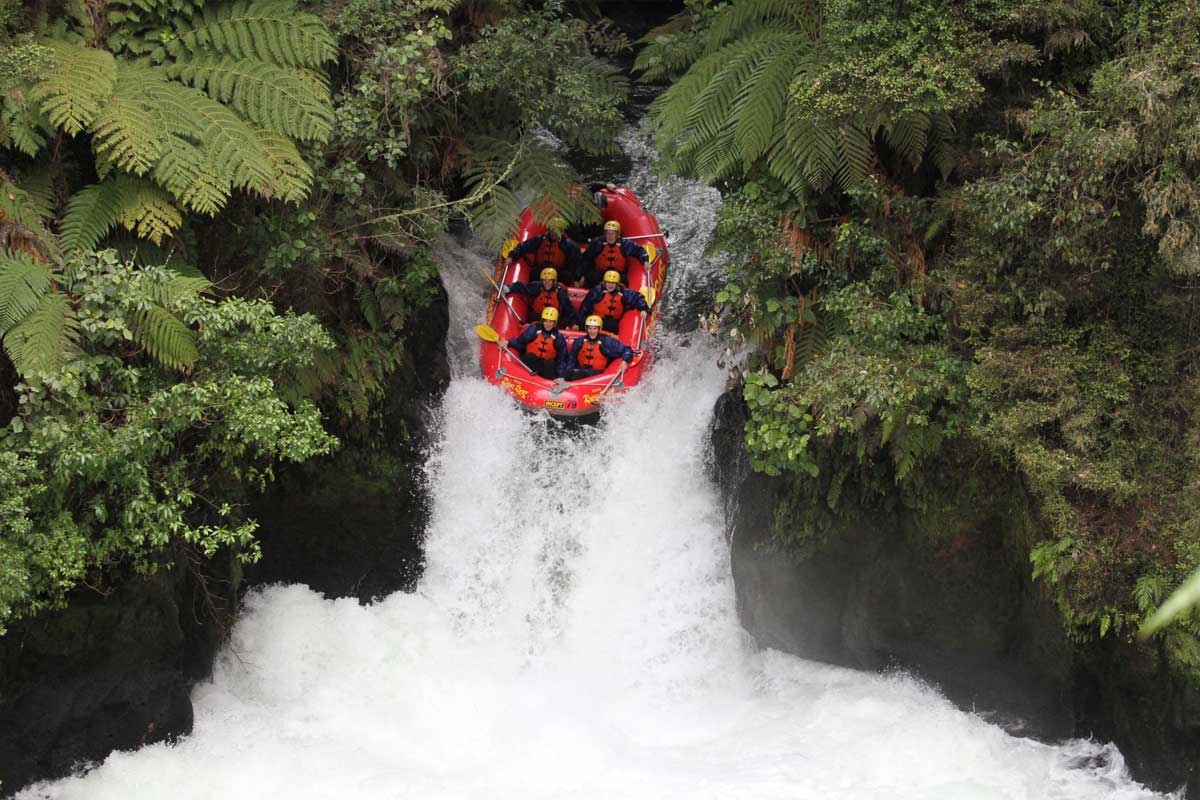
rafting
River rafting. Source: http://www.riverrats.co.nz

I recently had the great pleasure to read John Mackay’s book “Wild rivers”, published in 1978, in which he recounts with remarkable descriptive detail the rafting adventures he and his mates had during the 1970s. He describes adventures on the Upper Buller Gorge, the middle Clarence, the Motu, the Wanganui, and the Karamea – all undertaken on home-made rafts, constructed using inner tyre tubes, timber and ropes, with accessories such as life-jackets either borrowed or improvised. Continue reading

Treasure in a charred survivor

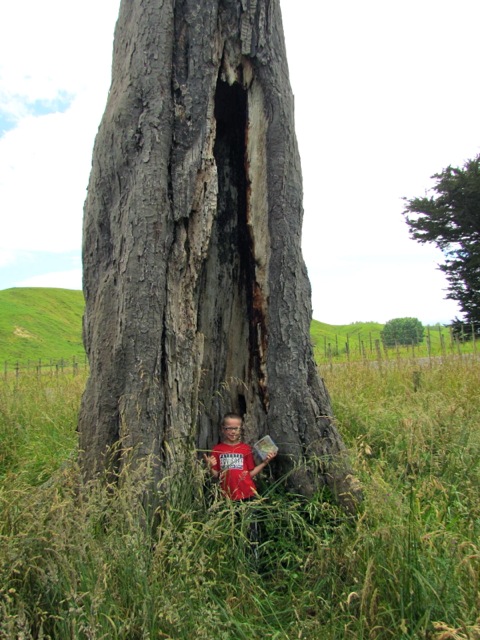
Bruce Park Reserve06
The kahikatea in which the geocache is hidden. Note the brown char marks around cavity.

On our way back from a recent trip to the Ruapehu Mountain district, we stopped at Bruce Park Reserve, near Hunterville. This was a forest reserve that I had read about in David Young’s conservation history of New Zealand Our Islands, Our Selves, and I had long wanted to visit it. To help entice my husband – an avid geocacher – to stop, I declared “there is sure to be a geocache in there!” Somewhat reluctantly, he relented, but his acquiescence paid off, because this turned out to be his favourite geocache of the trip. Continue reading

The story of the “solitary little trout”

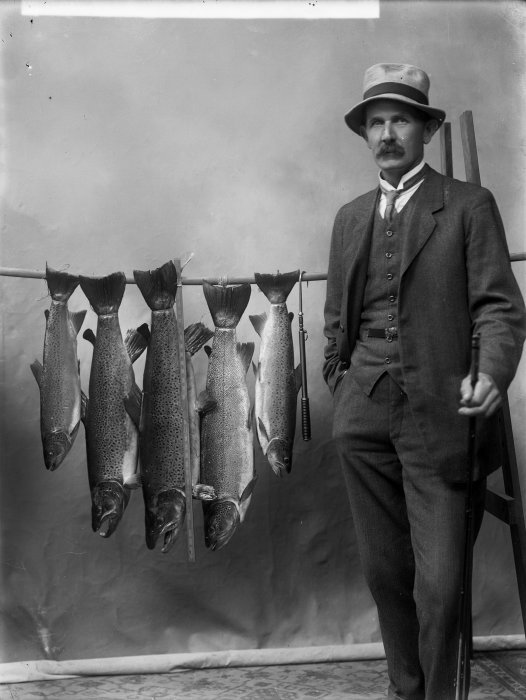
Mr Clark with trout. Ref: 1/1-005184-G. Alexander Turnbull Library, Wellington.

One of the great advantages of the Internet age is that not only is it possible now to find peoples’ PhD theses online, but graduate theses too. In my quest to better understand the acclimatisation of trout and salmon in New Zealand, I came across an honours dissertation by a Canterbury University history student, Jack Kós. Entitled “A most excellent thing”, it documents the introduction of trout to Canterbury in 1867 (the first successful introduction in New Zealand) and the subsequent dissemination of trout throughout New Zealand. Continue reading