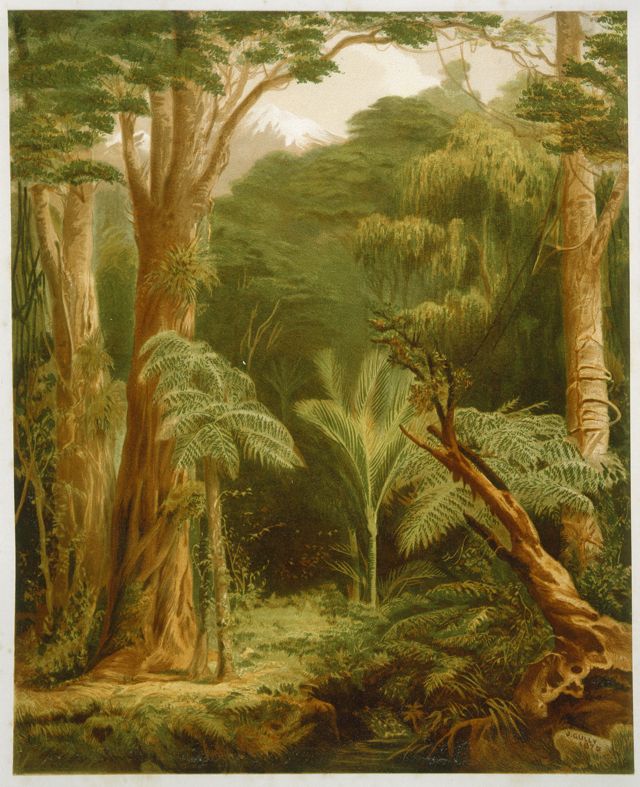
Did European settlers loathe the forest?

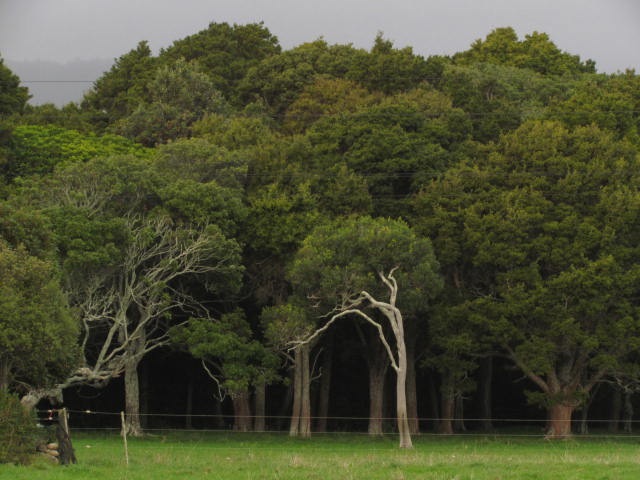
In 1969, geographer Paul Shepard published a monograph entitled “English reaction to the New Zealand landscape before 1850”, in which he explored the various attitudes of English immigrants towards the indigenous landscape, particularly the forest, in this early settlement period. He review of the written accounts by early settlers and observers found that the most prevalent view of the forest was negative: it was described as “dreary”, “dismal”, “gloomy”, and seen as the antithesis of civilization and morality.

Since then, a number of historians and historical geographers have explored this question further, including Jock Phillips in his 1981 paper “Fear and loathing of the New Zealand landscape”, and Paul Star in his 2003 article “New Zealand environmental history: a question of attitudes”. Continue reading

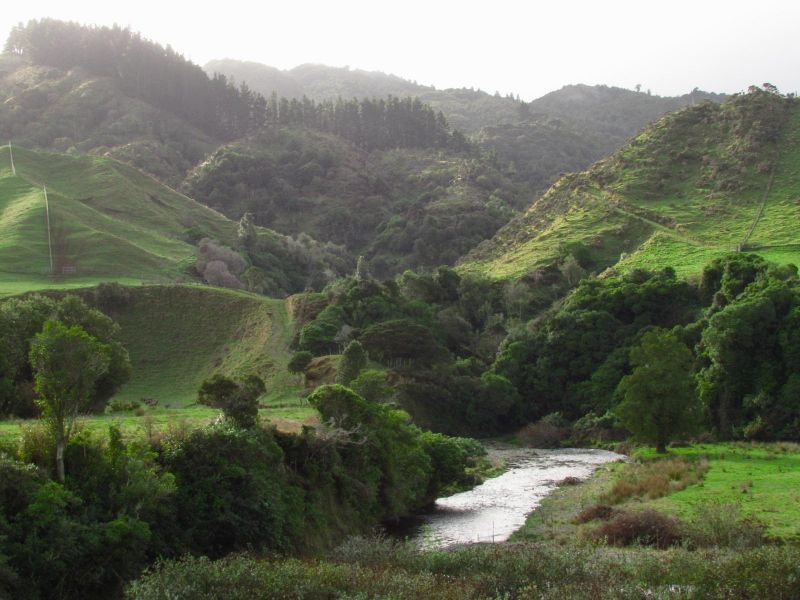
Reikorangi: walking the bush tramway (into the past … and future?)

My son (3 and a half) requested that we go for a drive this afternoon. I asked where he would like to go, and he said he would like to walk in the forest. (Truly his mother’s son!)

So, we headed into Reikorangi Valley and followed Mangaone South Road, where the southern end of the Mangaone Walkway is accessed. The last time we had explored this track (when my son was about two), we only got as far as the swing bridge (50 metres in), before becoming ensconced by the river, experimenting with the myriad different ways stones can be thrown into the water (<– irony). So no actual bush-walking was undertaken on that occasion. Continue reading

Totaranui: the many totara of Te Horo

In the last post, The “Hautere Turnips” of Te Horo, the origin and history of the stone walls, cairns and piles characteristic of this area was discussed. Another unusual feature of Te Horo is the large number of totara groves that can be seen in the fields. Continue reading

The “Hautere Turnips” of Te Horo

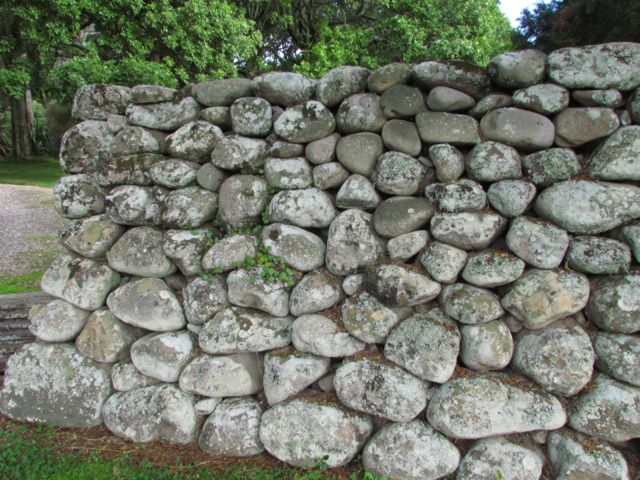
Driving through Te Horo recently, on the Kapiti Coast, I was fascinated by the number of stone walls, stone cairns, and stone piles evident in the locality – more reminiscent of my image of the English countryside, than of typical rural New Zealand. I sensed there must be a story there, and I was not disappointed. Continue reading

Prehistoric revelations of a Manawatu flood

When surveyors laid out the Manawatu town of Palmerston North, they were a little optimistic.

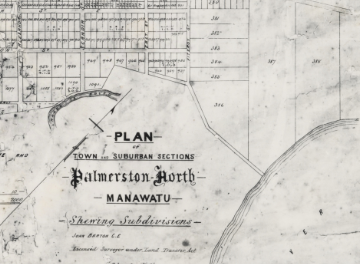
An 1878 [see left] and later 1895 survey map shows sections in the suburbs of Terrace End and low-lying Hokowhitu running right up to – and in some cases beyond – the banks of the meandering Manawatu River. However, the multitude of lagoons in the district showed that the Manawatu River must have flooded, and changed its course, many times throughout the centuries, leaving these “cut-off meander” lagoons as evidence. Continue reading

Volcanoes and farming

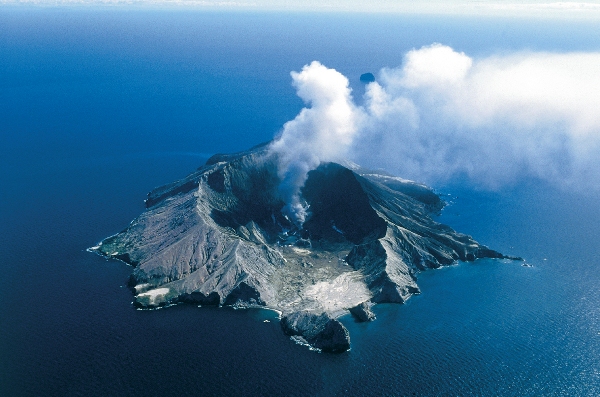
How do volcanoes relate to farming?

The early settler-farmers of New Zealand soon recognized the limitations of the fertility of the land which they farmed, particularly when it came to arable crops such as wheat. In regions such as the Manawatu, the “black soils” of burnt-off bush country at first produced prolific crops, owing to the minerals contained within the ashes of the burnt bush. However, quite rapidly, this fertility declined. Continue reading

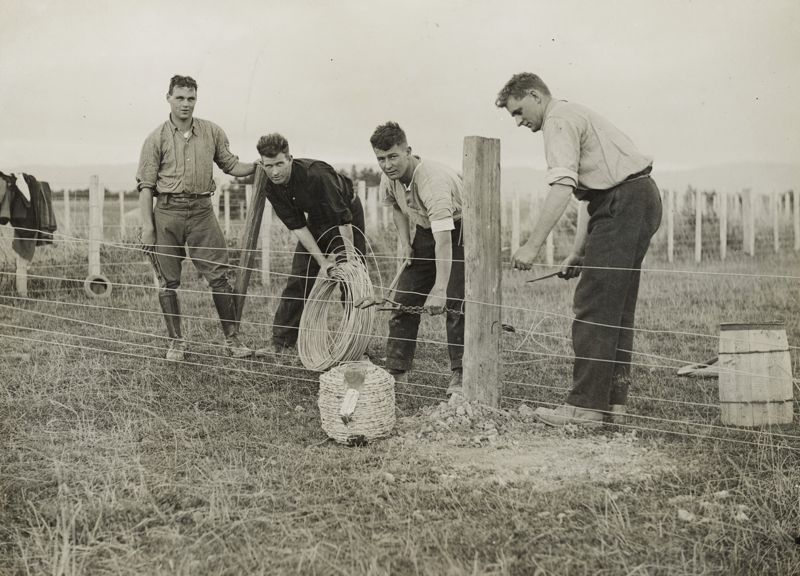
When is a fence not a fence?

I have been reading The Life and Times of Sir James Wilson of Bulls, by L. J. Wild recently. James Wilson, an immigrant from Scotland, was a pioneering sheep farmer in the Rangitikei in the late 1800s.

Reading his diary entries from the days when he was in the early stages of developing of Ngaio Farm, just east of Bulls, it is clear that fencing was a major consideration when establishing a farm – and the types of fences common at that time would not necessarily be familiar to us today. Continue reading

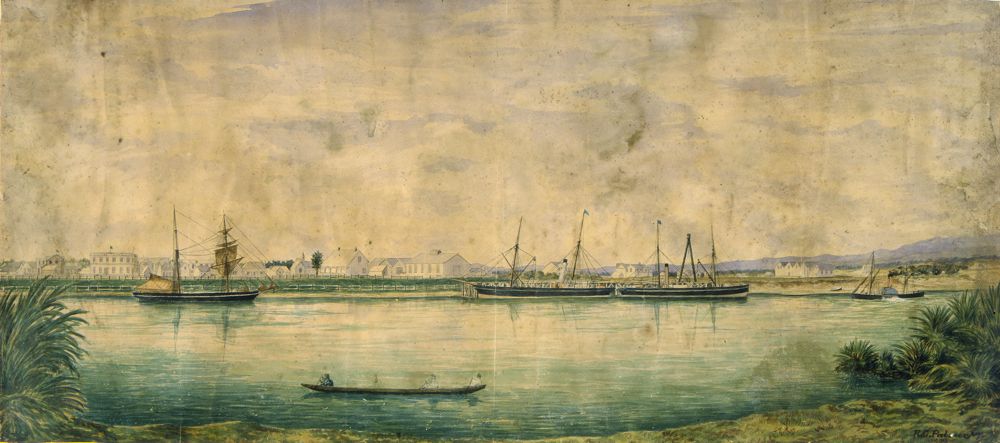
The town that lost its river: the sad story of Piriharakeke

The history and identity of the Horowhenua coastal town of Foxton is intrinsically linked to the Manawatu River. It was once a bustling port town, with ships loaded with flax, timber and other goods travelling down the river and out to markets in Wellington and beyond. While coastal shipping had largely ceased by the early 20th century, the wharf and the river that it served, was an integral part of the town’s identity and economy. Continue reading

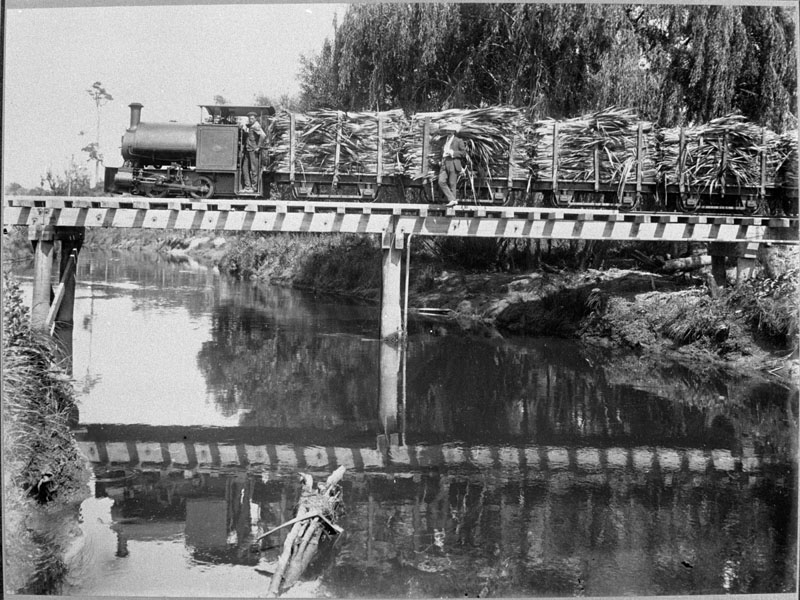
The little engine that couldn’t: the Miranui tramway

The Miranui flaxmill, located in the Makerua swamp just north of the Horowhenua town of Shannon, was once New Zealand’s largest flaxmill. The mill operated from 1907 to 1933, and had 19 mills, operating 42 flax-stripping machines and employing more than 700 workers during the height of the flax industry in 1916-17. Continue reading

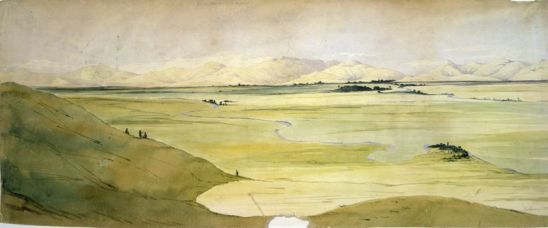
“Doing environmental history” on the Wairau Plain

The Wairau Plain is a triangular-shaped plain which surrounds Blenheim, wedged between mountains and hills to the north and south, and ending with the sea to the east (click here to view map). It was once an extensive swamp, fed by the Wairau River, which originates in the northern ranges of the Southern Alps, and flows north-east into Cloudy Bay, in the Cook Strait. But the swamp has long since been drained, the river controlled to flow in a more “orderly” fashion, and the land turned to agriculture, horticulture and other “productive uses” – most notably, viticulture. Continue reading