Dairy farming: environmental history’s twists & turns

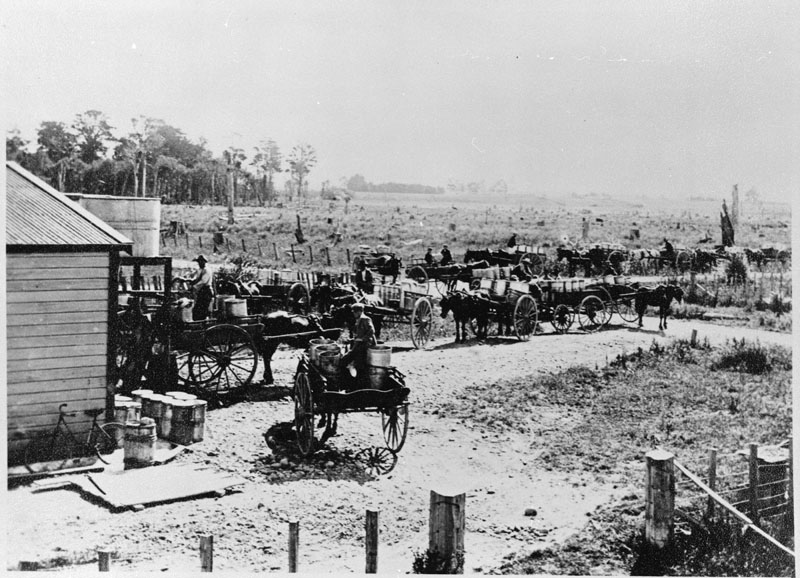
A skimming station on the corner of Roberts’s Line and the Bunnythorpe-Kairanga Road, Manawatu. This photograph shows the long line of carts which was a typical sight at a skimming station in the early years of that century. Source: Palmerston North City Library.

Reading a 1977 paper reviewing farming in the Manawatu, by soil scientist J. Cowie and farming advisor W. Osborn, I was interested to read the following passage:

Dairy farming no longer predominates [in the Manawatu] as it has lost a great number of units in recent years. Twenty-six small dairy companies existed in the billycan and horse and cart days. Continue reading

Sofia and her red biro

Sofia and biro
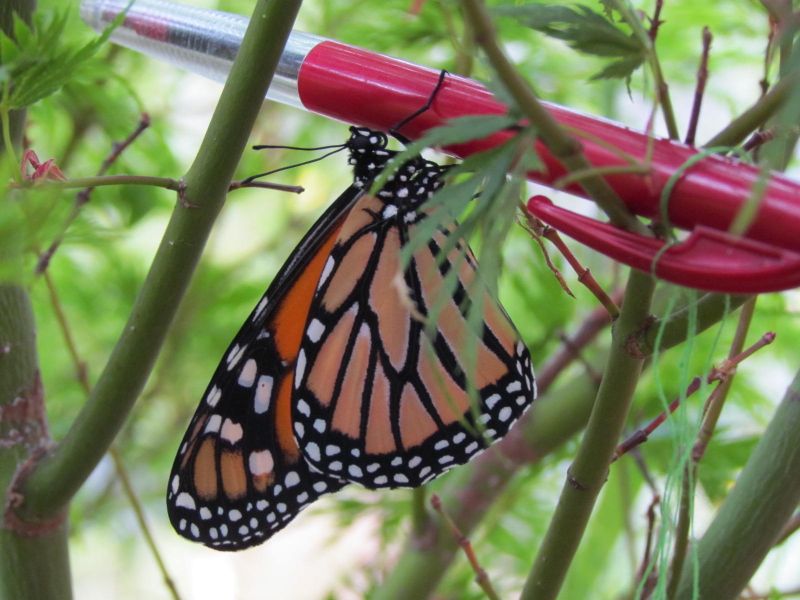
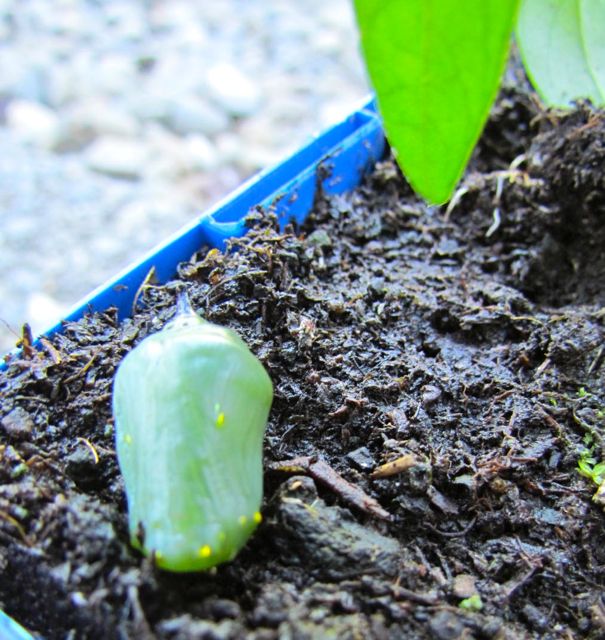
The beautiful Sofia, stretching her wings on the red biro from which she was suspended. She was transferred to this Asian maple tree on the morning of her emergence after the chrysalis became noticeably darker.

Well, readers will be pleased to know that Sofia emerged from her chrysalis, “small but perfectly formed”, right on cue – ten days after she disappeared into her chrysalis (see: Little wonders (of nature) and Nature’s capacity to surprise). Continue reading

Cursed weed or New Zealand’s own Christmas tree?

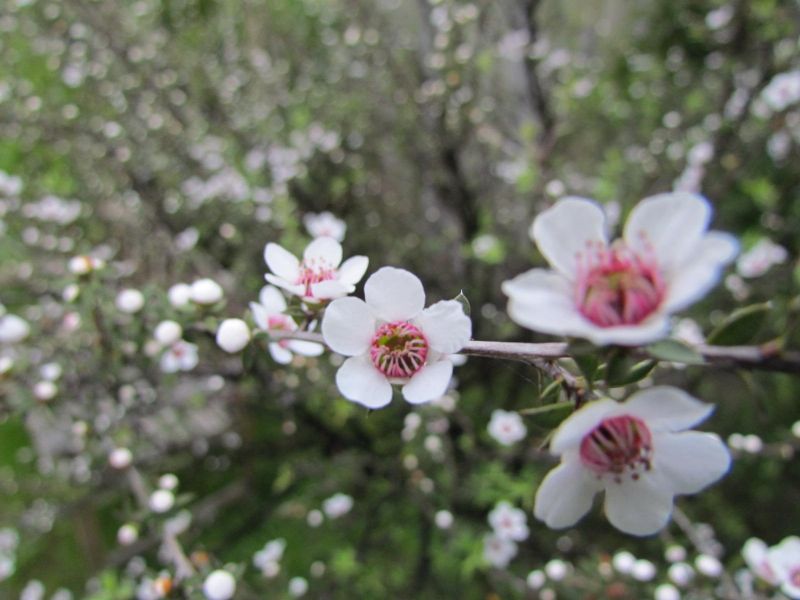
IMG_3810Manuka, along with its indigenous cousin, kanuka, have long been referred to as “scrub” by New Zealanders. “Scrub” is a term which infers something diminutive, including small trees or shrubs, and has a nuance of inferiority. As one of the first species to recolonise an area of cleared bush, manuka has long been viewed with loathing by farmers – its vigour and ability to quickly regenerate made it a cursed “weed”.

But, in our back garden, with its fine needle-like leaves, and covered in a shower of delicate, five-petaled flowers and pearl-like buds, it is reminiscent of snow on a small pine tree. In my mind, it is more than worthy of being New Zealand’s answer to the Christmas tree.

Nauru: a picture says it all

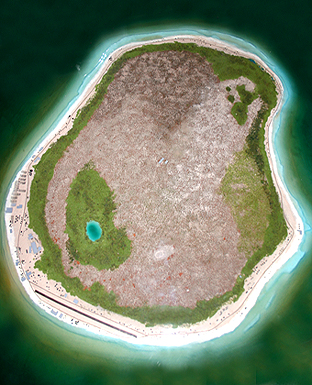
Nauru IslandI was flabbergasted when I found out about this piece of New Zealand’s history. I don’t know what shocked me more: our government’s part in destroying an island and a people’s economy and way of life, or the fact that this history is so little known by  New Zealanders.

New Zealand, along with Britain and Australia, gained the Pacific island of Nauru and its rich phosphate reserves as part of the spoils of the First World War. Continue reading

“Electric landscapes” and other perspectives from Environment & Nature in NZ

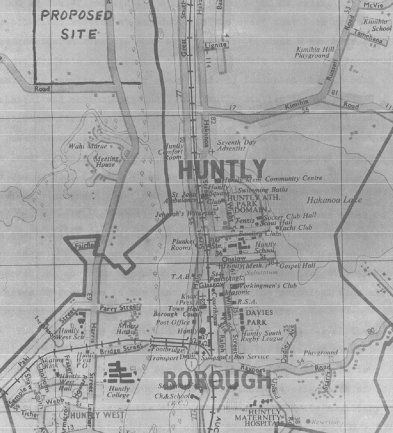
Huntly mapThe latest issue of Environment and Nature in New Zealand is now out, and can be downloaded here.

This issue is replete with interesting articles and reviews:

Jo Whittle, ‘Into the backyard: Huntly Power Station and the history of environmentalism in New Zealand’.

Ian Tyrrell, ‘Review Essay: Bernhard Gissibl, Sabine Höhler and Patrick Kupper (editors), Civilizing Nature: National Parks in Global Historical Perspective’. Continue reading

Nature’s capacity to surprise

IMG_3729Since my last post, Little wonders (of nature), I have become even more convinced of nature’s amazing capacity to enrapture and surprise. But, this story begins with sadness. Only a day after writing the last post, our household was visited by misfortune. My son misguidedly picked up the now rather plump Sofia, obviously deciding that she needed some more “contact” time. I sternly advised against doing this again, and taking Sofia, carefully returned her to a leaf. However, she remained in a curled-up position, and kept on falling off the leaf. I returned her to a leaf a couple of times before giving up, and carefully placed her on the soil in the pot, where I thought she would at least not incur any injury from further falls. My hope was that she would recover, and climb back up the plant to resume munching. Continue reading

Little wonders (of nature)

IMG_3685This was going to be a story about the introduction of a small exotic species by European settlers to New Zealand, and the possible motivations for it (since this species provides no economic benefits, as a honey bee or a sheep does, for example). However, somewhat inconveniently, I have been thwarted from doing so – by the facts!

The little creature I am talking about is the monarch butterfly (kahuku in Maori), which apparently reached New Zealand shores – not by human hand – but of its own accord, about 100 years ago. This is tremendous achievement given its size, and the distance from its native homeland, North America. Continue reading

Land slips, Kenneth Cumberland, & bitter irony

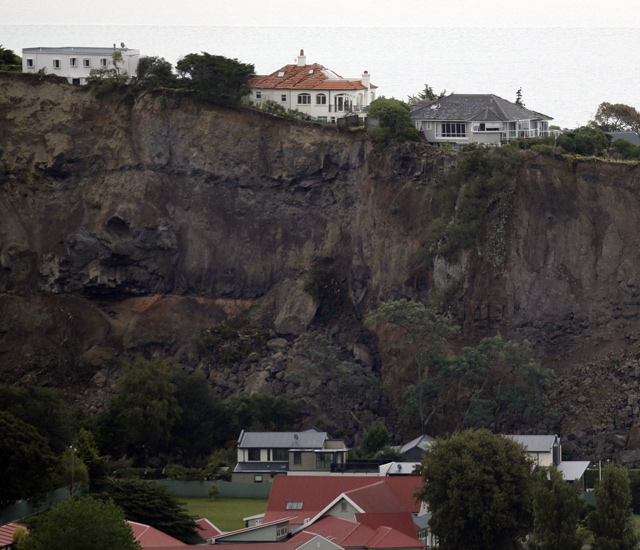
Sumner cliff slideIn 1944, Kenneth Cumberland, a recently emigrated British geographer published Soil Erosion in New Zealand, a geographical survey of what was fast becoming known as the “erosion epidemic”. Refreshingly, Cumberland does not shrink from expressing strong opinions. In the introduction to his book, he writes:

[New Zealand’s] cultural youth has been characterised to a large extent by the pioneer destruction of the resources of a little known environment…

The people of New Zealand have been reared in the midst of unnecessary losses of soil and become so accustomed to their presence as to take little heed of them. They often come to consider soil erosion as a “normal”, unavoidable occurrence…

Continue reading

Environmental histories of New Zealand – Making a New Land

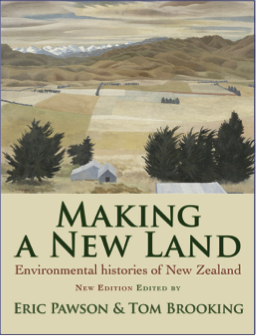
Making a New LandA new edition of the New Zealand environmental history classic, Environmental Histories of New Zealand, is out this month. Entitled Making a New Land, it has six new chapters with the existing ones revised. (You can read more about the book here.) I have put my order in for my copy already (and for my local library too).

This book (well, not this exact one – I haven’t got it yet!) is close to my heart. I discovered it when I was writing my Masters thesis about the Japanese treatment of nature through history (see publications page – it’s near the bottom). Continue reading

A racy title is one thing, but what’s the book actually about?

A fantail doing some of the aerial acrobatics it is known for at Anzac Park, Palmerston North. Wind turbines can be seen on the Tararua Ranges in the background. Anzac Park is a significant – but little celebrated – historical site; known as Motu o Poutoa, it was a strategically important Rangitane pa before it was destroyed by an invading tribe. Photo by Paul Knight.

It occurred to me that readers might want to know more about the book before offering an opinion on a title for it! (See: What’s the best title? Please vote! and What’s in a title? Your ideas please!) So here is a synopsis:

Few today would describe the Manawatū as spectacular or iconic – it is unlikely to adorn a tourist brochure promoting New Zealand. But behind this domesticated landscape is a story of transformation so dramatic that few could even imagine how “wild” – primeval, even – this landscape was only a little more than a century ago. Continue reading