“This sacrifice will bring retribution” – deforestation and its consequences

The following excerpts about deforestation  in New Zealand are from the Evening Post, 29 March 1910. They are just as relevant today as they were 100 years ago.

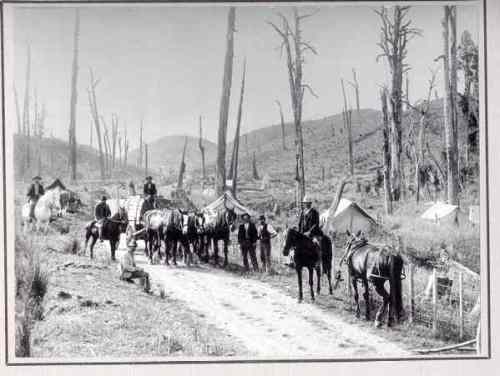
“This sacrifice will bring retribution,” was a recent comment of The Times in relation to the shortsighted Australasian practice of “improving” forest land by wholesale destruction of the native woods. The process is so gradual that it does not impress as it should the resident who sees it year after year going on before his eyes; but there are those who can look back forty or fifty years and recall the aspect of wooded hills, vocal with the song of native birds, now waste and barren, scarred with landslips, not even affording pasture — an eyesore instead of a beauty… Continue reading

We want your contributions!

Everyone has environmental histories to share (for example, see The lawn mower Part 2 – an enduring relationship). These are stories about our interactions with the environment, and the realisations we make from these. For instance, older people in Kapiti have shared how they used to row boats down the Waikanae River as children (but how now, the water is reduced to a trickle for much of the year and any kind of boating activity would prove a challenge). Or, people may remember catching eels or freshwater crayfish in the creek down the back of the farm as a child — a much less common children’s pastime today… Continue reading

Our favourite Californian – the history of Radiata Pine forestry in NZ

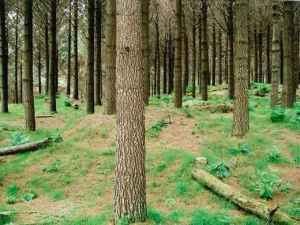
Radiata pine (Pinus radiata, known as Monterey pine in its place of origin, California), makes up nearly 90% of New Zealand’s plantation forest (1.6 million hectares). The pine grows much faster here than its homeland – about 7 times faster than in the US and 20 times faster than in Canada. No wonder then that New Zealand, along with Chile and Australia, are the top growers of this species worldwide. New Zealand also boasts the most extensive plantation forest, dominated by radiata pine, in the southern hemisphere (Kaingaroa Forest [click here for map]). So, how did this pine species become so integral to our landscape and economy? Continue reading

The Canadian connection – Leon MacIntosh Ellis

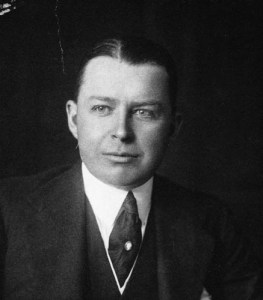
New Zealand’s State Forest Service and the forest management policies it implemented were shaped by its first director, Canadian Leon MacIntosh Ellis. Ellis was a strong proponent of plantation forestry and one of his most noticeable legacies, still very apparent today, is the extensive plantation forests of the central North Island.

Ellis was born on 17 July 1887 in Meaford, Ontario, Canada. He graduated with a BSc (Hons) in forestry from the University of Toronto in 1911. In 1919 he was interviewed for the Director of Forests position in New Zealand’s newly created Forestry Department, and arrived to take up the position the following year. Continue reading

Top 10 posts of 2009

OK, sure, its only been a couple of months, but everyone else has a top 10, so why not us? The post coming in with the top number of hits was Were the Scottish really greener?. The complete list as follows (click on the title to read the post):

1 Were the Scottish really greener?

2 A Kapiti environmental history – Nga Manu

3Destruction of our forests over time

4The mysterious case of the disappearing river

5 The lawn mower Part 2 – an “enduring relationship”

6The lawnmower – the great New Zealand love affair

7A lesson not learnt – Lake Manapouri

8 Why is understanding our environmental history so important?

9 The “grasslands revolution”

10 The ultimate paradox?

The “furry money-spinner” – the history of the possum in New Zealand

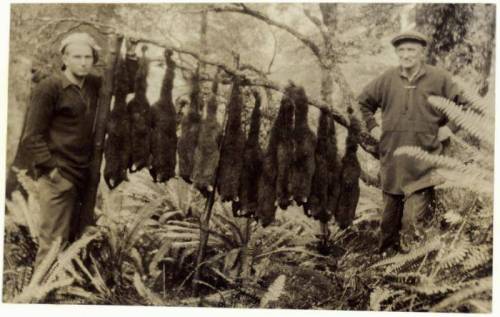
Possums are now estimated to number 70 million in New Zealand, and are acknowledged as a pest that inflicts colossal damage on New Zealand’s indigenous flora and fauna. However, only 100 years ago, they were highly valued and strictly protected.

Possums were introduced to New Zealand with the intention of establishing a fur trade. They were first released in the 1830s, but initially failed to become established. Imports began to taper off after 1900, and until the late 1930s, they were periodically protected as imported game – it was illegal to trap or kill them. As David Young notes, they were regarded by the government as “furry money-spinners” well into the third decade of the 20th century. Continue reading

envirohistory NZ podcast – episode 1 out now!

Episode 1 of the envirohistory NZ podcast series is out now! The envirohistory NZ podcasts are produced bi-monthly (or thereabouts) and are found on the Podcasts page. These podcasts will discuss themes explored in recent articles on the website and will also include interviews with people researching or “making” environmental history. Click on the link below to have a listen!

24 December 09 – Episode 1 – Introducing envirohistory NZ – (09:27 mins)

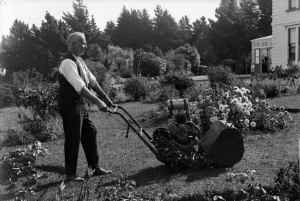
The lawn mower Part 2 – an “enduring relationship”

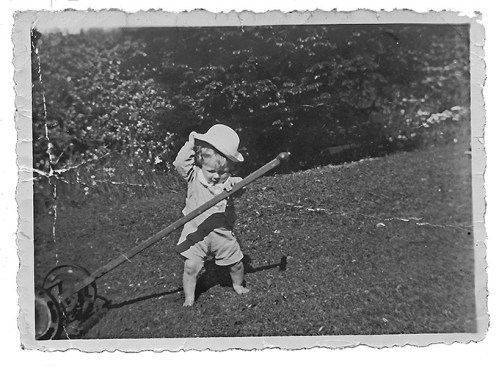
The article on lawn-mowing has drawn a lot of interest, and the following is a contribution from an envirohistory NZ follower, Paul Knight (now 74) who has demonstrated that he has had an enduring association with the lawn mower:

This is a photo of me in 1936, at 14 months, “mowing” the lawns on my grandparents’ one acre property in Pt Chevalier, Auckland. In fact, I did end up with lawn-mowing duties – I mowed gannie and gampie’s lawns from primary school age right through to when I went to university. I used to run there and back from Mt Eden, where I lived. Continue reading

The lawnmower – the great New Zealand love affair

A lawnmower was an indispensable piece of equipment for the New Zealand homeowner for much of the 20th century, and a piece of equipment for which New Zealand men in particular have formed a kind of reluctant affection – perhaps more so than any other country in the world. (Though we as New Zealanders take our lawn for granted, many people in even the developed world have only a court-yard garden at most.) The traditional quarter-acre section, ubiquitous until the 1980s, but now subdivided into near-oblivion, was comprised largely of lawn, and the lawn mower was an essential tool for keeping the lawn (or perhaps more accurately in many cases – grass and weeds) under control. Lawn-mowing was the obligatory weekend task that could not be overlooked – even if Dad (because, lets face it, it was generally his job) was able to avoid the other tasks and sneak off to the rugby/cricket/fishing. Continue reading

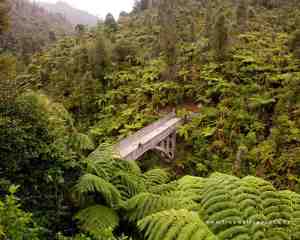
Bridge to nowhere – a battle with nature lost

Not all struggles to tame the land in New Zealand have been successful ones. The failed attempt to settle Mangapurua, (now part of the Whanganui National Park) is a battle that nature won – and the Bridge to Nowhere is a poignant symbol of human defeat.

Under the Discharged Soldiers Settlement Act 1915 and further legislation in 1917, over 10,000 veterans of the First World War were assisted onto land. Some 3,000 of these were settled on Crown land, much of it marginal and remote central North Island land. Over 5,000 veterans took up government loans to buy and develop properties, while others took up leases of Crown land under various forms of tenure.

Mangapurua (click here to view map) was one of the settlements opened up for soldiers returning from the war. The land was infertile, steep and prone to erosion because the bush had been cleared. A slow migration of soldier settlers out of the district began after the 1921 crash in agricultural prices, with the last settlers leaving in 1942. A bridge – known as ‘the bridge to nowhere’ – over the Mangapurua Gorge is one of the few traces of the former settlement. [Source: Te Ara Encyclopedia of New Zealand]

Watch a TV6 video about the Bridge to Nowhere (including spectacular forest scenery) here.