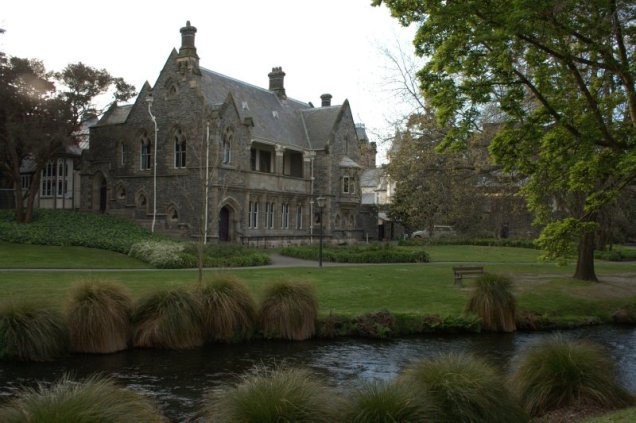
 It is with both horror and immeasurable sadness that I contemplate the tragic consequences of last Tuesday’s massive earthquake on the city that I lived in for 8 years, and which I still regard with immense affection. I cannot even begin to imagine how life must be like for its residents today, especially those who have friends or family who have perished. Continue reading
Author: envirohistory NZ

Tutira: desecration of God’s earth dubbed as improvement?
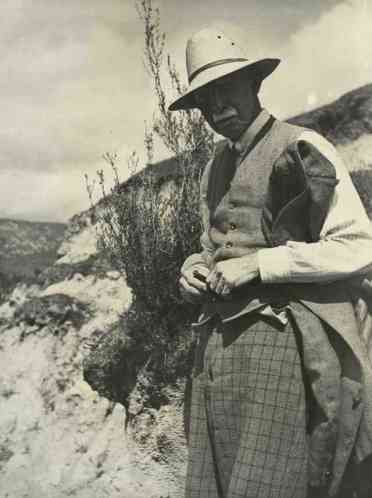 It seems both ironic, yet at the same time intensely appropriate to me that New Zealand’s first major environmental publication was written by a farmer – one of the many who helped to so dramatically transform the land into the landscape we take for granted today.
Tutira: the story of a New Zealand sheep station (1921) was written by William Herbert Guthrie-Smith about his sheep station in the Hawkes Bay [click here to view location]. In particular, he chronicled – with meticulous detail – the way he developed the land, and the implications that these “improvements” had for the ecological, hydrological and geological systems that had functioned within the landscape for thousands of years.
Tutira became an internationally acclaimed classic of ecological writing, and is generally seen as New Zealand’s first major environmentalist publication. Continue reading
Share this:

The Lorax: a timeless environmental parable
 It is strange to me that, long before I associated myself with environmentalism – indeed, long before I even knew what “environmentalism” meant, I loved the story of the Lorax. This is even more strange considering that at six or seven years old, I had no inkling whatsoever of the allegorical brilliance of the story. But I remember vividly the brightly-coloured book cover on my childhood bedroom bookshelf as though it had always been there.
Selfishly however, when my two-year old son reached for the book at bedtime recently, my heart sank. I knew how wordy the Lorax was, compared to say, “The Dancing Tiger” or “Farmer Jim’s Truck” (the latter a remarkable 35 words!), and as it was the third story for the night, I was quite keen to slip away and have a little bit of “down-time” myself. I was also worried that my son might be a little too young to appreciate the story. Continue reading
Share this:

A West Coast odyssey
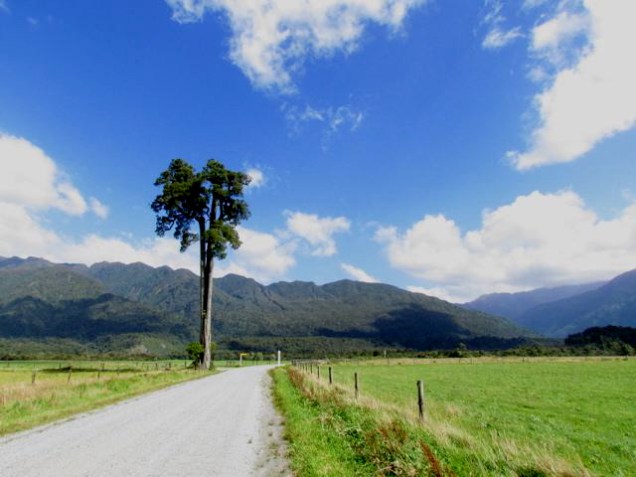 To call it an “odyssey” is, without question, embellishing slightly, given that it was less than a day. But today, I had the great privilege to travel to the West Coast (Hokitika and Greymouth) for work reasons, and although our time there was regrettably brief, I relished every moment of this beautiful, complex and historically rich landscape. [Photo above: A solitary kahikatea standing by the roadside just before the entrance to the Hokitika Gorge Scenic Reserve (click here to view approximate location).] Continue reading
Share this:

Hidden treasure at Otaki Gorge
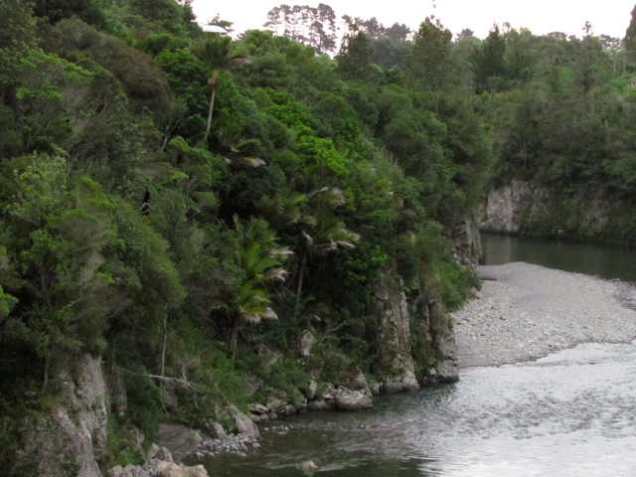 An after-dinner drive today led to a fascinating discovery. My husband and I drove up Otaki Gorge Road [click here to view map], a beautiful scenic road that follows the Otaki River up towards its source in the Tararua Ranges. In many places there are stands of totara which some past landowner with some foresight decided to spare from the scourge of milling and burning that destroyed all trace of most of the other plains forest.* Continue reading
Share this:

Saving our last riverine forest – the era of scenery preservation
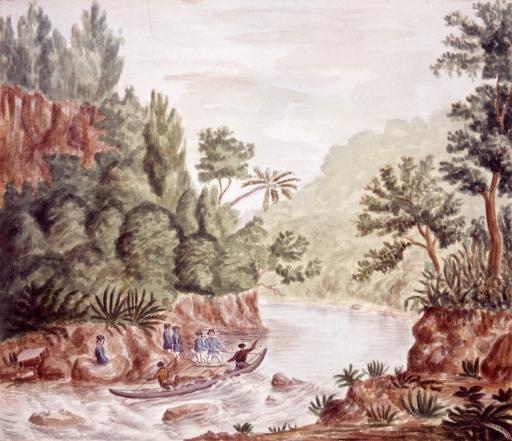 In Nga Uruora – Ecology and History in a New Zealand Landscape (Chapter 3 – “The Riverbend”), Geoff Park tells the history of the riverine forests of Mokau, a river which flows from its source in the forest on the slopes of the Rangitoto Ranges, out to sea at the Taranaki Bight, just north of the boundary between Taranaki and Waikato [click here to view map]. Here is one of the very few places left in the North Island where coastal forest remains intact down to the sea. Continue reading
Share this:

Canterbury Plains: an ecological “ground zero”
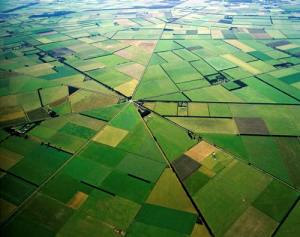 An article in the New Zealand Listener by Rebecca Macfie is entitled “Nature ground zero” and describes an initiative in Canterbury to give “a new lease of life” to “the devastated native flora of the Canterbury Plains” [click here to read article]. The initiative is to identify and encourage the reintroduction of indigenous plant species which provide “ecosystem services” such as the provision of pollen and nectar to attract beneficial insects, improved soil health, weed suppression, the control of pest insects, and greater biodiversity. The project is focused on the Waipara Valley of Northern Canterbury, which is renowned for its vineyards, but has potential to be applied across Canterbury. Continue reading
Share this:

Views of Kapiti 7: Morning mist over Hemi Matenga
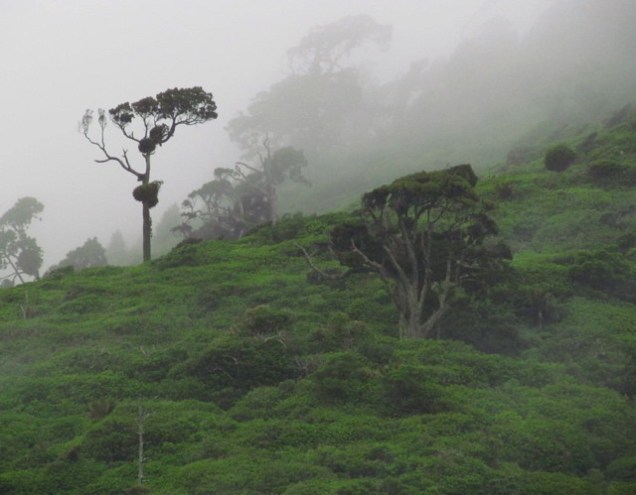 A view of the Hemi Matenga hills, which overlook the town of Waikanae, taken from Elizabeth Street, eastern Waikanae. Low morning cloud shrouds the hills, threatening rain, and creating a sense of drama and mystique. Continue reading
Share this:

Protest on the landscape – Wallaceville, Upper Hutt
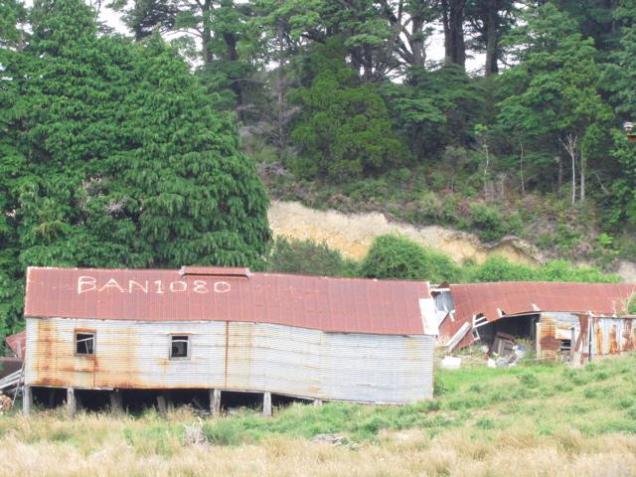 This dilapidated shed, on Wallaceville Road, south of Upper Hutt [click here to view location], has now come to serve a purpose beyond its original one of a wool shed – a protest banner against 1080. Continue reading
Share this:

Akatarawa Valley – last refuge of the huia
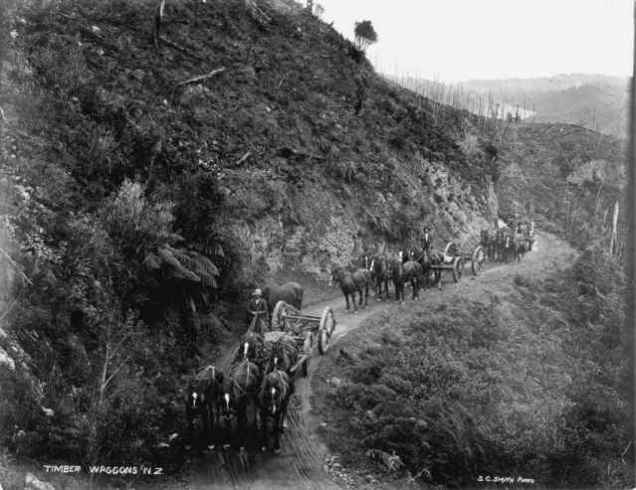 Today, the Akatarawa Road between Waikanae and the Upper Hutt provides a beautiful scenic route through rugged native forest and forestry country, with views across the valley out to sea [click here to view location]. The road largely follows the Akatarawa River, which joins the Hutt River north of Upper Hutt. Continue reading

 envirohistory NZ