Kirkin’ of the Tartan: the Scottish diaspora of Turakina

By David Carnegie Young

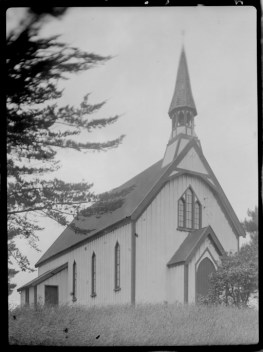
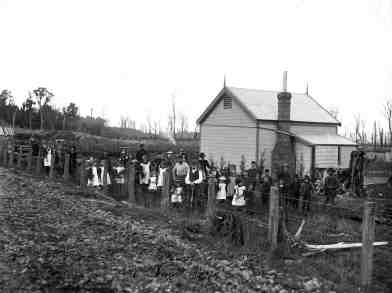
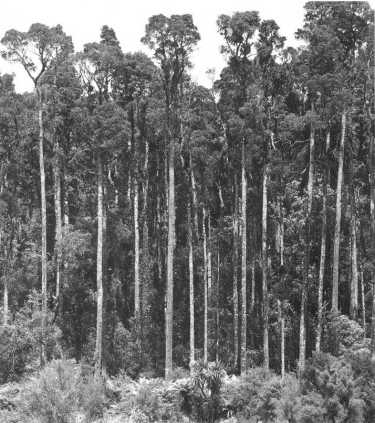
All my life I had driven through the village, the great iron gates to its cemetery and  spreading oaks speaking of a larger, lost past. From the 1950s I’d watched the gradual decline of a place that, long before my life, had been so much more. There was the smithy, whose hanging door I recall one day remained shut, the shops with their arthritic verandas, old houses that became hidden behind brambles as they staggered under the weight of vegetation and age. The village’s human edges greened and frayed until it was little more than a hamlet. Yet its centre survived.

There was still the Ben Nevis pub, Harry Stirling’s old garage, two churches, a graveyard on the hill and a broken necklace of 1860s wayside architecture where wayfarers might stop for a pie or sandwich and even a browse. Continue reading

When is a road a “line”? The curious case of Kairanga County

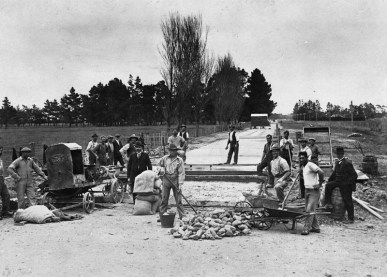
In keeping with the roading theme [see the last post], I have just finished reading The Line of the Road by M.H. Holcroft, a history of the Manawatu County from 1876 to 1976, published in 1977.

The book was published to commemorate 100 years of the Manawatu County Council (as it was at the time). One of the themes which is reflected strongly both in the book and its title, is the importance of roads and roading (and bridges) in the development of the fledgling county – they were critical to the linking of communities, the distribution of goods, food and building and construction materials, and to get people to schools, hospitals and other facilities (where they existed). Continue reading

envirohistory NZ: better and brighter (but without the ads)

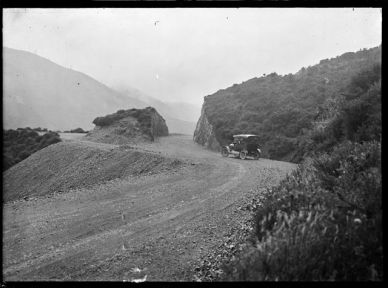
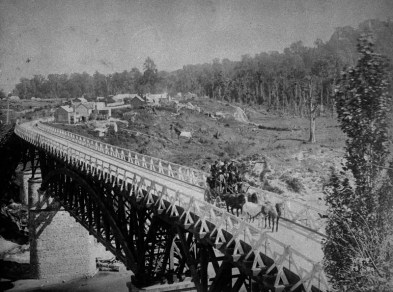
Just like the Rimutaka Road from Wellington to the Wairarapa (pictured), we at envirohistory NZ are always looking for ways to improve ourselves.

The eagle-eyed among you may have spotted a couple of changes, but the other change involves something that you will not see. Continue reading

Wairarapa Moana: a story of dispossession

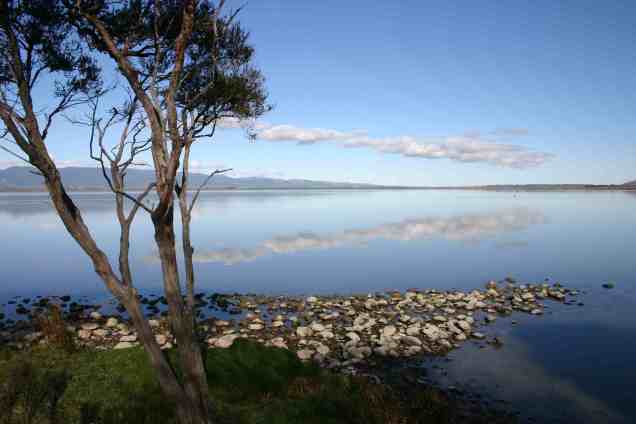
A couple of weeks back, I took the train to the Wairapara. Emerging from the tunnel through the Rimutaka Ranges (which at 8.8 kms is one of the longest train tunnels in New Zealand), the landscape was striking. What impressed me was the sheer scale of the agricultural plains: the indigenous forest that once covered the hills and plains long ago replaced by an orderly patchwork of fields. But a second glance down onto the plains to the east revealed the presence of a large watery expanse: not blue, exactly – more swirls of green and brown – but unmistakably a lake. Continue reading

A history of environmental history in New Zealand

In 2003, Paul Star, an Otago-based environmental historian, published a paper outlining developments in the field of environmental history in New Zealand, how it fits in to the international context, and some thoughts about the areas in which the field would most benefit from further research (“New Zealand Environmental History: A Question of Attitudes”).

It is a great little article, written in Star’s characteristic reader-friendly, jargon-free style, and I would recommend it to anyone with an interest in this field. Continue reading

Manawatu’s environmental past to be documented

envirohistory NZ‘s founder and primary contributor, Catherine Knight, has been awarded a New Zealand History Research Trust Fund Award in History to research the environmental history of the Manawatū. The project, tentatively entitled “Forested hinterland to pastoral province: the environmental transformation of the Manawatū”, will ultimately result in a book. The research will canvass the region’s history from its Māori settlement through to the present day, and will make use not only of historical, archaeological and archival records, but also the latest palaeoenvironmental research. Continue reading

What is forest?

The excellent UK site History and Policy carries a paper by Ben Cowell, written earlier this year, in the wake of the UK government’s proposal to sell off much of the public forest estate. There was a public outcry, which appeared to take the government by surprise. Cowell suggests that had policy-makers been more aware of the history of contestation regarding rights and access to forest, the government would not only have been more prepared, but may also have formulated its proposal differently. Continue reading

Exploring NZ’s environmental history through maps

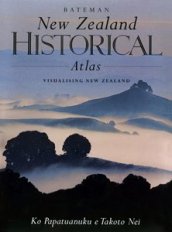
I feel slightly embarrassed to admit this (and therefore perhaps shouldn’t), but I have only recently discovered the cartographic and other visual delights which lie between the sturdy covers of the New Zealand Historical Atlas, published in 1997.

Of course, I had seen it referenced many times in scholarship on New Zealand’s environmental history, but (and this is where my less than favourable encounters with high-school geography may be revealed), I had imagined a dusty old book of the traditional style maps that only a dyed-in-the-wool geographer or cartographer would get excited about. Continue reading

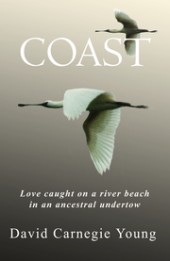
Coast: three generations of men on the Rangitikei coast

“Coast” is a novel written by David (Carnegie) Young about three generations of men; their relationships with each other and the wild Rangitikei coast. Strong themes running through the book are ancestry and belonging (and acceptance). The narrative is largely based in the Rangitikei: in the township of Marton and the small beach settlement of Koitiata, near Turakina [click here to view map], spanning from around the turn of the 20th century through to today (or thereabouts).

The Turakina River features prominently in the narrative: as a destructive and unpredictable force which takes life in the dramatic opening scenes of the novel; as a source of food and recreation for Maori and European alike; as an ancestral place for Maori; as a source of historical relics (including shoes of the victims of the Tangiwai train disaster); and, as a dynamic and powerful forger of the landscape. Continue reading

Nature study in NZ: a teacher’s reflections on historical approaches

In a recent issue of Education Today, Bill Clarkson, a veteran teacher and environmental educator, wrote about nature study in New Zealand and reviewed some of the pioneering literature which influenced how nature study was taught in New Zealand. These books include “New Zealand Nature Study” by W. Martin (1947) and “Nature Study: handbook for teachers”, by D. Beggs (1966). [Click here to read the full article.] Continue reading