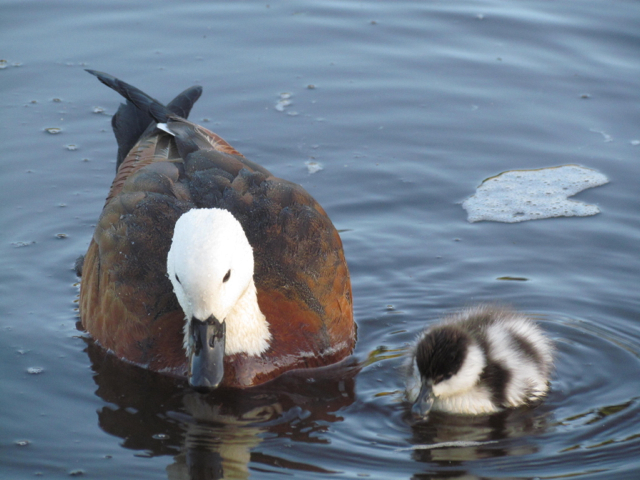
This is the time of year that you find yourself compulsively counting ducks.
We live next to an artificially created lake, and it has become home to a wide range of birds – both indigenous and introduced. But it is the Paradise shelducks that create the most excitement when they produce their little black and white balls of fluff. Continue reading →
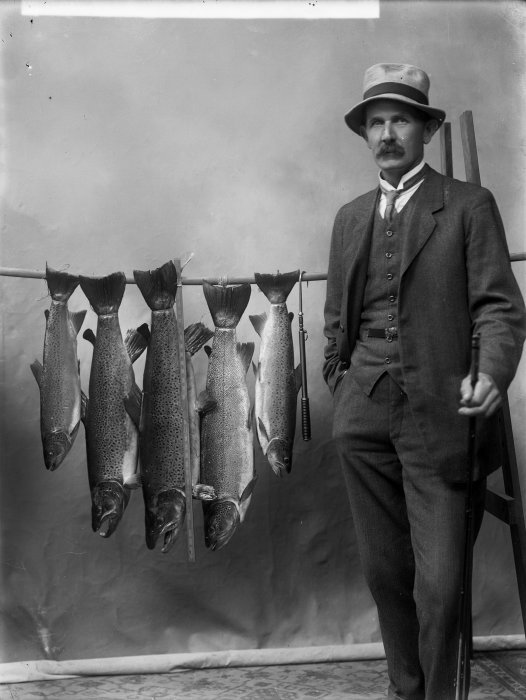
Mr Clark with trout. Ref: 1/1-005184-G. Alexander Turnbull Library, Wellington.
One of the great advantages of the Internet age is that not only is it possible now to find peoples’ PhD theses online, but graduate theses too. In my quest to better understand the acclimatisation of trout and salmon in New Zealand, I came across an honours dissertation by a Canterbury University history student, Jack Kós. Entitled “A most excellent thing”, it documents the introduction of trout to Canterbury in 1867 (the first successful introduction in New Zealand) and the subsequent dissemination of trout throughout New Zealand. Continue reading →
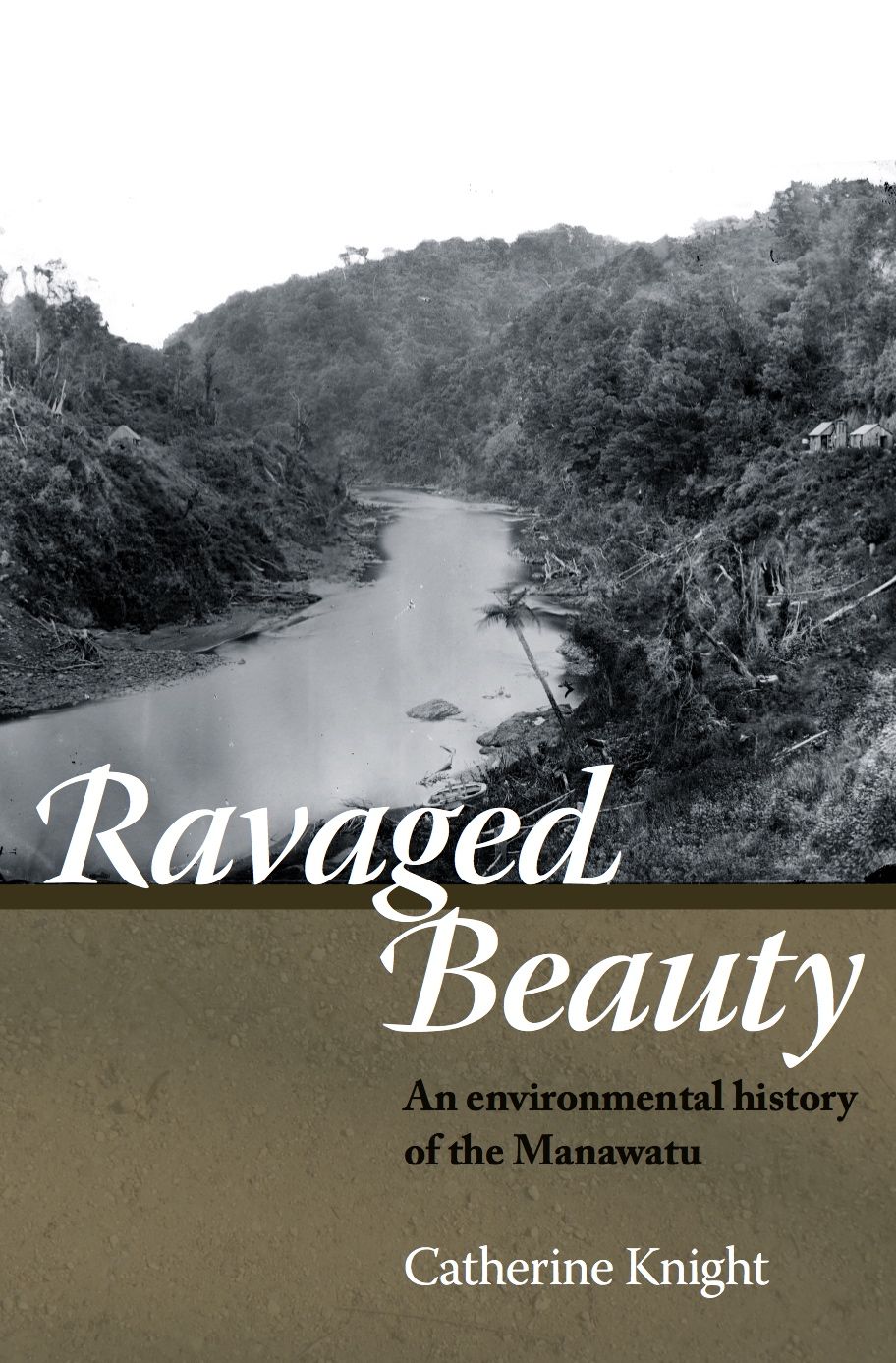
A few people have been inquiring whether I will be doing a talk in Wellington about Ravaged Beauty and the environmental history of the Manawatu. The answer is yes.
Other upcoming talks include the following:
Kapiti Forest & Bird: 7:30 pm 24 September (today!), Presbyterian Church Hall, Waikanae
Otaki Historical Society: 7:30pm 7 October, Otaki
National Library Author’s Voice Series: 12:10pm 23 October, National Library, Wellington
Mina McKenzie Memorial Lecture: 7 pm 5 November, Te Manawa, Palmerston North
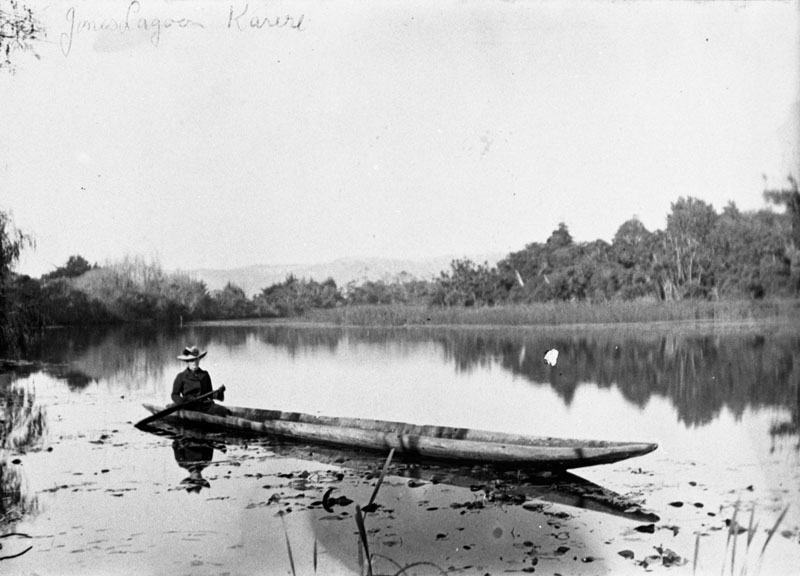
Woman paddling in dugout canoe in Jone’s Lagoon, Karere, c1905. Palmerston North City Library, 2007N_Lo27_BRW_0609
One aspect of the Manawatu’s environmental history which I completely neglected in my book Ravaged Beauty: an environmental history of the Manawatu, was recreational canoeing on the Manawatu River. Yet I have since discovered that it had a most illustrious history, according to Murray Fyfe’s history of recreational canoeing in New Zealand, published in 1972. Continue reading →
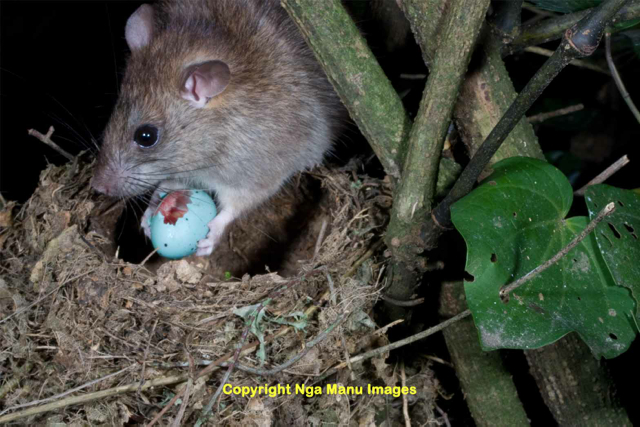
This dramatic photograph shows a black rat eating a thrush egg. This common rat species (Rattus rattus, otherwise known as a bush, roof or ship rat) is one of three that has long made its home in New Zealand. Continue reading →
Plan of lagoons and channels dug by Maori at the mouth of the Wairau River, published by W. L. Skinner in 1912. Alexander Turnbull Library, MapColl 832.2gmtb [pre-1840] Acc. 120In 1963, a major engineering feat was completed on the Wairau River, in the Marlborough district: the Wairau diversion. The diversion created two Wairau Rivers, one following its original course, which meanders south-east into a network of lagoons, before reaching Cloudy Bay at Wairau Bar. The “new Wairau River” was a channel that connected the river through a cut eastwards to the sea. Continue reading →
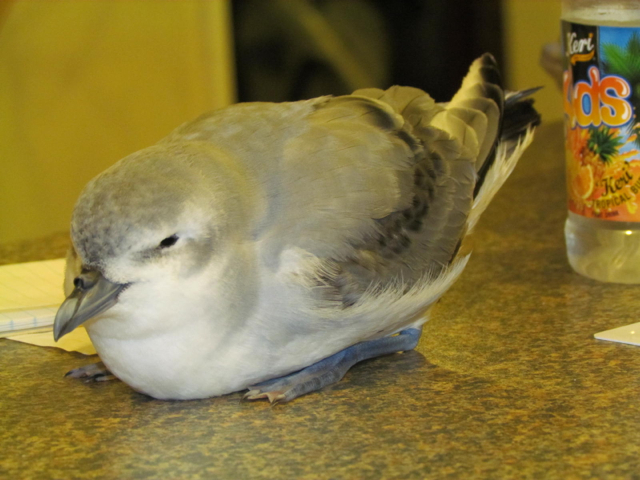
There are probably not many who can claim to have had a fairy in the kitchen, but we can. We came home after work today to find an unexpected visitor: a small grey bird with webbed feet huddled in the backyard. Our border collie had been considerately keeping it company. We brought the little chap inside out of the weather into a towel-lined box, an arrangement he seemed perfectly happy with. Continue reading →
Christchurch, 1860, showing Avon River and Worcester Bridgein the middle ground. Alexander Turnbull Library, ref. 1/2-022720-F
I have been trawling historic newspapers in Papers Past in my efforts to research early European attitudes to New Zealand’s rivers. In the course (unintended pun) of doing so, I stumbled upon a report on the drainage of the city, submitted to the Christchurch City Council in 1864 by the City Surveyor. It is illuminating given the city’s struggle with flooding following the Canterbury earthquakes. Continue reading →
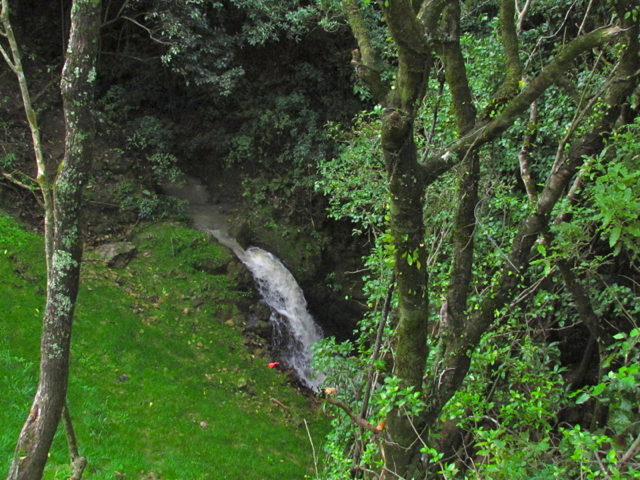
Longtime envirohistory NZ followers might remember how my husband and I stumbled upon the international phenomenon of geocaching entirely by accident (see Hidden treasure at Otaki Gorge). Geocaching involves searching for caches that have been hidden by members of the worldwide geocaching community, using GPS coordinates and other clues. Continue reading →
 Just released: Environment and Nature in New Zealand Vol 9 No 2





![Plan of lagoons and channels dug by Maori at the mouth of the Wairau River, drawn by J.L. D'Arcey Irvine. Alexander Turnbull Library, MapColl 832.2gmtb [pre-1840] Acc. 120](https://envirohistorynz.com/wp-content/uploads/2014/08/wairau-lagoon-maori-channels.jpg)




 envirohistory NZ