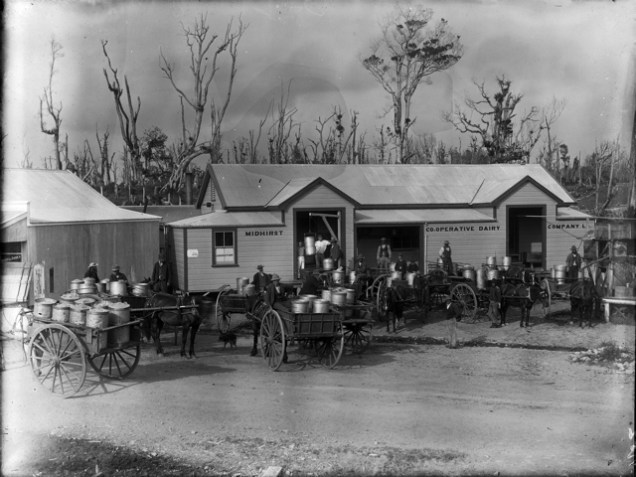
 I have often heard the region of Taranaki referred to as the “Kingdom of Taranaki”, owing to the fierce independence displayed by its long-time residents – particularly farmers, and particularly in relation to property rights. While the epithet is used facetiously, it is often underpinned by a sense of admiration for this feisty independence. But is there a reality to this perceived feistiness, and if so, is there some historical reason for it? Continue reading
Month: August 2011

Waikato: from dairy capital to wetland capital of the world?
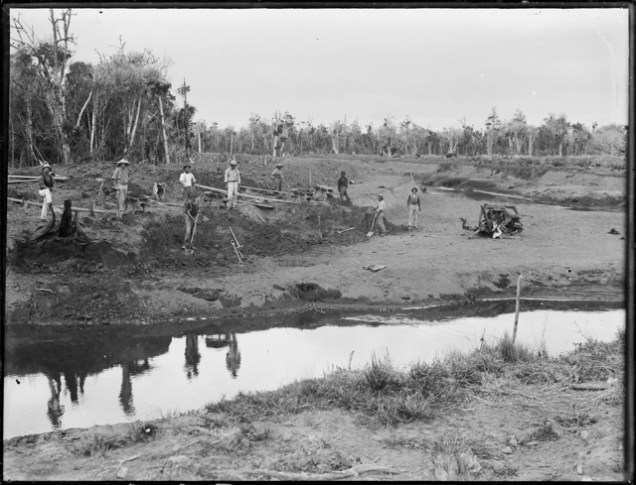 The Waikato was one of the original dairy farming regions of New Zealand, and its transformation from forested hills and swampy valleys to productive farmscapes was well underway by the late 19th century. So it would be ironic, but a satisfying example of the circular route environmental history often takes, if the region was one day to become known more for its wetlands than its “smiling farms”. Continue reading
Share this:

Seminar: how can environmental history shape the future?
After a great session last week at University of Waikato, Hamilton, hosted by the History Department (see: How can environmental history shape the future?), Catherine will be doing the same talk at Massey in October. The Hamilton talk was attended by scholars of history (both faculty and students), ecologists, hydrologists, as well as environmental managers and practitioners, and stimulated some interesting discussion. Continue reading
Share this:

Forgotten streams, urban wetlands and Scandinavians: top posts for second quarter 2011
 As anticipated, the top posts for the last quarter have been Christchurch-related, with Earthquake reveals the forgotten streams of Christchurch and Christchurch: a city haunted by its environmental past? being overwhelmingly the most popular (864 and 627 views respectively). Next was the post Waitangi Park – an urban wetland recreated, about the recently (re-)created wetland in central Wellington (376 hits). Continue reading

 envirohistory NZ