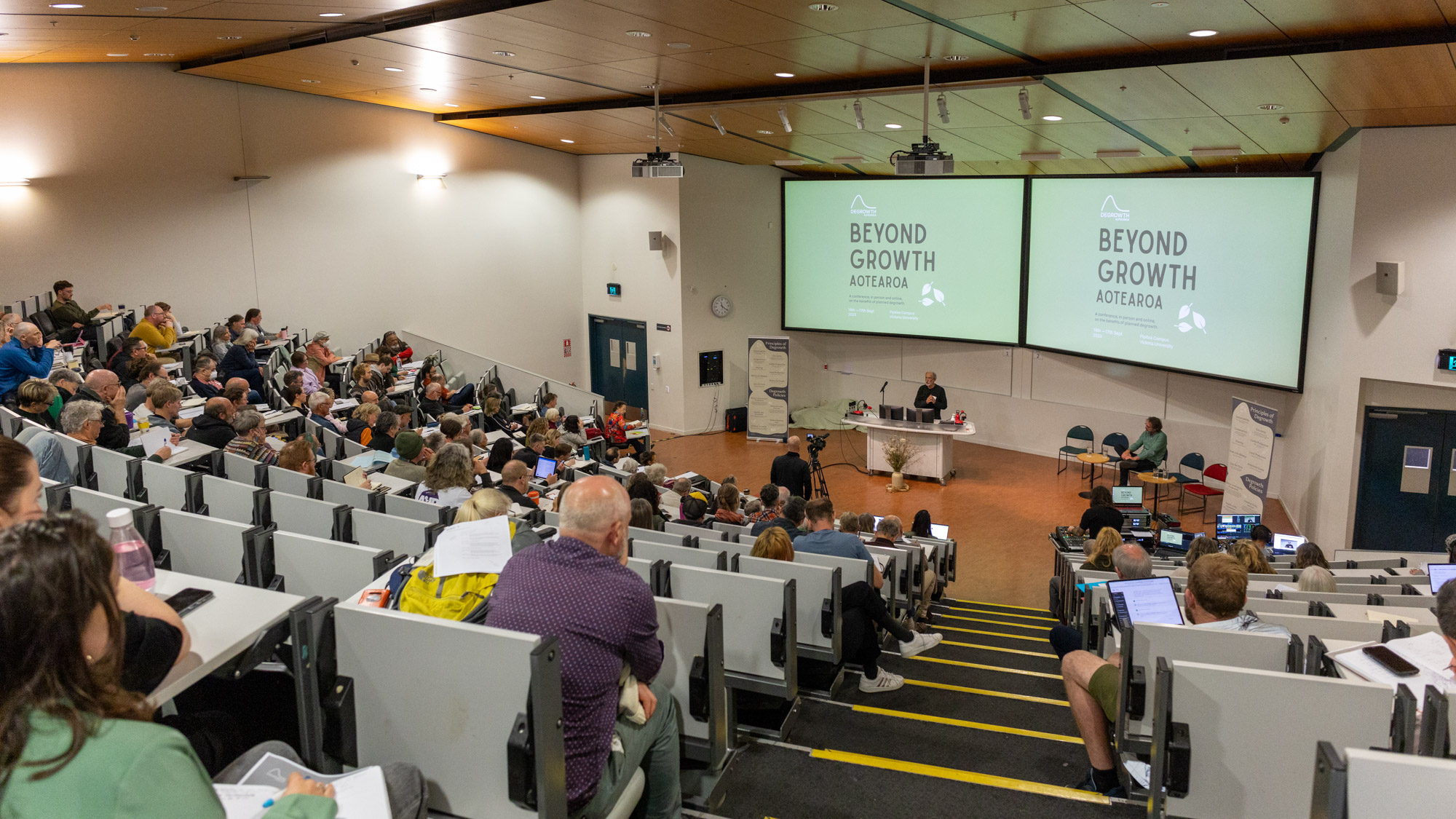
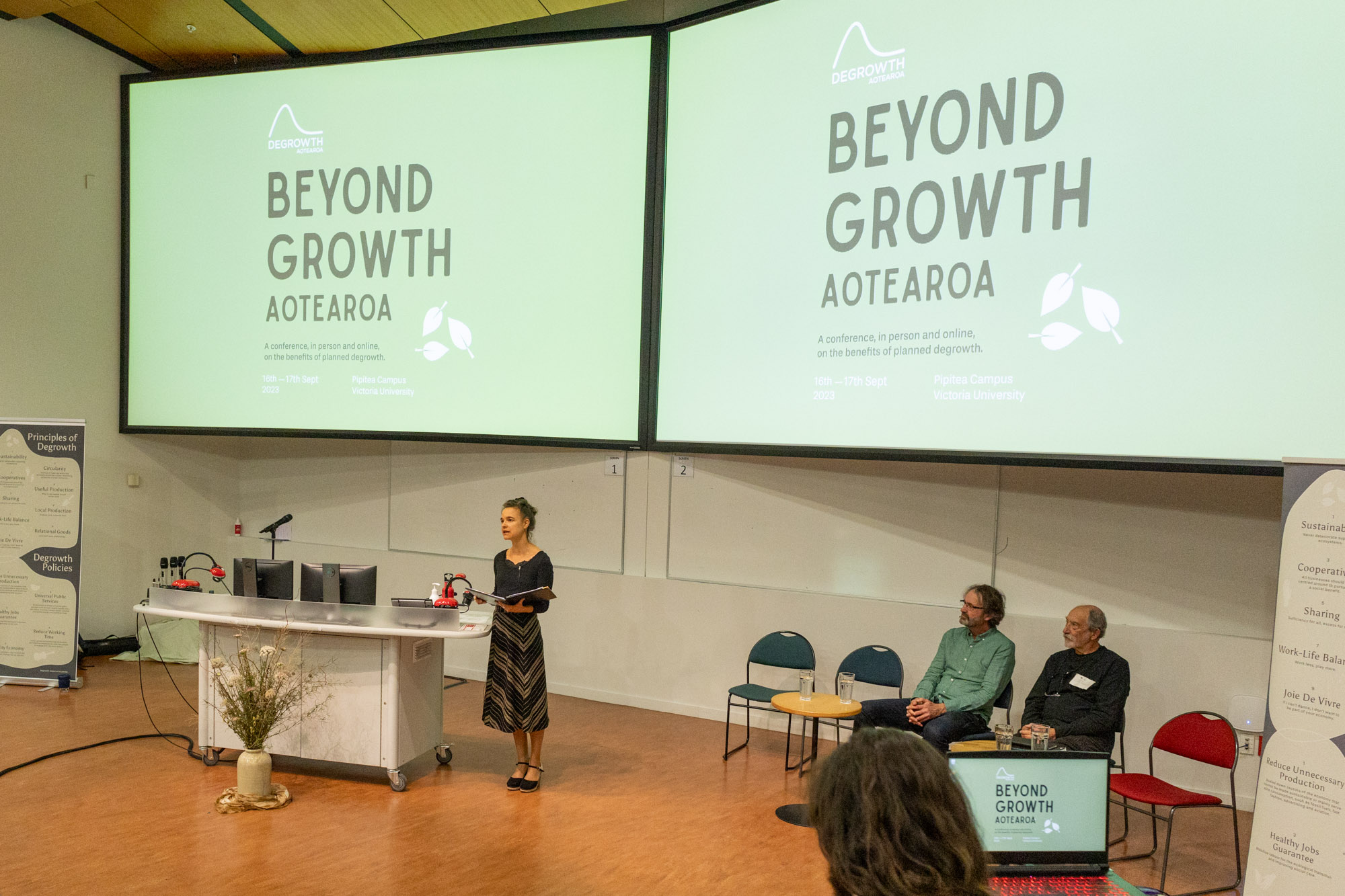
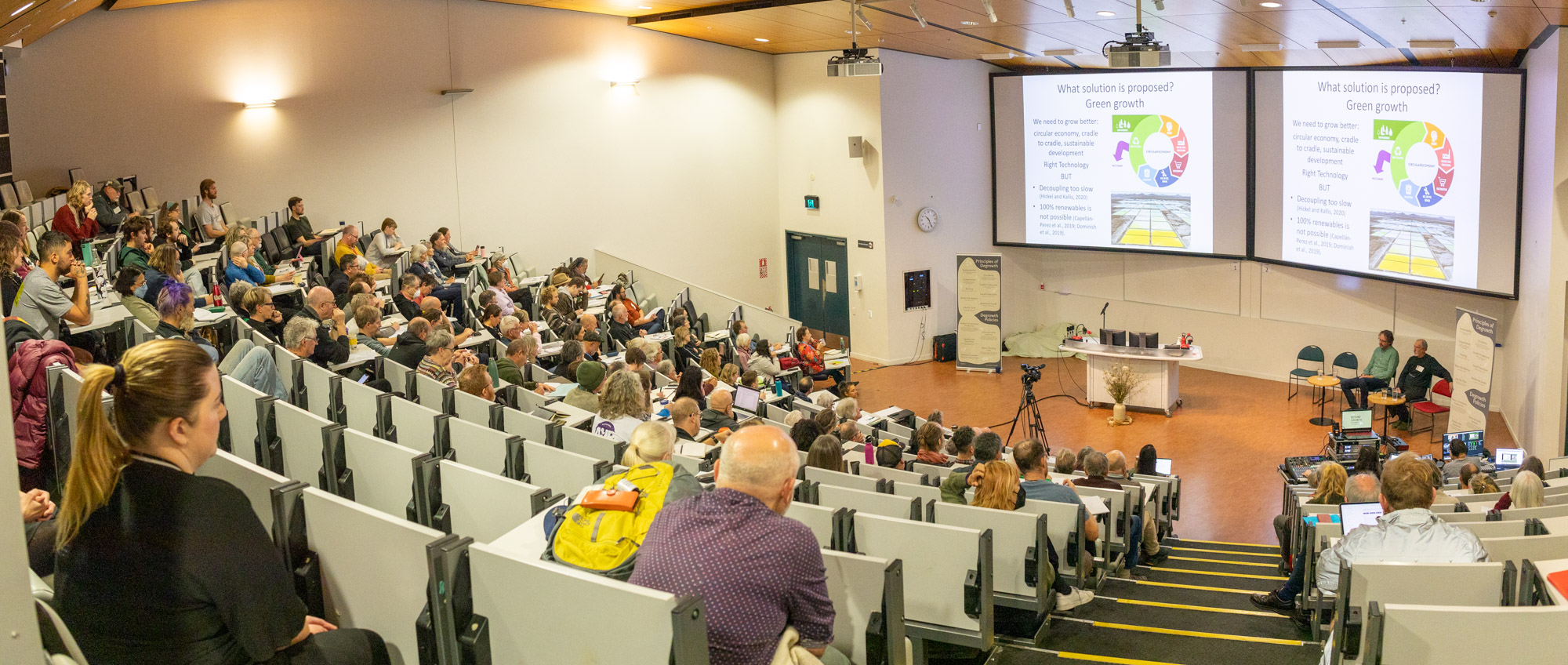
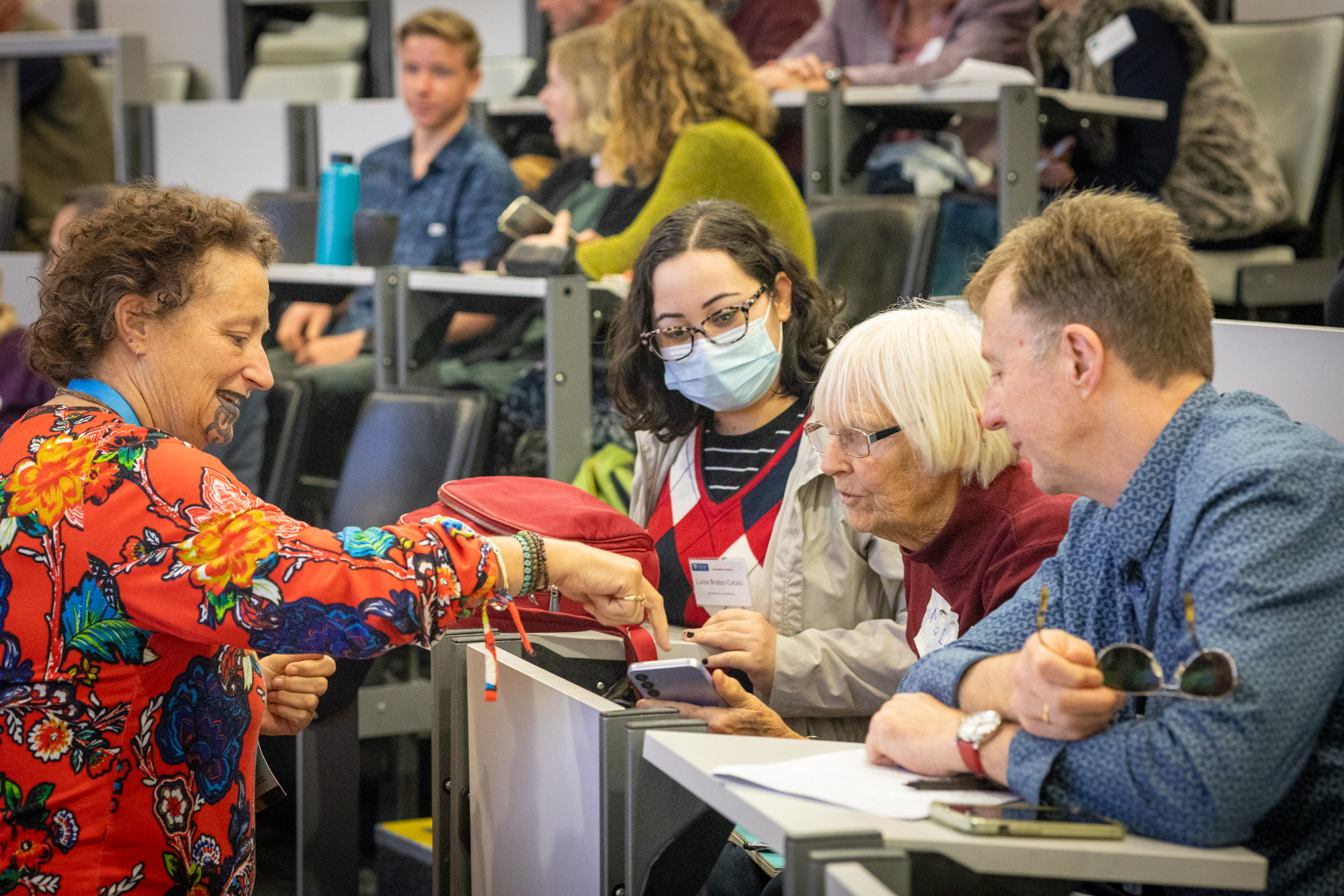
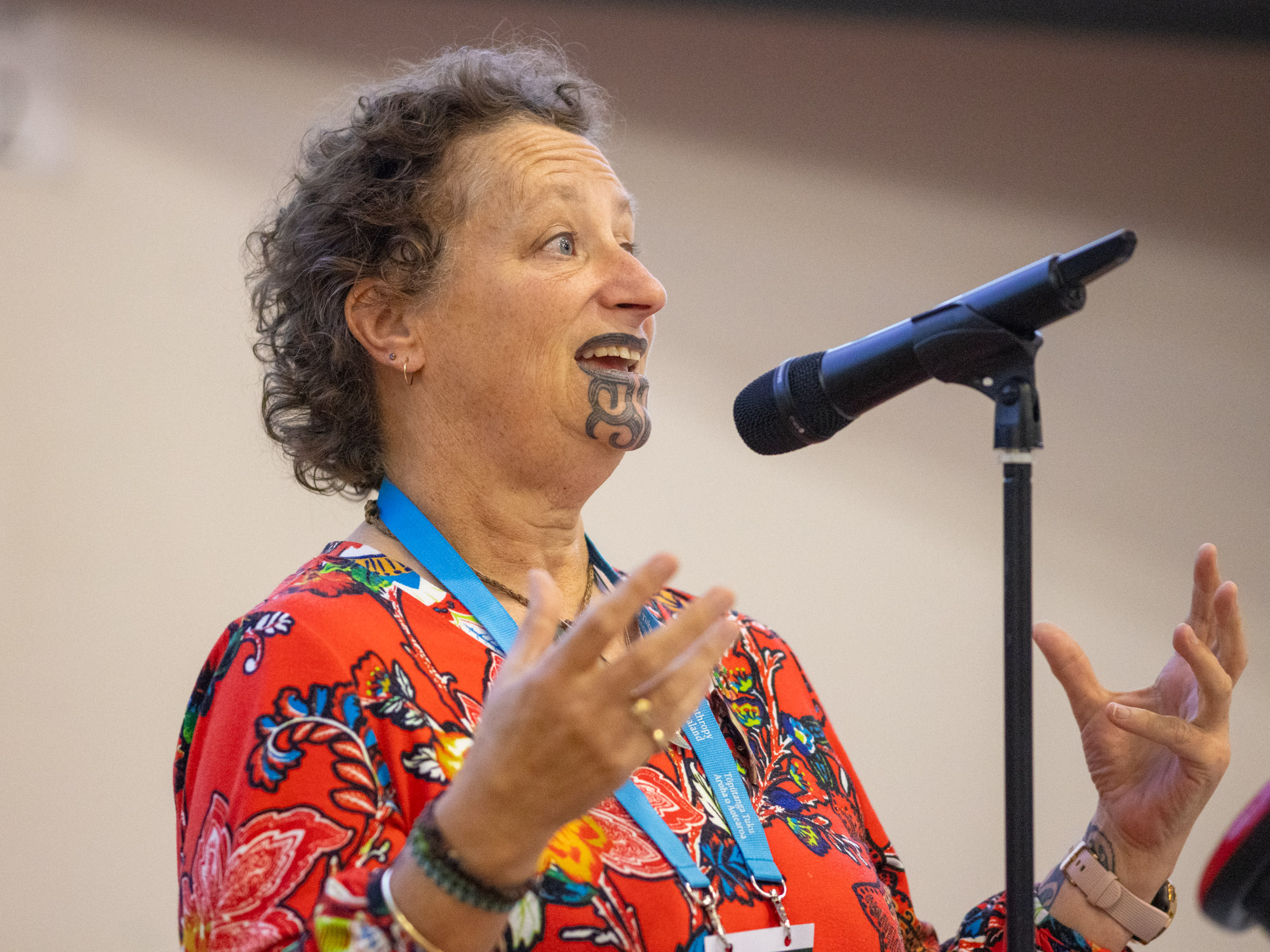
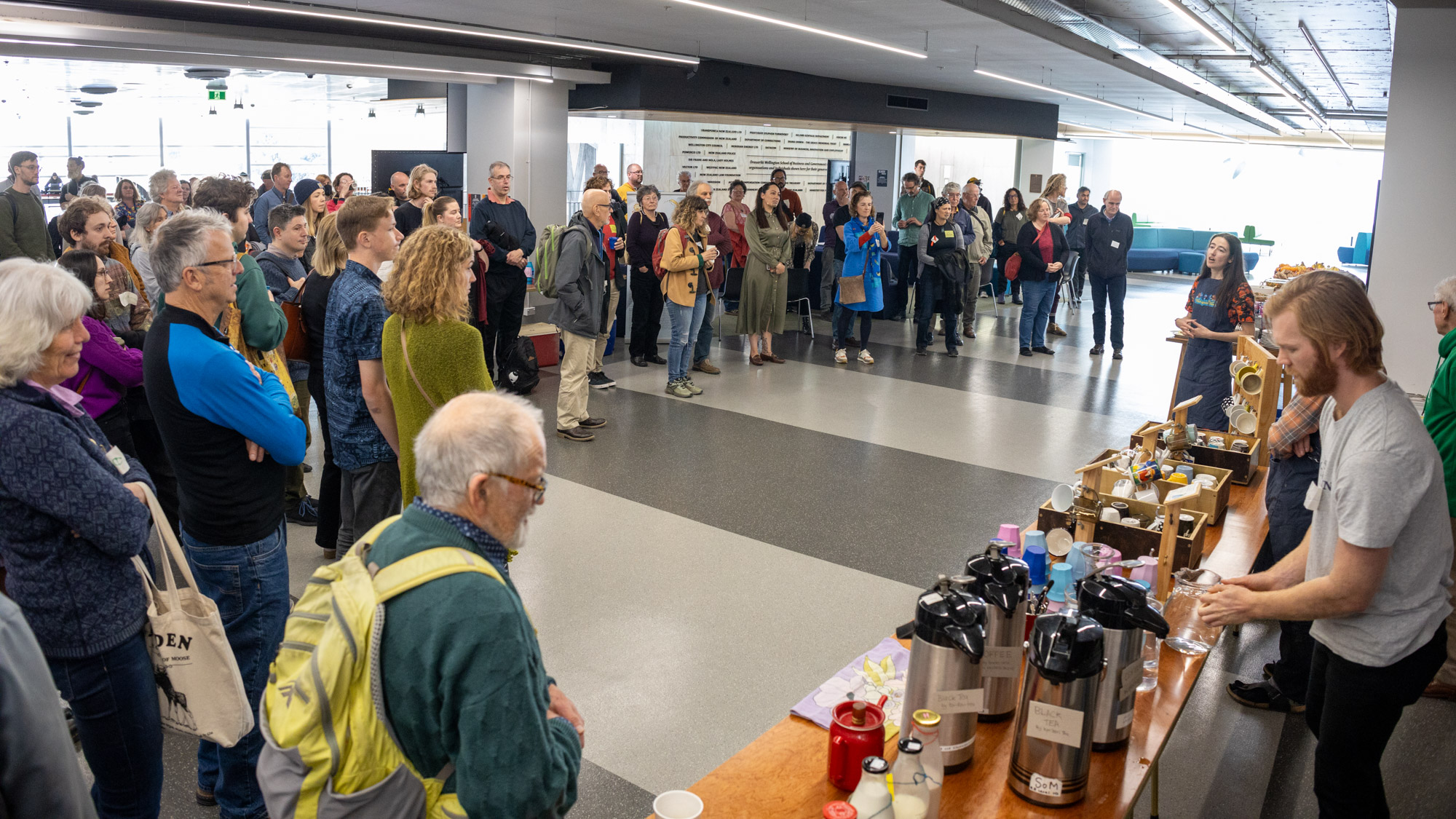
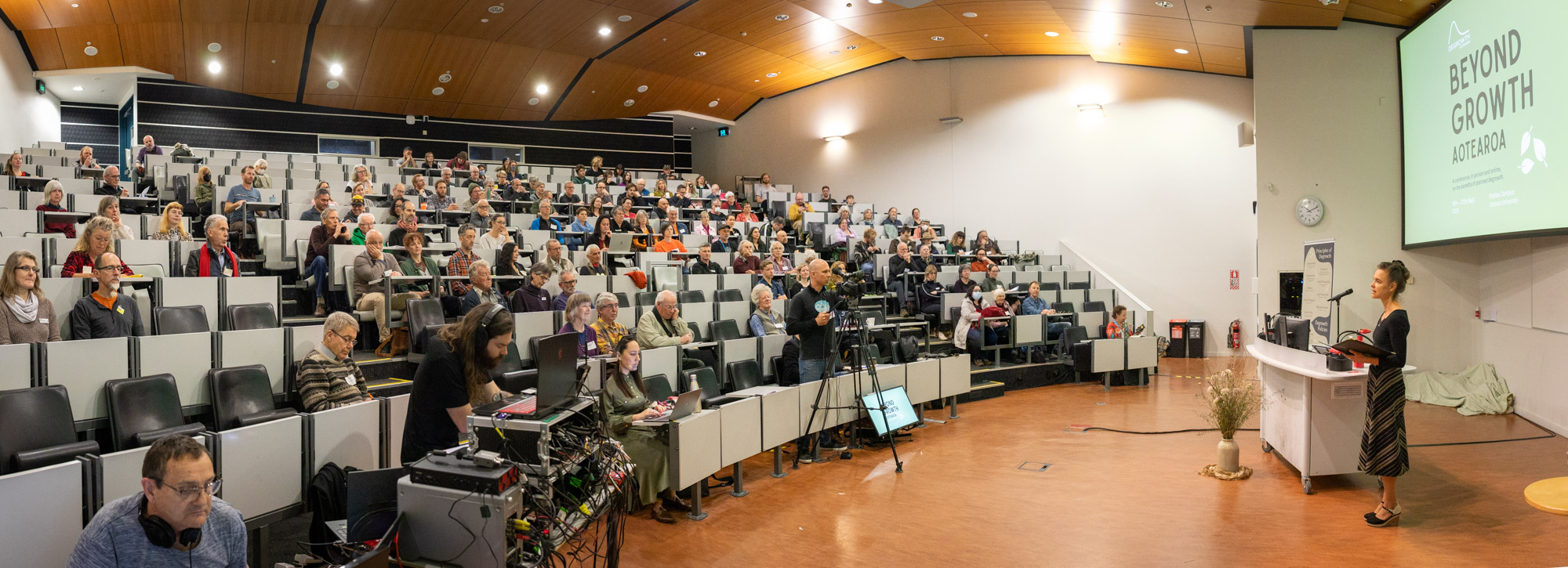
The session recordings for the recent Beyond Growth Aotearoa conference, held at Victoria University of Wellington are now available and can be viewed on Youtube.
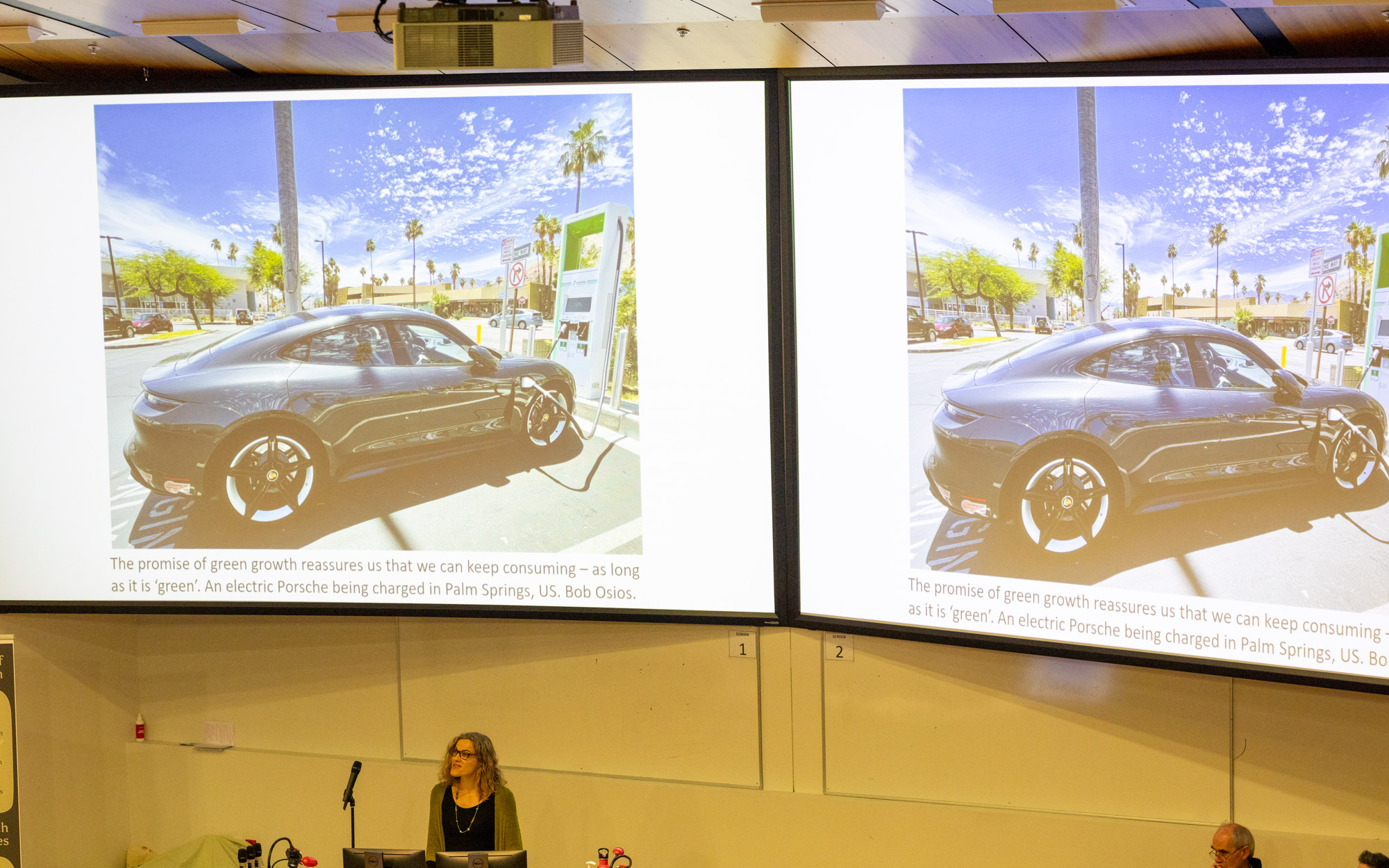
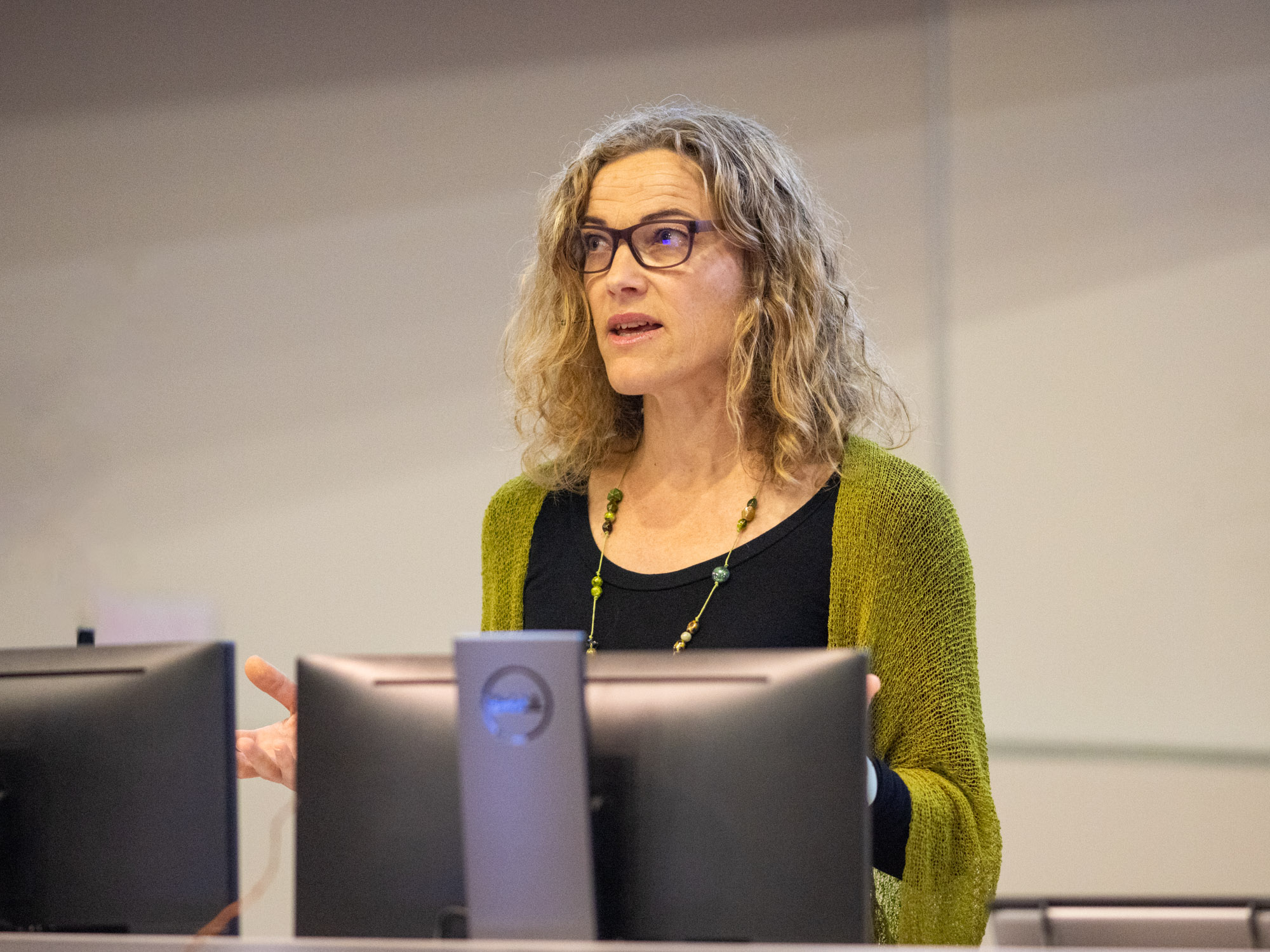
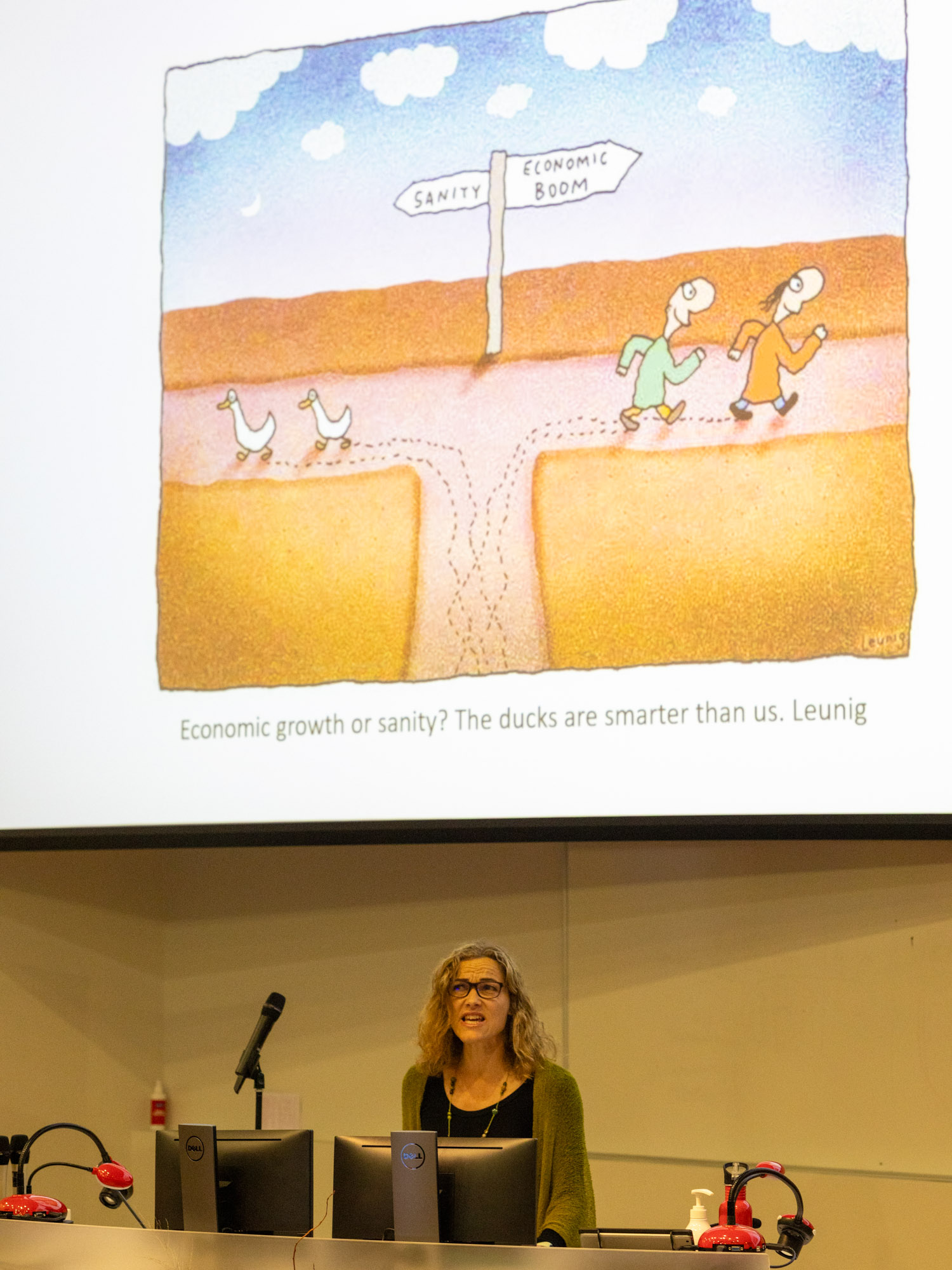
My session focused on sufficiency as a pathway to a post-growth economy. In the talk I draw on the experience of France, which has instituted sufficiency at the core of its energy law. Whatever we call this new pathway, the reality is clear: the current economic system is not working for people or the planet. We need an economy that focuses on delivering what people need to support wellbeing while operating within safe operating boundaries (listen to my conversation about wellbeing economy with RNZ’s Jesse Mulligan here). In my conference session I suggest some possible areas of focus, including a food resilience strategy and an energy security strategy. Take a listen to find out more.
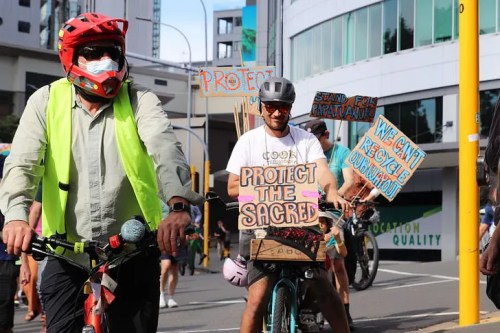
We can’t consume our way out of the climate crisis. Photo courtesy The Kaka.
This week I chatted with journalists Bernard Hickey and Cathrine Dyer about the economics of sufficiency on The Kaka. We covered a lot of ground, including why recycling and buying an electric car won’t quite cut if we want to curb combat climate change, the limits of the renewable energy transition, and the idea of putting sufficiency ahead of GDP growth as the central policy goal for our economy.
Listen to and read more about the conversation here.
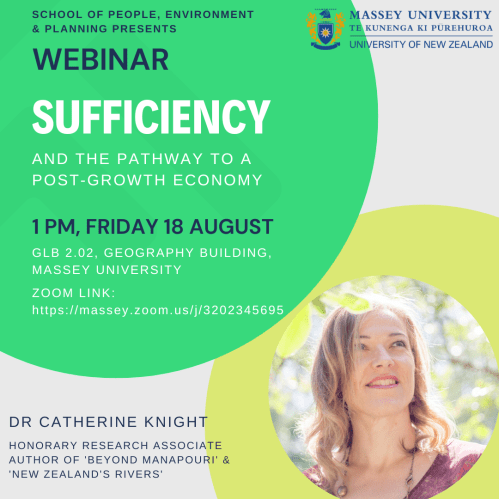
In August I presented a seminar, hosted by Massey University, on what I believe to be the single most important issue we face today. That is, how to reconcile our growth-based economy and energy-intensive way of life with the polycrisis that means a liveable planet hangs in the balance.
In the talk, I argue that we simply cannot reconcile these two things – contrary to what we are led to believe by the proponents of green growth. Instead, we must let go of growth as the central goal of our economy and focus instead on what a society needs to deliver to achieve wellbeing for all, within the limits of a finite planet.
I argue that a key policy goal must be “sufficiency” – with the right vision, it is an idea that people from across the political spectrum are likely to coalesce around, unlocking the pathway to a better future.
For those who missed the seminar, here is a link to the recording (passcode: 0U3PW@sA).
A hundred years ago many New Zealanders were content with a bowl of porridge in the morning made from oats produced in Southland and Otago. Photo: Newsroom.
My latest article on Newsroom asks what if we made sufficiency a central guiding principal of our economy, as countries such as France are starting to do? It draws on earlier advocacy of the late Jeanette Fitzsimons, who argued for an ‘economy of enough’.
On one autumnal afternoon in 2013, the late Jeanette Fitzsimons addressed a hall full of people in the leafy town of Waikanae on the Kāpiti Coast. Unusually, for a former academic and seasoned politician, she began her address with a story about a certain slow-witted but very likeable bear – who had indulged in a bit too much honey while visiting his friend Rabbit and got stuck in Rabbit’s doorway on his way out.
In the story much discussion ensued on ways to resolve this predicament, including Rabbit moving to a bigger tree, or cutting a bigger doorway. But in the end it was Christopher Robin who sagely concluded, “Pooh, you will just have to stay there and not eat any more until you lose weight”.
Through this story, Fitzsimons was deftly providing an analogy for the current human predicament. She went on to describe the need to transition to an “economy of enough”. That is, rather than Rabbit upsizing to allow for more honey consumption, Pooh just needed to cut back a bit. He needed to understand how much honey was enough and be satisfied with that.
Ten years have passed, and the need to transition to an economy of enough has only become more urgent. The words “overshoot”, “polycrisis”, “metacrisis” and “collapse” are now scattered through everyday conversations in lecture halls, meeting rooms, cafes and living rooms around the country as our awareness of the situation deepens.





 envirohistory NZ