It is my pleasure and privilege to be presenting this upcoming seminar hosted by the School of People and Environment, Massey University. In the seminar I will be expanding on themes explored in my articles on Newsroom, which can be found at this link.
For those who missed the seminar, here is a link to the recording (passcode: 0U3PW@sA).
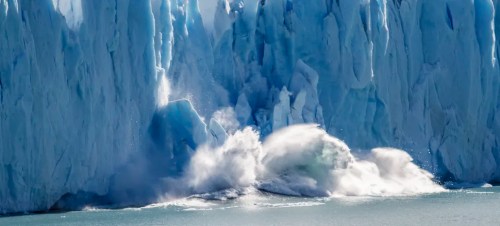
‘Collapse’ – the complete breakdown of society as we know it. Photo: Newsroom
Is there anything more terrifying than the prospect of global collapse in the near future? Yes, undoubtedly: the possibility that collapse is already happening but we just don’t realise it.
‘Collapse’ used as a simple unmodified noun refers to the complete breakdown of society as we know it. It may be precipitated by climate change, but it could also be triggered by any number of other crises, including another, even more brutal pandemic than Covid-19, a global financial crash or sudden energy disruption. Or a combination of some or all of these.
The cause is almost academic, because all of these things are related. They are all symptoms of a single problem, which is that humans (and especially high-income nations) are overshooting the planet’s ability to regenerate and self-regulate, fuelled by the one-off bonanza of fossil fuels, which have allowed us to produce and consume more (and pollute more) than any other time in history.
A hundred years ago many New Zealanders were content with a bowl of porridge in the morning made from oats produced in Southland and Otago. Photo: Newsroom.
My latest article on Newsroom asks what if we made sufficiency a central guiding principal of our economy, as countries such as France are starting to do? It draws on earlier advocacy of the late Jeanette Fitzsimons, who argued for an ‘economy of enough’.
On one autumnal afternoon in 2013, the late Jeanette Fitzsimons addressed a hall full of people in the leafy town of Waikanae on the Kāpiti Coast. Unusually, for a former academic and seasoned politician, she began her address with a story about a certain slow-witted but very likeable bear – who had indulged in a bit too much honey while visiting his friend Rabbit and got stuck in Rabbit’s doorway on his way out.
In the story much discussion ensued on ways to resolve this predicament, including Rabbit moving to a bigger tree, or cutting a bigger doorway. But in the end it was Christopher Robin who sagely concluded, “Pooh, you will just have to stay there and not eat any more until you lose weight”.
Through this story, Fitzsimons was deftly providing an analogy for the current human predicament. She went on to describe the need to transition to an “economy of enough”. That is, rather than Rabbit upsizing to allow for more honey consumption, Pooh just needed to cut back a bit. He needed to understand how much honey was enough and be satisfied with that.
Ten years have passed, and the need to transition to an economy of enough has only become more urgent. The words “overshoot”, “polycrisis”, “metacrisis” and “collapse” are now scattered through everyday conversations in lecture halls, meeting rooms, cafes and living rooms around the country as our awareness of the situation deepens.
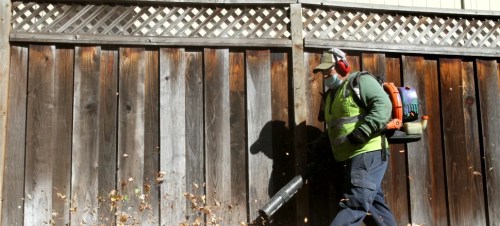
Leaf blowers made from recycled materials or designed to last for 10 years are still products that no one actually needs, produced using scarce energy and resources, with the sole purpose of making a profit. Newsroom
In this piece on Newsroom, I argue that just as the architects of our current economic system designed the system around perpetual growth, we can redesign the economy around delivering wellbeing to all, within planetary limits
“Every civilisation has had its irrational but reassuring myth. Previous civilisations have used their culture to sing about it and tell stories about it. Ours has used its mathematics to prove it.”
The economist and writer David Fleming was speaking about our civilisation’s myth of perpetual economic growth. And the mathematics, along with the graphs, models and analyses supporting this myth have become increasingly elaborate – inscrutable to the average person, who dares not question their truth. But now, it is not just mathematics used to assert the validity of a growth-based economy, we have added words to our arsenal of myth-making.






 envirohistory NZ