In this piece for the Kākā, I argue that this election is big on marketing strategy and slogans, but appreciably thin on vision. And it is a marketing campaign largely based on the assumption that the voter is Homo Economicus – that is, a person who makes decisions exclusively guided by self-interest. But my sense is that, despite what politicians think, New Zealanders do care about the world beyond their own economic status – and a growing number of us are acutely aware that the growth-based economy is not working for either people or the planet. But New Zealanders are not being given the chance to contemplate an alternative future because no one in any position of influence is talking about it. Our politicians are too pre-occupied with their desperate appeals to Homo Economicus.
We can’t consume our way out of the climate crisis. Photo courtesy The Kaka.
This week I chatted with journalists Bernard Hickey and Cathrine Dyer about the economics of sufficiency on The Kaka. We covered a lot of ground, including why recycling and buying an electric car won’t quite cut if we want to curb combat climate change, the limits of the renewable energy transition, and the idea of putting sufficiency ahead of GDP growth as the central policy goal for our economy.
Listen to and read more about the conversation here.
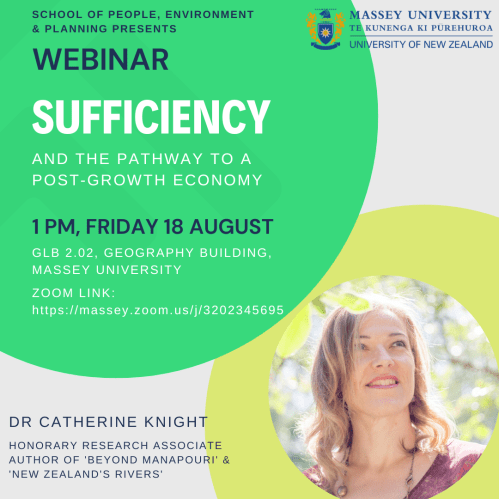
In August I presented a seminar, hosted by Massey University, on what I believe to be the single most important issue we face today. That is, how to reconcile our growth-based economy and energy-intensive way of life with the polycrisis that means a liveable planet hangs in the balance.
In the talk, I argue that we simply cannot reconcile these two things – contrary to what we are led to believe by the proponents of green growth. Instead, we must let go of growth as the central goal of our economy and focus instead on what a society needs to deliver to achieve wellbeing for all, within the limits of a finite planet.
I argue that a key policy goal must be “sufficiency” – with the right vision, it is an idea that people from across the political spectrum are likely to coalesce around, unlocking the pathway to a better future.
For those who missed the seminar, here is a link to the recording (passcode: 0U3PW@sA).
It is my pleasure and privilege to be presenting this upcoming seminar hosted by the School of People and Environment, Massey University. In the seminar I will be expanding on themes explored in my articles on Newsroom, which can be found at this link.
For those who missed the seminar, here is a link to the recording (passcode: 0U3PW@sA).
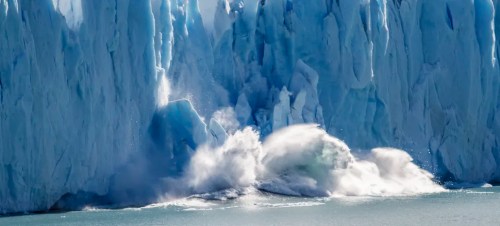
‘Collapse’ – the complete breakdown of society as we know it. Photo: Newsroom
Is there anything more terrifying than the prospect of global collapse in the near future? Yes, undoubtedly: the possibility that collapse is already happening but we just don’t realise it.
‘Collapse’ used as a simple unmodified noun refers to the complete breakdown of society as we know it. It may be precipitated by climate change, but it could also be triggered by any number of other crises, including another, even more brutal pandemic than Covid-19, a global financial crash or sudden energy disruption. Or a combination of some or all of these.
The cause is almost academic, because all of these things are related. They are all symptoms of a single problem, which is that humans (and especially high-income nations) are overshooting the planet’s ability to regenerate and self-regulate, fuelled by the one-off bonanza of fossil fuels, which have allowed us to produce and consume more (and pollute more) than any other time in history.
A hundred years ago many New Zealanders were content with a bowl of porridge in the morning made from oats produced in Southland and Otago. Photo: Newsroom.
My latest article on Newsroom asks what if we made sufficiency a central guiding principal of our economy, as countries such as France are starting to do? It draws on earlier advocacy of the late Jeanette Fitzsimons, who argued for an ‘economy of enough’.
On one autumnal afternoon in 2013, the late Jeanette Fitzsimons addressed a hall full of people in the leafy town of Waikanae on the Kāpiti Coast. Unusually, for a former academic and seasoned politician, she began her address with a story about a certain slow-witted but very likeable bear – who had indulged in a bit too much honey while visiting his friend Rabbit and got stuck in Rabbit’s doorway on his way out.
In the story much discussion ensued on ways to resolve this predicament, including Rabbit moving to a bigger tree, or cutting a bigger doorway. But in the end it was Christopher Robin who sagely concluded, “Pooh, you will just have to stay there and not eat any more until you lose weight”.
Through this story, Fitzsimons was deftly providing an analogy for the current human predicament. She went on to describe the need to transition to an “economy of enough”. That is, rather than Rabbit upsizing to allow for more honey consumption, Pooh just needed to cut back a bit. He needed to understand how much honey was enough and be satisfied with that.
Ten years have passed, and the need to transition to an economy of enough has only become more urgent. The words “overshoot”, “polycrisis”, “metacrisis” and “collapse” are now scattered through everyday conversations in lecture halls, meeting rooms, cafes and living rooms around the country as our awareness of the situation deepens.
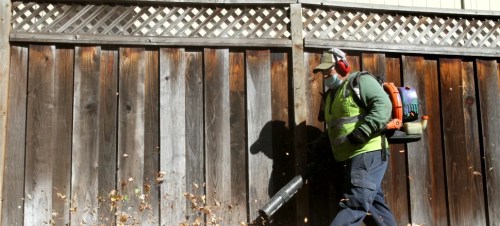
Leaf blowers made from recycled materials or designed to last for 10 years are still products that no one actually needs, produced using scarce energy and resources, with the sole purpose of making a profit. Newsroom
In this piece on Newsroom, I argue that just as the architects of our current economic system designed the system around perpetual growth, we can redesign the economy around delivering wellbeing to all, within planetary limits
“Every civilisation has had its irrational but reassuring myth. Previous civilisations have used their culture to sing about it and tell stories about it. Ours has used its mathematics to prove it.”
The economist and writer David Fleming was speaking about our civilisation’s myth of perpetual economic growth. And the mathematics, along with the graphs, models and analyses supporting this myth have become increasingly elaborate – inscrutable to the average person, who dares not question their truth. But now, it is not just mathematics used to assert the validity of a growth-based economy, we have added words to our arsenal of myth-making.
I originally pitched this short opinion piece to Stuff to follow on from an earlier piece on degrowth. However, when I submitted the finished piece, the editor declined to publish, stating that ‘it was too like other pieces published lately’ and that the audience had reached saturation point on green growth and degrowth issues. (A deeply ironic statement given that almost everything published in mainstream media is supportive and unquestioning of a growth-oriented narrative.) I also felt it would be prescient given the upcoming debate on degrowth versus green growth hosted by University of Victoria.
In light of Stuff publishing this opinion piece in response to the debate, in which the author seems to be calculatedly stirring up Red Menace anxieties reminiscent of the Cold War era by selectively cherry-picking the likes of Marxist scholar Kohei Saito’s writings as if representative of degrowth scholarship, I thought I needed to get my original piece out there one way or another.
As I have argued previously, for the future of our country and our planet, we urgently need a mature and evidence-based discussion. This kind of fear-mongering (degrowth is a thinly-veiled Marxist plot and without growth we will no longer have cancer drugs or dialysis machines) and sneering academic elitism (‘degrowth is intellectually chaotic’ – not to mention one of its main advocates is an anthropologist who believes he has expertise on the economy!?) certainly fulfils mainstream media’s desperation for click-baity headlines, but does nothing to progress a reasoned, open-minded debate on arguably the most important issue of our time.
As I have argued elsewhere, every New Zealander has a right to have a say on the future of our economy and our planet – this should not be be the preserve of economists institutionalised within government or academia. So here is the piece that Stuff refused to publish.
A growing number of New Zealanders are expressing deep concern about climate change, particularly as recent extreme weather events on our shores show that this is no longer a remote issue that only affects people in other countries. It is affecting us here, now: destroying homes and livelihoods, disrupting communities, causing heartbreak and distress, and in the most tragic cases, loss of life.
But despite our growing concern, many of us remain quietly optimistic about the future – reassured by daily offerings from mainstream media filled with stories of innovators developing new technology that will instantly create clean energy, suck up carbon dioxide by the truck-load, and turn waste into energy or other useful things like car-seat covers. The message is, we can carry on living the energy- and resource-intensive lives we do now because clever scientists, innovators and tech geniuses will find a way out of this.
Green growth adds to the bright shiny promise that we can keep on living the way we do now (using resources at a rate equivalent to one and three-quarter Earths). Green growth promises that we can carry on pursuing growth (after all, if we don’t have growth, how will we pay to fix all the damage we are causing?) – all we need to do is decouple it from greenhouse gas emissions and other environmental harm. This can be done, green growth advocates tell us, by increasing productivity and efficiency, moving to a more circular economy, and reducing waste. All without making a dent in growth!
Through the Intergovernmental Panel on Climate Change (IPCC), climate scientists have delivered their final warning: we need to take bold action urgently to avert the untold environmental and human tragedy of irreversible climate breakdown. So, if the promise of green growth (or its affable cousin, ‘sustainable growth’) hasn’t been realised yet and there is no evidence that it will at the rate and scale required, isn’t it time we gave up on that idea and moved on to something that does give us – and more importantly, our children and their children – a chance?
That ‘something’ is degrowth. If that sounds a bit subversive, steady-state economy, doughnut economics or wellbeing economy are other economic models that embrace the same foundational principle: that is, an economic system that puts human wellbeing and ecological balance at the centre, not the blind pursuit of growth.
As discussed in this earlier piece published on Stuff, degrowth does not advocate for the carte blanche downscaling of the economy as a whole – rather it argues for the upscaling of the parts of the economy that will enhance human wellbeing while reducing our impact on the planet. These sectors include renewable energy generation, public transport, education and health and care sectors, sustainable food production, energy-efficient homes and repairable long-lasting goods. At the same time, it argues for the downscaling of the parts of our economy that are damaging to the environment, with little or no benefit for our collective wellbeing – such as single-use products and designed-in obsolescence, private vehicles, air travel, fast fashion and industrialised meat and dairy production.
And it is important to remember too, that while perpetual, compounding growth, as measured by GDP, has become the central goal for which all ‘modern’ economies strive, it has only been so since the 1950s. Since then we have become entranced by it glittering promises of ever-growing wealth for all; simultaneously blinded to all the damage that our ever-expanding global economy is doing to our planet’s seas, forests, freshwaters, atmosphere and – ultimately – to our descendants’ chances of being able to lead flourishing, fulfilling lives.
Isn’t it time we found another guiding star for our economy – that of wellbeing for all, including the living things we share this planet with?
In this latest piece on Newsroom, I argue that it is time we democratised economics and work towards designing an economy that works for people and the planet, not the other way around.
Imagine a day when you tune into the financial news and the announcer reports:
“Share markets have plummeted to historic lows overnight with more of the world’s mega-corporations losing investor confidence. Investors are flocking instead to promising social enterprises, citing pressure from grandchildren who would rather inherit a liveable planet than a private jet.
“In New Zealand, the Domestic Happiness Index (DHI) is continuing its strong upwards trajectory and our national contribution to the Planetary Overshoot Index (POI) is trending downwards. This mirrors global trends, and leading ecological economic commentators are bullish, predicting that we may still have a liveable planet in 2050.”
Just imagine.
This scenario may not be as far-fetched as we first think. But for it to happen, we must be part of redesigning an economy fit for the 21st Century.
Over the last few weeks, I have published a number of articles in the media exploring topics such as energy transition, energy descent and food security from a systems lens. I am sharing them through this blog so that they can reach as a wide as possible audience. Here is the first, published on The Spinoff:
“We are all aware of the ambitious changes we need to make if we are to avert catastrophic and irreversible climate change. However, exactly what we need to do remains a confusing minefield which few of us have the time or energy to navigate.
Every day we hear of a new technology that promises to suck carbon dioxide from the atmosphere, or a space-based solar technology that will power millions of homes, or, conversely, we find out that what was touted as a solution yesterday is no longer one today.
But all this “complexity” is just a distraction from the simple reality that to avoid catastrophic climate breakdown we need to make fundamental changes to the way we live.”
You can continue reading ‘Why combatting climate change means embracing degrowth’ at The Spinoff.













 envirohistory NZ