Did European settlers loathe the forest?

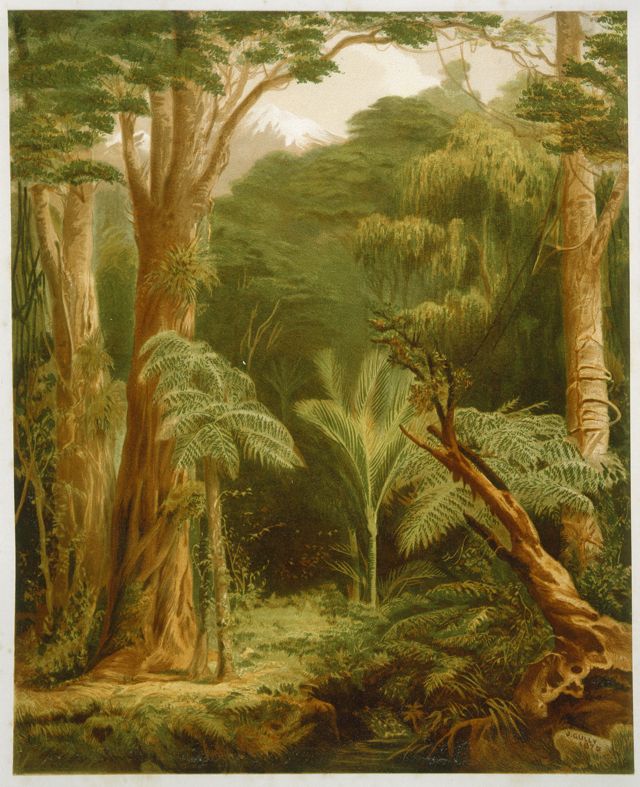
In 1969, geographer Paul Shepard published a monograph entitled “English reaction to the New Zealand landscape before 1850”, in which he explored the various attitudes of English immigrants towards the indigenous landscape, particularly the forest, in this early settlement period. He review of the written accounts by early settlers and observers found that the most prevalent view of the forest was negative: it was described as “dreary”, “dismal”, “gloomy”, and seen as the antithesis of civilization and morality.

Since then, a number of historians and historical geographers have explored this question further, including Jock Phillips in his 1981 paper “Fear and loathing of the New Zealand landscape”, and Paul Star in his 2003 article “New Zealand environmental history: a question of attitudes”. Continue reading

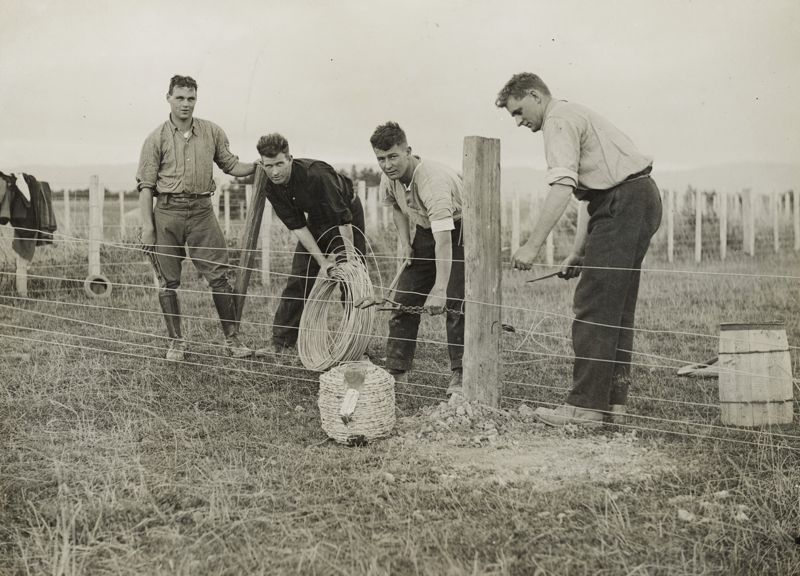
When is a fence not a fence?

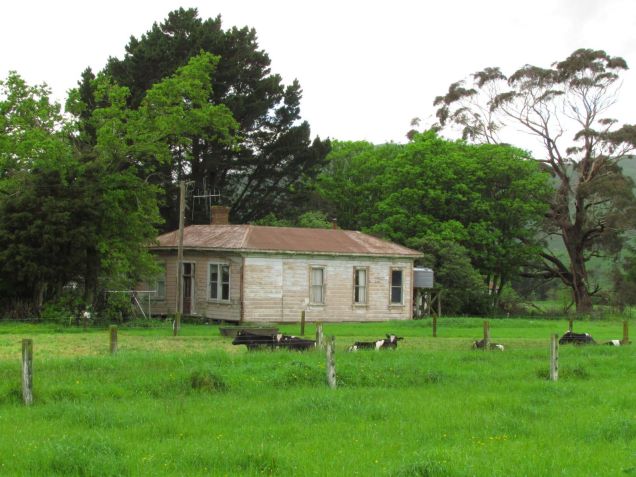
I have been reading The Life and Times of Sir James Wilson of Bulls, by L. J. Wild recently. James Wilson, an immigrant from Scotland, was a pioneering sheep farmer in the Rangitikei in the late 1800s.

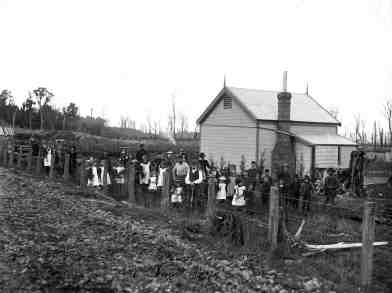
Reading his diary entries from the days when he was in the early stages of developing of Ngaio Farm, just east of Bulls, it is clear that fencing was a major consideration when establishing a farm – and the types of fences common at that time would not necessarily be familiar to us today. Continue reading

“Doing environmental history” on the Wairau Plain

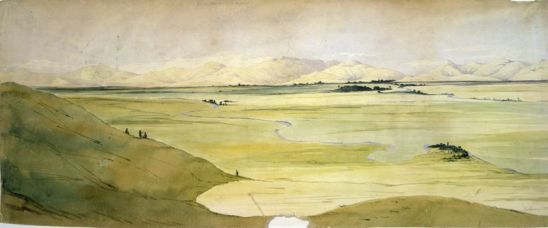
The Wairau Plain is a triangular-shaped plain which surrounds Blenheim, wedged between mountains and hills to the north and south, and ending with the sea to the east (click here to view map). It was once an extensive swamp, fed by the Wairau River, which originates in the northern ranges of the Southern Alps, and flows north-east into Cloudy Bay, in the Cook Strait. But the swamp has long since been drained, the river controlled to flow in a more “orderly” fashion, and the land turned to agriculture, horticulture and other “productive uses” – most notably, viticulture. Continue reading

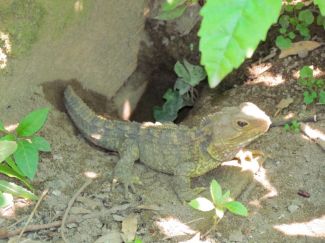
Welcome to Year of the Dragon: a New Zealand “dragon” story

Not being an avid follower of the Chinese zodiac, I was not aware that 2012 was the Year of the Dragon until yesterday, when I read a post of a favourite blogsite of mine. So, I thought it would be an opportune time to write about a New Zealand “dragon”.

The tuatara represents 225 million years of history on four scaly (and rather wrinkly) legs; it is the only survivor of an ancient group of reptiles that roamed the earth at the same time as dinosaurs. Its relatives became extinct 60 million years ago – and for this reason it is often referred to as a ‘living fossil’. Continue reading

Kirkin’ of the Tartan: the Scottish diaspora of Turakina

By David Carnegie Young

All my life I had driven through the village, the great iron gates to its cemetery and  spreading oaks speaking of a larger, lost past. From the 1950s I’d watched the gradual decline of a place that, long before my life, had been so much more. There was the smithy, whose hanging door I recall one day remained shut, the shops with their arthritic verandas, old houses that became hidden behind brambles as they staggered under the weight of vegetation and age. The village’s human edges greened and frayed until it was little more than a hamlet. Yet its centre survived.

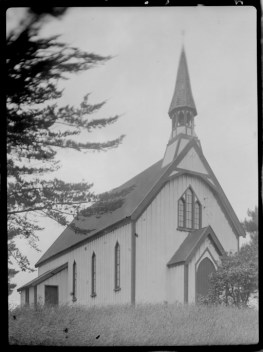
There was still the Ben Nevis pub, Harry Stirling’s old garage, two churches, a graveyard on the hill and a broken necklace of 1860s wayside architecture where wayfarers might stop for a pie or sandwich and even a browse. Continue reading

A history of environmental history in New Zealand

In 2003, Paul Star, an Otago-based environmental historian, published a paper outlining developments in the field of environmental history in New Zealand, how it fits in to the international context, and some thoughts about the areas in which the field would most benefit from further research (“New Zealand Environmental History: A Question of Attitudes”).

It is a great little article, written in Star’s characteristic reader-friendly, jargon-free style, and I would recommend it to anyone with an interest in this field. Continue reading

Exploring NZ’s environmental history through maps

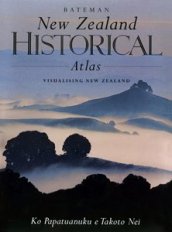
I feel slightly embarrassed to admit this (and therefore perhaps shouldn’t), but I have only recently discovered the cartographic and other visual delights which lie between the sturdy covers of the New Zealand Historical Atlas, published in 1997.

Of course, I had seen it referenced many times in scholarship on New Zealand’s environmental history, but (and this is where my less than favourable encounters with high-school geography may be revealed), I had imagined a dusty old book of the traditional style maps that only a dyed-in-the-wool geographer or cartographer would get excited about. Continue reading

History shaping the future – NZHA conference

Next week’s New Zealand Historical Association Conference features a special four-person panel dedicated to environmental history. The panel is entitled: “History shaping the future: how environmental history research can inform environmental policy and management”, and will feature papers by Professors Katie Pickles and Eric Pawson (both from Canterbury University), Professor Tom Brooking (Otago University) and Dr Catherine Knight (envirohistory NZ). Continue reading

A burning question: what is pastoralism?

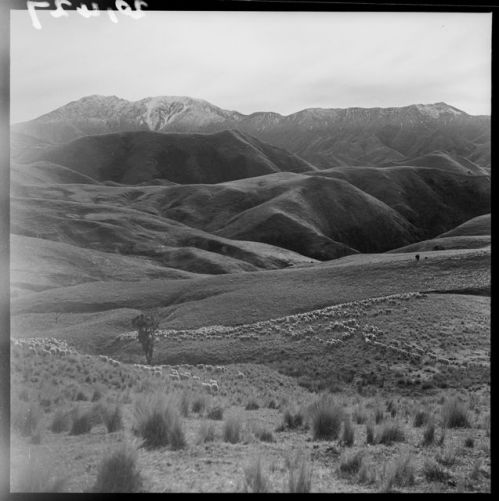
I have learned a few things while reading “Seeds of Empire”, by Tom Brooking and Eric Pawson, including the definitions of some terms that crop up a bit in environmental history literature (see also: How did the Korean War change the NZ landscape?). One example of this is in Robert Peden’s essay “Pastoralism and the transformation of open grasslands” (Chapter 5).

Using Mount Peel Station* in central Canterbury as a case study, Peden explains how pastoralism transformed much of the eastern hillcountry (or rangelands, as he refers to them) of the South Island, and seeks also to debunk a few myths about the impacts of pastoralism while he is at it (specifically, about the role of pastoralism in rabbit infestations and burning as a management tool). Continue reading

The ebb and flow of a rural township: Tokomaru

My last post How did the Korean War change the NZ landscape? and specifically the mention of the demise of local dairy factories in the post-Korean War years, led me to think about ex-dairy factory towns and villages within my immediate orbit. One such place is in the northen Horowhenua village of Tokomaru, on the western side of the Tararua Ranges [click here to view map]. Continue reading