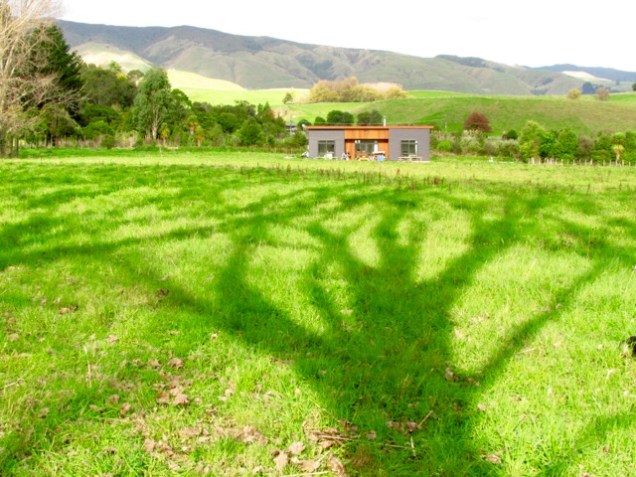
About three weeks ago my family and I made a very big life change. We moved from comfortable, convenient, leafy suburbia on the Kapiti Coast to a 7-acre block of land in rural Manawatu. This involved moving ourselves out of our 213 m2 4-bedroom, double-garaged home into a garage-less house of exactly half that size.
There is a very good reason for us doing this: it wasn’t the plan.
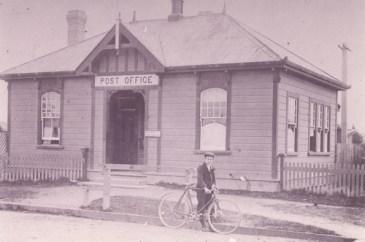
I will be doing a talk about my book Ravaged Beauty, with a focus on the Manawatu River, at the historic Ashhurst Community Library (seen here in its original form as a post office), on:
Thursday, 20th October at 7pm.
This will possibly be my last talk about my first book, which is fitting, because I lived in Ashhurst when I first conceived on the idea of doing a history of the Manawatu. I also have the last few books left, so it may peoples’ last opportunity to purchase one (at discount, of course).
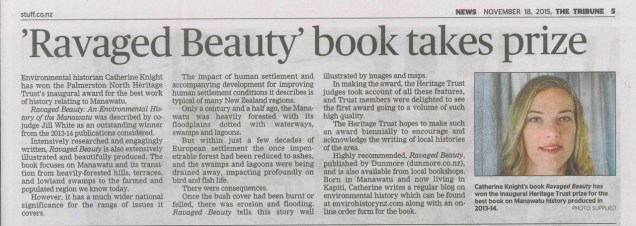
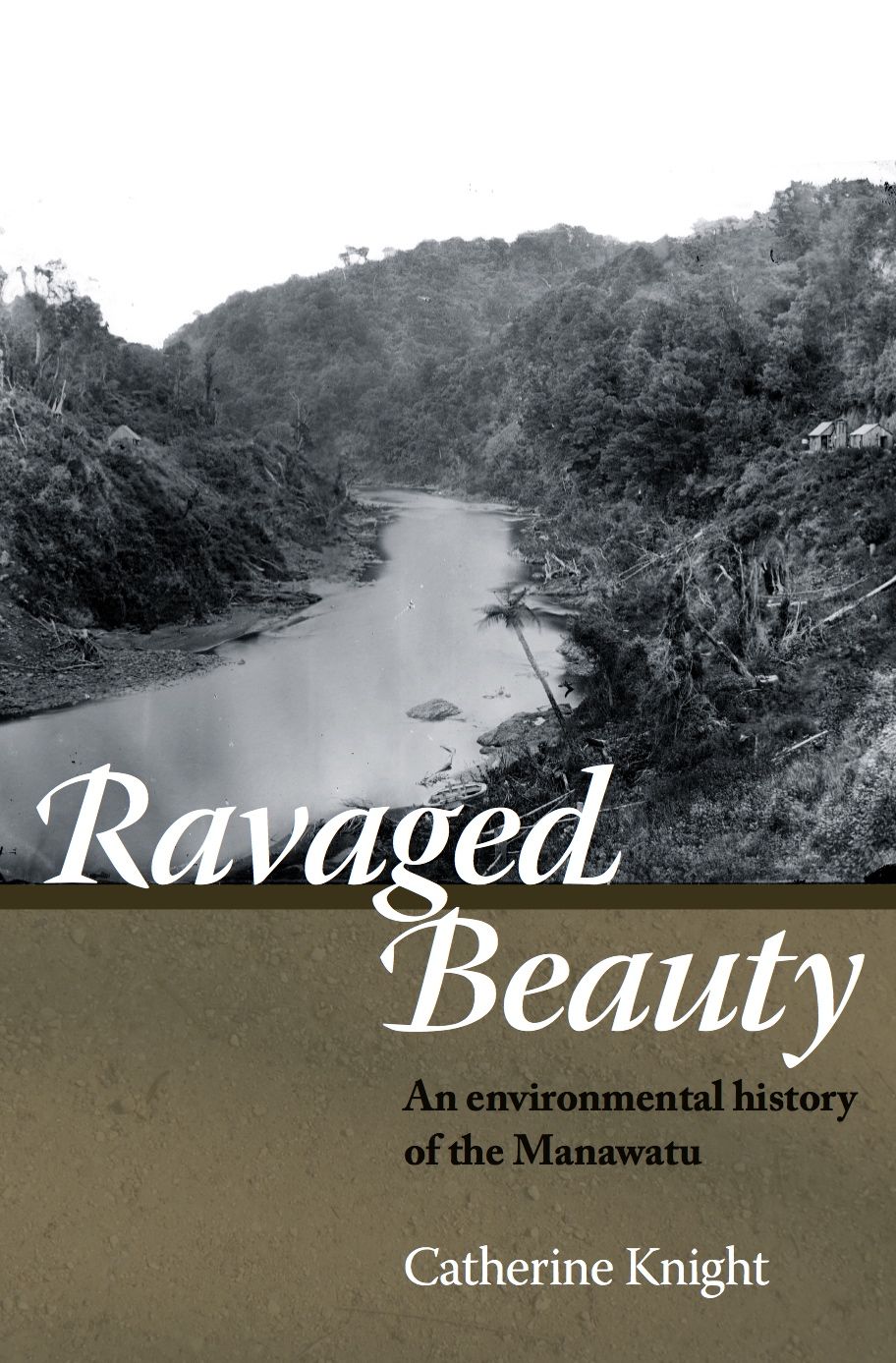
On Wednesday night, I received an award from the Palmerston North Heritage Trust for my book Ravaged Beauty: an environmental history of the Manawatu.
From the Heritage Trust’s media release:
“Environmental historian Catherine Knight has won the Palmerston North Heritage Trust’s inaugural award for the best work of history relating to the Manawatu. Ravaged Beauty: An Environmental History of the Manawatu was described by co-judge Jill White as an outstanding winner from the 2013-14 publications considered. Continue reading →
Young Maori girl at Te Ariki Pa, near Lake Tarawera, Bay of Plenty. Shows her standing alongside a vegetable garden and a whare. Photograph taken in the 1880s by the Burton Brothers. Alexander Turnbull Library ref. 1/2-004619-F.
In anticipation of my talk on Friday, I thought I would gain some insights into envirohistory NZ’s most popular posts. Fittingly, given that my talk is in the Manawatu, the most popular post (by far) has been The Scandinavian settlers of the Manawatu.
A few people have been inquiring whether I will be doing a talk in Wellington about Ravaged Beauty and the environmental history of the Manawatu. The answer is yes.
Other upcoming talks include the following:
Kapiti Forest & Bird: 7:30 pm 24 September (today!), Presbyterian Church Hall, Waikanae
Otaki Historical Society: 7:30pm 7 October, Otaki
National Library Author’s Voice Series: 12:10pm 23 October, National Library, Wellington
Mina McKenzie Memorial Lecture: 7 pm 5 November, Te Manawa, Palmerston North
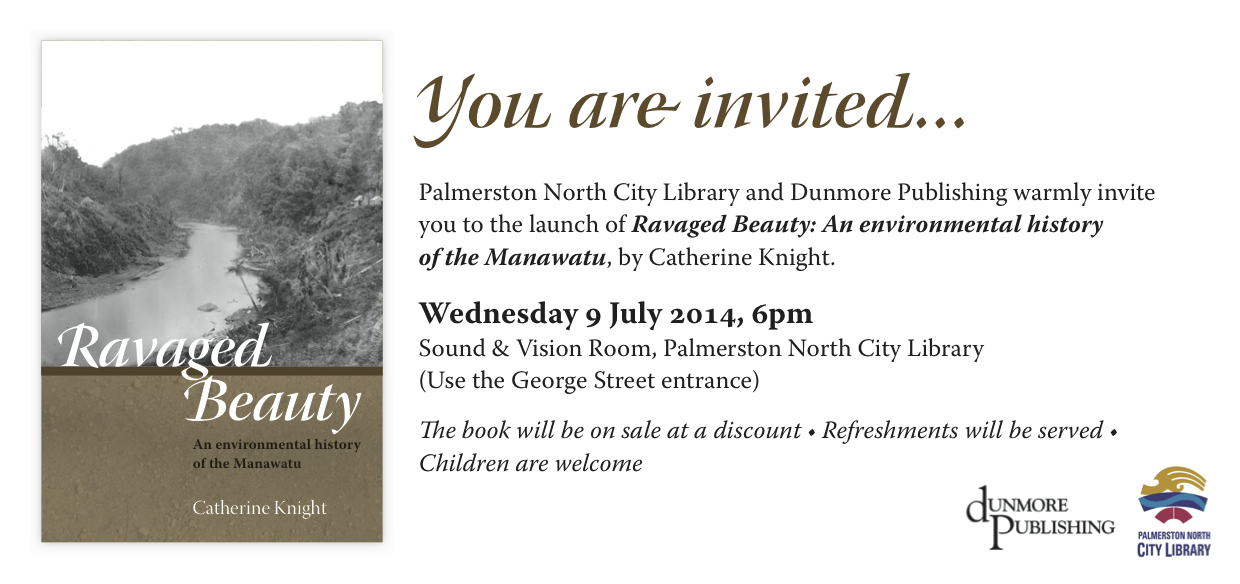
The long-awaited Ravaged Beauty: an environmental history of the Manawatu is available June 2014
.
Ravaged Beautytells the story of one place, from prehistory to today. But its themes are universal. What motivates the human desire to modify and exploit their natural environment, and have people learned anything from the consequences? Read this new book to find out.
.
Only a century and a half ago, the Manawatu was a heavily forested hinterland: the floodplains were a sea of swamps and lagoons, teeming with birdlife, eels and other fish; the hills and terraces were covered with thick impenetrable forest, refuge perhaps to a few lingering moa. Continue reading →
This image taken by Charles E. Wildbore circa 1907 shows the rural mail delivery that operated in the Pohangina Valley. It is the background of scorched, leafless tree trunks and limbs that draws the eye of the environmental historian, rather than the mail cart or people in the foreground. Palmerston North City Library, ID 2007N_Poh2_RTL_0852
Why should we study New Zealand’s environmental history? and how is it different from “conventional” history?
These are the questions that Paul Star asks in his essay entitled Environmental history and New Zealand history, first written in 2008, but recently republished on Environment and Nature in New Zealand.
Star offers seven compelling reasons why it is important. And of course, the key difference between environmental history and history is that while peopleare the central players in conventional history, the relationship between people and the environment is the focus in environmental history. Continue reading →
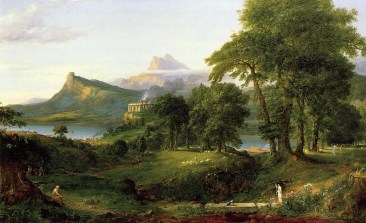
Thomas Cole’s The Arcadian or Pastoral State, 1834
A series of articles were recently published on Environment and Nature in New Zealand, all drawn from essays written between 1989 and 2000 by students in history at the University of Otago.
A prominent theme in the essays covering the colonial period is the disconnect between the expectations of immigrants and the reality of what they found, particularly in respect to the environment. Continue reading →