Kimbolton and surrounds – “putting the small man on the land”

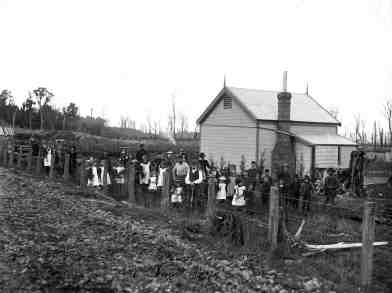
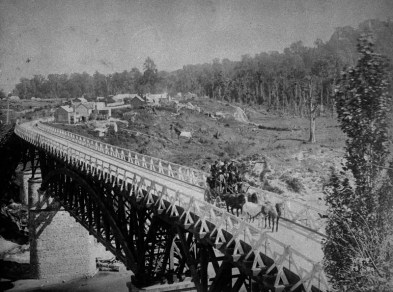
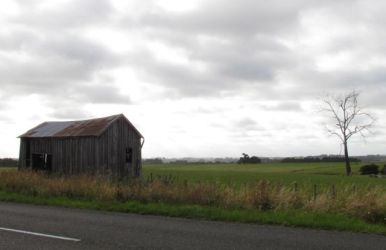
The area between Cheltenham and Kimbolton, north-east of the Manawatu town of Feilding, offers both interesting landscapes and history to the observant traveller [click here to view map]. But here, the history is not so much in what is there, but what isn’t there.

The area, once part of the Kiwitea County, is speckled with illustrious-sounding placenames, such as Almadale, Cheltenham, Beaconsfield and Kimbolton; names of soon-to-be thriving towns on surveyors’ meticulously laid plans, but towns which never grew beyond small villages. Continue reading

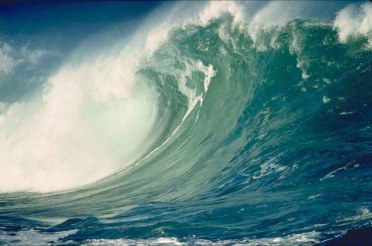
Did tsunami cause resource wars in prehistoric New Zealand?

Archaeologists have conventionally divided New Zealand prehistory into two chronological phases: “Archaic Maori” and “Classic Maori”. These phases are defined by the distinctive assemblages of artefacts (such as adzes, fishing implements and ornaments) that are associated with each phase. But they also largely coincide with the centrality of big game to Maori subsistence. During the earlier phase, moa and seals were central to people’s diet. However, as moa became extinct (by around 1500 AD), and seal populations seriously depleted, Maori had to rely more heavily on other sources of food. Continue reading

Welcome to Year of the Dragon: a New Zealand “dragon” story

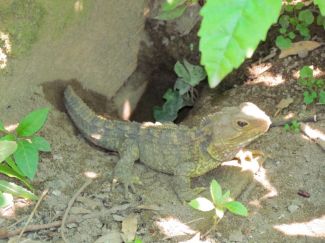
Not being an avid follower of the Chinese zodiac, I was not aware that 2012 was the Year of the Dragon until yesterday, when I read a post of a favourite blogsite of mine. So, I thought it would be an opportune time to write about a New Zealand “dragon”.

The tuatara represents 225 million years of history on four scaly (and rather wrinkly) legs; it is the only survivor of an ancient group of reptiles that roamed the earth at the same time as dinosaurs. Its relatives became extinct 60 million years ago – and for this reason it is often referred to as a ‘living fossil’. Continue reading

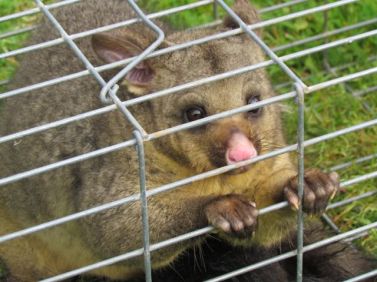
What is cute, furry and ecologically devastating?

Answer: a possum.

Even this little fellow, still not fully grown, would wreak havoc on vegetables and fruit trees, and in an indigenous forest environment, shrubs, trees, bird young and eggs.

Recently, we stayed at our friends’ lifestyle block near Tokomaru, nestled in the foothills of the Tararua Ranges [click here to view map]. Continue reading

Omarupapaku “Old Mother Parker”: the forest that was

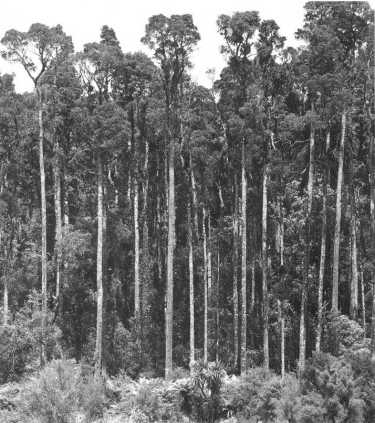
“Round Bush”, an unassuming reserve near the coastal town of Foxton, Manawatu, is a place of great significance – though a casual passer-by would barely notice it, let alone have any sense of this significance.

A description of this remnant swamp forest is thought to be the first recorded account of the botany of the Manawatu. The account was made by E. J. Wakefield, when he passed the mouth of the Manawatu River by ship in February 1840.

He wrote:  “As we ran along within two miles of the shore I saw a remarkable grove of high pine trees, near the mouth of a river called Manawatu, or ‘hold breath’, which flows into the sea about twenty-five miles from Kapiti.” Continue reading

When is a road a “line”? The curious case of Kairanga County

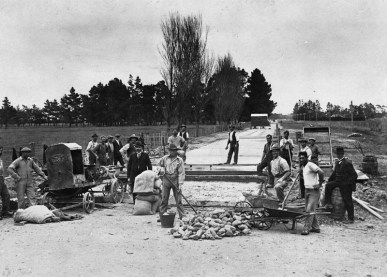
In keeping with the roading theme [see the last post], I have just finished reading The Line of the Road by M.H. Holcroft, a history of the Manawatu County from 1876 to 1976, published in 1977.

The book was published to commemorate 100 years of the Manawatu County Council (as it was at the time). One of the themes which is reflected strongly both in the book and its title, is the importance of roads and roading (and bridges) in the development of the fledgling county – they were critical to the linking of communities, the distribution of goods, food and building and construction materials, and to get people to schools, hospitals and other facilities (where they existed). Continue reading

A history of environmental history in New Zealand

In 2003, Paul Star, an Otago-based environmental historian, published a paper outlining developments in the field of environmental history in New Zealand, how it fits in to the international context, and some thoughts about the areas in which the field would most benefit from further research (“New Zealand Environmental History: A Question of Attitudes”).

It is a great little article, written in Star’s characteristic reader-friendly, jargon-free style, and I would recommend it to anyone with an interest in this field. Continue reading

Manawatu’s environmental past to be documented

envirohistory NZ‘s founder and primary contributor, Catherine Knight, has been awarded a New Zealand History Research Trust Fund Award in History to research the environmental history of the Manawatū. The project, tentatively entitled “Forested hinterland to pastoral province: the environmental transformation of the Manawatū”, will ultimately result in a book. The research will canvass the region’s history from its Māori settlement through to the present day, and will make use not only of historical, archaeological and archival records, but also the latest palaeoenvironmental research. Continue reading

Exploring NZ’s environmental history through maps

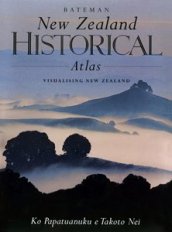
I feel slightly embarrassed to admit this (and therefore perhaps shouldn’t), but I have only recently discovered the cartographic and other visual delights which lie between the sturdy covers of the New Zealand Historical Atlas, published in 1997.

Of course, I had seen it referenced many times in scholarship on New Zealand’s environmental history, but (and this is where my less than favourable encounters with high-school geography may be revealed), I had imagined a dusty old book of the traditional style maps that only a dyed-in-the-wool geographer or cartographer would get excited about. Continue reading

History shaping the future – NZHA conference

Next week’s New Zealand Historical Association Conference features a special four-person panel dedicated to environmental history. The panel is entitled: “History shaping the future: how environmental history research can inform environmental policy and management”, and will feature papers by Professors Katie Pickles and Eric Pawson (both from Canterbury University), Professor Tom Brooking (Otago University) and Dr Catherine Knight (envirohistory NZ). Continue reading