Why green growth won’t save the world

I originally pitched this short opinion piece to Stuff to follow on from an earlier piece on degrowth. However, when I submitted the finished piece, the editor declined to publish, stating that ‘it was too like other pieces published lately’ and that the audience had reached saturation point on green growth and degrowth issues. (A deeply ironic statement given that almost everything published in mainstream media is supportive and unquestioning of a growth-oriented narrative.) I also felt it would be prescient given the upcoming debate on degrowth versus green growth hosted by University of Victoria.

In light of Stuff publishing this opinion piece in response to the debate, in which the author seems to be calculatedly stirring up Red Menace anxieties reminiscent of the Cold War era by selectively cherry-picking the likes of Marxist scholar Kohei Saito’s writings as if representative of degrowth scholarship, I thought I needed to get my original piece out there one way or another.

As I have argued previously, for the future of our country and our planet, we urgently need a mature and evidence-based discussion. This kind of fear-mongering (degrowth is a thinly-veiled Marxist plot and without growth we will no longer have cancer drugs or dialysis machines) and sneering academic elitism (‘degrowth is intellectually chaotic’ – not to mention one of its main advocates is an anthropologist who believes he has expertise on the economy!?) certainly fulfils mainstream media’s desperation for click-baity headlines, but does nothing to progress a reasoned, open-minded debate on arguably the most important issue of our time.

As I have argued elsewhere, every New Zealander has a right to have a say on the future of our economy and our planet – this should not be be the preserve of economists institutionalised within government or academia. So here is the piece that Stuff refused to publish.

A growing number of New Zealanders are expressing deep concern about climate change, particularly as recent extreme weather events on our shores show that this is no longer a remote issue that only affects people in other countries. It is affecting us here, now: destroying homes and livelihoods, disrupting communities, causing heartbreak and distress, and in the most tragic cases, loss of life.

But despite our growing concern, many of us remain quietly optimistic about the future – reassured by daily offerings from mainstream media filled with stories of innovators developing new technology that will instantly create clean energy, suck up carbon dioxide by the truck-load, and turn waste into energy or other useful things like car-seat covers. The message is, we can carry on living the energy- and resource-intensive lives we do now because clever scientists, innovators and tech geniuses will find a way out of this.

Green growth adds to the bright shiny promise that we can keep on living the way we do now (using resources at a rate equivalent to one and three-quarter Earths). Green growth promises that we can carry on pursuing growth (after all, if we don’t have growth, how will we pay to fix all the damage we are causing?) – all we need to do is decouple it from greenhouse gas emissions and other environmental harm. This can be done, green growth advocates tell us, by increasing productivity and efficiency, moving to a more circular economy, and reducing waste. All without making a dent in growth!

And indeed, relative and even absolute decoupling has been achieved in some countries for a period of time – though in many cases at least in part due to the ‘offshoring’ of carbon-intensive industries. (Happily, there is always a developing country ready to take a wealthier country’s dirty industry!) Nevertheless, this decoupling is not happening at anything close to the scale and speed required to keep warming within the 1.5 C limit. In fact, global emissions continue to go up year on year.

Through the Intergovernmental Panel on Climate Change (IPCC), climate scientists have delivered their final warning: we need to take bold action urgently to avert the untold environmental and human tragedy of irreversible climate breakdown. So, if the promise of green growth (or its affable cousin, ‘sustainable growth’) hasn’t been realised yet and there is no evidence that it will at the rate and scale required, isn’t it time we gave up on that idea and moved on to something that does give us – and more importantly, our children and their children – a chance?

That ‘something’ is degrowth. If that sounds a bit subversive, steady-state economy, doughnut economics or wellbeing economy are other economic models that embrace the same foundational principle: that is, an economic system that puts human wellbeing and ecological balance at the centre, not the blind pursuit of growth.

As discussed in this earlier piece published on Stuff, degrowth does not advocate for the carte blanche downscaling of the economy as a whole – rather it argues for the upscaling of the parts of the economy that will enhance human wellbeing while reducing our impact on the planet. These sectors include renewable energy generation, public transport, education and health and care sectors, sustainable food production, energy-efficient homes and repairable long-lasting goods. At the same time, it argues for the downscaling of the parts of our economy that are damaging to the environment, with little or no benefit for our collective wellbeing – such as single-use products and designed-in obsolescence, private vehicles, air travel, fast fashion and industrialised meat and dairy production.

And it is important to remember too, that while perpetual, compounding growth, as measured by GDP, has become the central goal for which all ‘modern’ economies strive, it has only been so since the 1950s. Since then we have become entranced by it glittering promises of ever-growing wealth for all; simultaneously blinded to all the damage that our ever-expanding global economy is doing to our planet’s seas, forests, freshwaters, atmosphere and – ultimately – to our descendants’ chances of being able to lead flourishing, fulfilling lives.

Isn’t it time we found another guiding star for our economy – that of wellbeing for all, including the living things we share this planet with?

Why renewable energy is not going to save the planet (but what might)

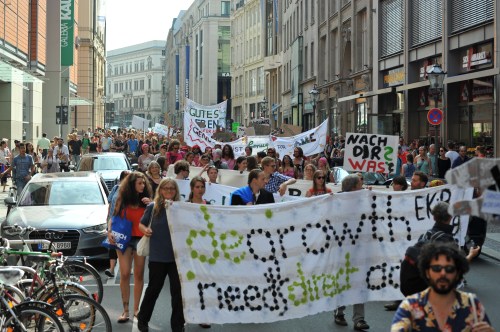
A protest in Leipzig, Germany. Courtesy https://inhabitingtheanthropocene.com

Over the last few weeks, I have published a number of articles in the media exploring topics such as energy transition, energy descent and food security from a systems lens. I am sharing them through this blog so that they can reach as a wide as possible audience. Here is the first, published on The Spinoff:

“We are all aware of the ambitious changes we need to make if we are to avert catastrophic and irreversible climate change. However, exactly what we need to do remains a confusing minefield which few of us have the time or energy to navigate.

Every day we hear of a new technology that promises to suck carbon dioxide from the atmosphere, or a space-based solar technology that will power millions of homes, or, conversely, we find out that what was touted as a solution yesterday is no longer one today.

But all this “complexity” is just a distraction from the simple reality that to avoid catastrophic climate breakdown we need to make fundamental changes to the way we live.”

You can continue reading ‘Why combatting climate change means embracing degrowth’ at The Spinoff.

Why cities are key to the future

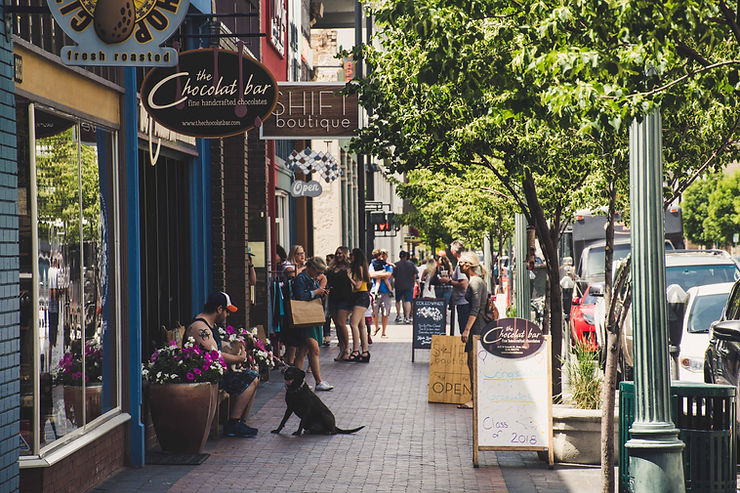
A thriving city street-scape (even better if you imagine away the parked cars!)

[This article was first published on https://www.catherineknight.nz/]

I believe cities are the key to the future. A bit controversial maybe – and no doubt many will disagree with me – but let me tell you about our experience and what has led me to this conclusion.

In 2017, my family and I moved to a lifestyle block in the country, about 30 km out from the nearest city and 15 km from the nearest shops. It seemed like a great opportunity to live close to the land, especially for our two kids, who were pre-school and primary school aged at the time.

We had the obligatory chickens, a flock of black and white Wiltshire sheep and for a while some gentle-natured lowline Angus cattle. We had a vegetable garden and a couple of fruit trees (though I did find out the hard way that sheep like to eat feijoa trees and walnuts don’t like clay soils).

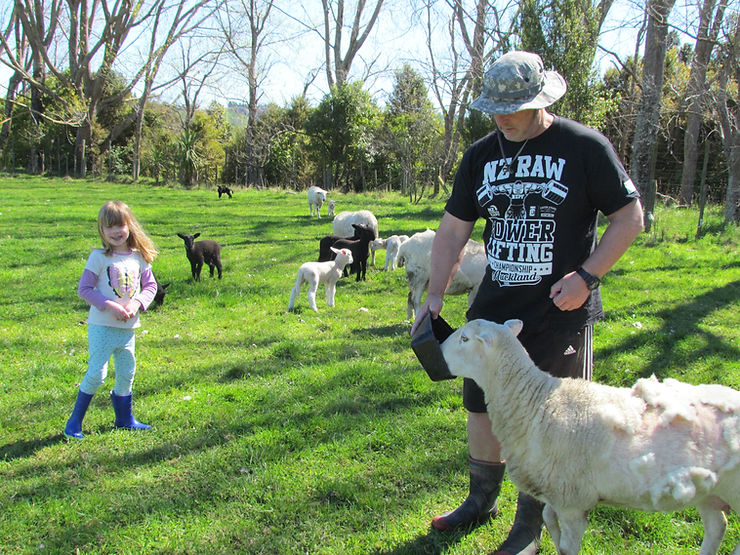
Our sheep came to the rattle of sheep nuts
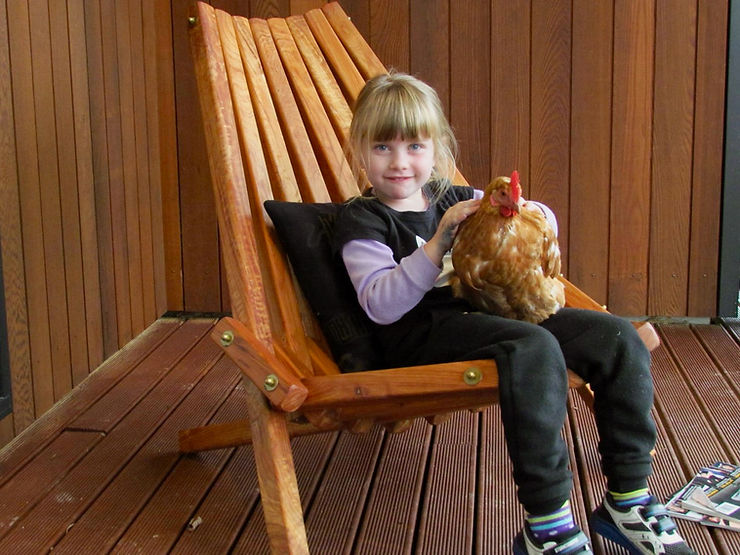
Chickens make good pets but can be quite bossy (like someone else I know!)

Every winter we planted a trailer-load of eco-sourced native trees, and a once bare field is now bordered by a thick ribbon of vegetation – or as a neighbouring farmer observed, ‘You have blocked out the view!’ (note to readers: trees are not ‘a view’). We also worked on restoring the gully stream ecosystem from its weed-infested state.

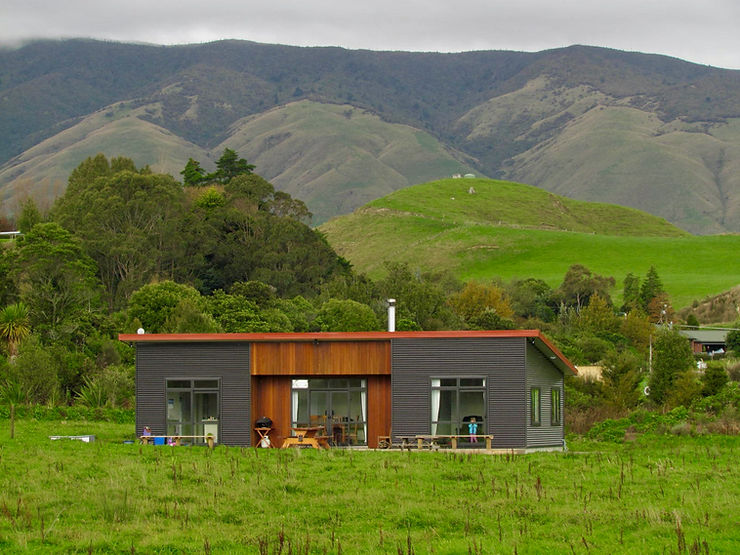
The house we built was small, barely over 100 square metres, thermally efficient and made from no-fuss, long-lasting materials.

Little house in the valley

We sought a community-oriented life. Our children went to the local country school, just half a kilometre down the road.

But of course, like many ‘lifestylers’ we also maintained our jobs, which in my husband’s case involved a 60 km commute every day. I was working as a policy and communications consultant which meant that I did not need to commute daily – a no-commute lifestyle had been a bottom-line for me before we made the shift to the country.

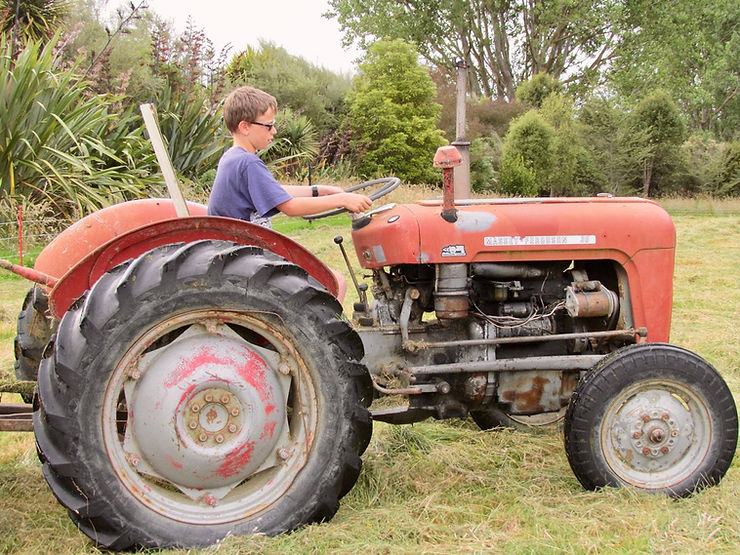
Topping the grass with a neigbour’s vintage tractor

But for all our living ‘from the land’, light-footprint aspirations, I became increasingly uncomfortable that this was a bit of a fraud. Running livestock for example, irrespective of how few, requires all the same nutritional, water-provisioning, fencing and animal welfare requirements as an actual farming operation (but without the efficiency of scale) – involving the purchasing of all kinds of paraphernalia that needed to be stored in a shipping container, along with other belongings we had accumulated along the way. We used to joke too that, with all the investment in our chickens – a premium quality henhouse, fencing, bedding material, feeding equipment and mollasses-fortified feed – the chooks really should have been producing golden eggs!

And of course, every time we needed something – milk or bread, for example – it was at least a 30 km round trip to get it.

And as the time came for our son to move on to high school, which would require a 60 km round-trip on a number of buses, it was time to re-evaluate. Not only were we concerned about our expanding carbon footprint but also the inability of our son to be independent or spontaneous – every after-school activity would require us to ferry him around.

A year ago we moved to the Kapiti Coast, to the town of Waikanae – sometimes known as God’s waiting room, because of the comparatively large proportion of older people. I was really sad about seeing our sheep go (to a new home, not to a freezer – I can happily reassure you, readers) but also felt like a bit of a hypocrite because it was my husband who had done all the work caring for them. Happily, we were able to find our chooks a new home just around the corner from our new place in Waikanae – and even get to eat their freshly laid eggs.

But apart from the sheepish regrets (bad pun alert), there has been no looking back. We now live a 5–15 minute cycle ride from both kids’ schools, a 5-minute cycle to the public swimming pool, a 10-minute cycle from two supermarkets, two farmers’ markets, our GP, our dentist, the chemist, the library and pretty much every other service we need on a daily basis.

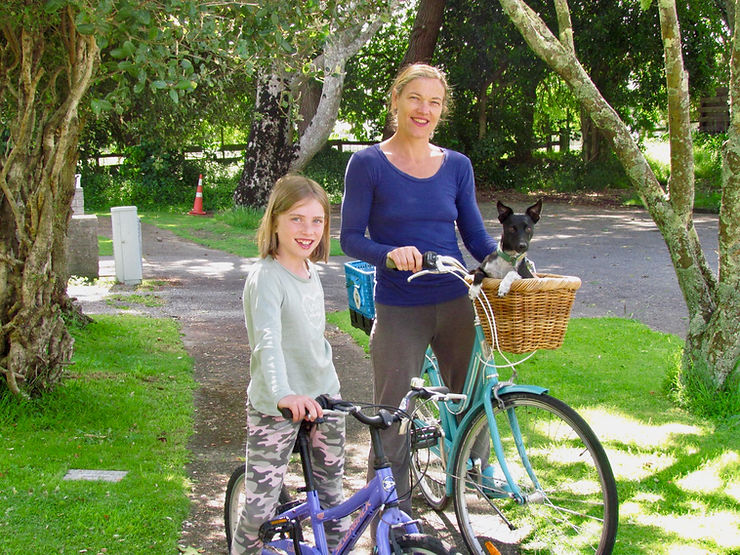
Cycling is safe and pleasurable in Waikanae – including for Archie, who has become a bit of a local celebrity

And of course, there is the all-important green- and nature space. We live a 2-minute walk from the best football fields on the Coast (fortunate, because everyone in the family is football mad), minute from a beautiful swimming spot and 1 minute from a network of nature-rich walk- and cycle-ways along the river to the sea.

Social connection is so much easier and spontaneous here too. We are forever meeting new and interesting people out on our walks or as we go about everyday life.

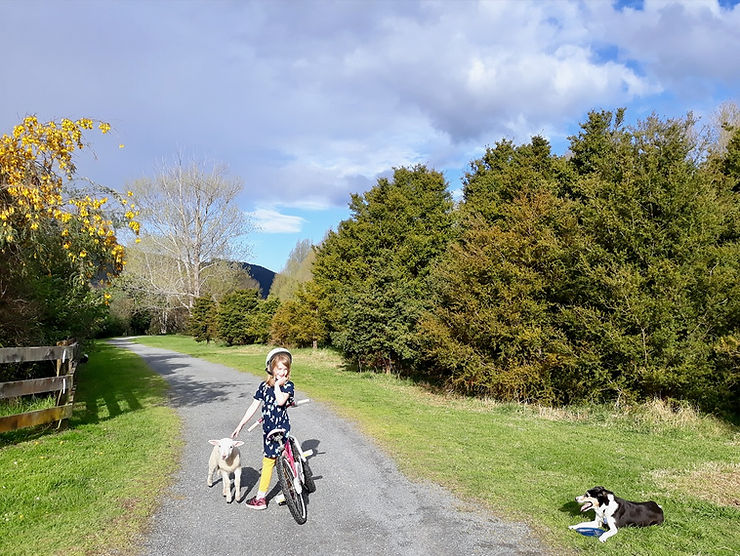
Going for a cycle along the river pathway, with Gracie the dog and Mia the lamb

Because I am fortunate enough to be able to work from home at least part of my working week, I can go for days on end without using the car.

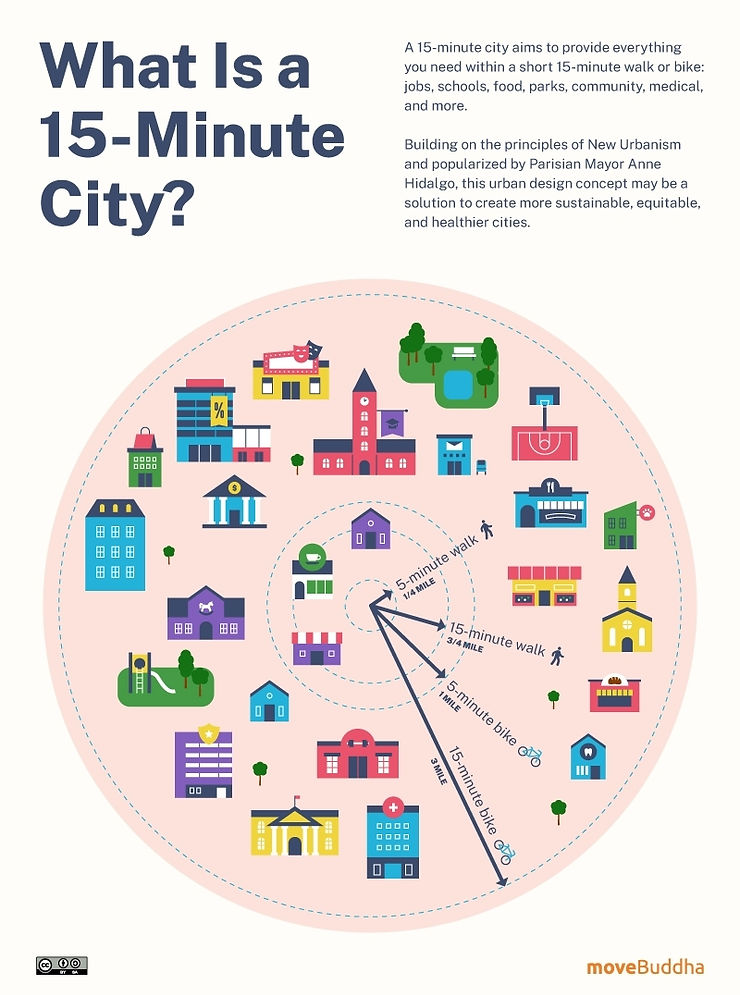
In short, whether it is that way by accident or design, we live in a 15-minute neighbourhood. In other words, we have everything we need for a good life within 15 minutes walk or cycle of our home.

But I am acutely conscious how fortunate we are – we had the means to purchase here and to the make the choices we have to be in this position.

Being able to live with a light footprint, within 15-20 minutes safe and pleasurable walk, mobility-scooter, cycle or bus-ride from most of the things you need in life should not be the preserve of the well-off. It should be everyone’s right in Aotearoa New Zealand.

Already 86% of New Zealanders live in our towns and cities. I emphatically believe that our towns and cities are going to be pivotal to a low-emissions, low-energy future. We therefore need them to be places people want to live – places people will not just survive, but thrive. Places where people feel connected – to place, people and nature. As we grapple with the challenges of the transition to a low-carbon future, now is the time to reshape our towns and cities so that they are fit for the future.

Dr Catherine Knight is author of ‘Nature and Wellbeing in Aotearoa New Zealand‘ (Totara Press, 2020) and ‘Beyond Manapouri: 50 years of environmental politics in New Zealand‘ (Canterbury University Press, 2018). To view her other publications see her website http://www.catherineknight.nz.

Protecting our future: do we need to fundamentally re-evaluate the way we live our lives?

Photo: Pexels – Pixabay

[First published on www. catherineknight.nz on 16 November 2022]

Is it time we re-evaluated our obsession with perpetual growth and shifted our focus to building a society that puts human wellbeing at its centre?

The signs that we have breached multiple biophysical boundaries are becoming harder to ignore. Climate scientists say that we have missed the opportunity to limit global warming to below 1.5 degrees and predict that the world will breach this critical threshold in the next few years. Unprecedented biodiversity loss, marine and freshwater degradation are well-documented. In recent weeks, researchers reported that 75% of fish caught in New Zealand’s southern seas contained microplastics.

For a while now, we have been reassured that if we cannot reduce our emissions as much as we need to, offsetting will take care of the rest – mainly through tree-planting. But this is a fairytale – a convenient one for industry and consumers alike. A tree planted now will not be sequestering carbon at anywhere near its peak rate for many years; meanwhile we continue to pump out climate pollution. Forests are also at increasing risk of fire due to a heating climate, or can simply be harvested – wiping out their sequestration capacity. Recently, Climate Commissioner Rod Carr condemned this strategy as ‘plant and pollute’.

But we can just switch our fossil-fuel guzzling habits to other more sustainable energies, and all will be well, right? Not quite, because there is the issue of net energy. At peak abundance, it took something like one unit of energy to produce 100 units of oil, but alternative energy sources – including hydropower, solar and wind – have a significantly lower energy return. Biofuels perform especially poorly – at 3 or less units of energy for every one consumed by some assessments. So producing enough energy to maintain our energy-hungry lifestyles will require a huge expansion of the energy sector, with all its associated environmental costs.

Photo: Pexels – Jose Francisco Fernandez Saura

Meanwhile, in New Zealand, our per capita energy consumption (in oil equivalent terms) has been on a relentless rise – tripling since the 1960s – despite all our ‘energy-saving’ devices.

The reality is simple. The continued pursuit of growth is not viable; we cannot continue consuming and throwing stuff away at the rate we are. We are already in breach of multiple biophysical limits – climate being just one – and the technological salvation we have been waiting for is nowhere in sight.

To a growing number of New Zealanders, the way forward is clear. To reduce emissions and our environmental impacts, we must reduce our consumption. Some call this idea de-growth, but this has the obvious disadvantage of sounding like a deficit. In my eyes, this is the wrong way to think about it. I believe that a shift from our obsession with economic growth and its mythical ‘trickle down’ effect, to one where human and environmental wellbeing is central, would be a path to plenitude – of improved wellbeing, time with family and friends, connection with community, time to move, have fun and be in nature.

I grew up in the 1970s. Our family had no car, we walked or biked everywhere, and occasionally took a bus; most of our clothes were hand-me-downs; we grew our own vegetables; if something broke we fixed it; we spent most of our time playing creatively or outside – not with expensive devices. Did I feel deprived or hard done by? No – we had everything we needed for a good life.

I am not suggesting we turn back time and eschew technology, Amish-like, but rather think about what we really need for a good life. When looking back on their lives, few people will regret not having the latest Smart TV or getting that status-enhancing but stress-inducing promotion. Most people will regret things like not spending more time with their kids, or not prioritising their health over work.

Photo: Pexels – Creation Hill

Whatever we call it: degrowth, steady state economy, wellbeing economy or ‘new economics’, the time to fundamentally reassess what is important to us, both individually and as a nation, is now. Is it growth, mass consumption, convenience; or is it wellbeing, connection, and time to spend with those we love?