Announcing the ‘An Uncommon Land’ Book Tour!

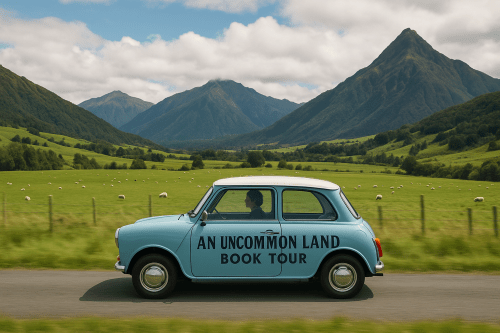
Thanks to the support and enthusiasm of lots of organisations and people around the motu, we have managed to lock in dates for events organised so far:

29 July – national (online), Wellbeing Economy Bookclub

9 August – Paekakariki, Kapiti Book Festival

12 August – Christchurch, Scorpio Books

13 August – Timaru, South Canterbury Environment Centre

14 August – Dunedin, Centre for Sustainability, University of Otago

27 August – Matamata, Transition Towns

28 August – Hamilton, Rototuna Public Library, in partnership with Go Eco (Waikato Environment Centre)

17 September – Wellington, Sustainable Business Network member’s event

Will the ‘An Uncommon Land’ book tour be the biggest thing to hit Matamata since Hobbiton?

In addition to these confirmed events, I am in the process of planning events to be held in the following centres:

  • Wellington (public event)
  • Auckland – in partnership with University of Auckland and Deep Green Aotearoa
  • Palmerston North
  • Hawke’s Bay
  • Gisborne/Tairawhiti (this may be online)

If you would like to help partner on, host, or otherwise support these events, please let me know. You can contact me via message on Substack or via my website.

Find out more about An Uncommon Land here. Read the media release here.

Government cuts threaten public history in New Zealand – just when we need it most

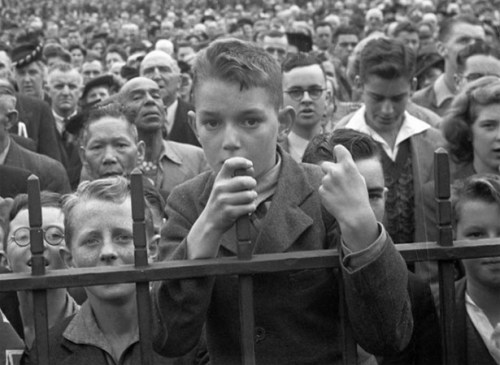
Crowds at the VE Day celebrations, Parliament Buildings, Wellington, 1945. Alexander Turnbull Library.

Just when we thought there was nothing more to destroy, the government continues its unrelenting assault on our commons. This time our knowledge commons – our knowledge of our own history.

Manatū Taonga Ministry for Culture and Heritage has announced plans to disestablish the majority of its historian positions and get rid of the digital production roles essential for maintaining platforms such as Te Ara Encyclopedia of New Zealand and NZHistory.net, which are a vital source of information about our history utilised by students, researchers and the public. (They are an invaluable go-to for researchers and writers like me.)

This will effectively end decades of vital public history work. These cuts constitute a serious threat to New Zealand’s capacity for historical research, education, and public engagement at a time when such work is more crucial than ever.

This is what three of New Zealand’s leading historical organisations have to say:

PHANZA, NZHA, and NZHTA* express profound alarm and deep opposition to the proposed restructuring of MCH. The changes threaten to dismantle decades of world-class historical scholarship, shutter vital resources for history research, and harm public education. The proposed elimination of historian positions catastrophically reduces the ability of New Zealanders to preserve, discover, and share their stories.

*Professional Historians’ Association of New Zealand Aotearoa, New Zealand Historical Association and New Zealand History Teachers’ Association. See their full statement at this link.

If you care about our history and believe that the government should too, here are some things you can do:

  • Write to Paul Goldsmith, Minister for Arts, Culture and Heritage P.Goldsmith@ministers.govt.nz
  • Write to Leauanae Laulu Mac Leauanae, Secretary for Culture and Heritage and Chief Executive (via his Executive Assistant: Bridie.Cooper@mch.govt.nz)
  • Write to Erica Stanford, Minister of Education E.Stanford@ministers.govt.nz
  • Write to your electorate MP
  • Write a statement in support of MCH’s historical work to be included in the PSA’s decision and send it to Grace Miller (contact person at the PSA for the historical community on this matter) at grace.millar@psa.org.nz.

Please be aware, I no longer post regularly to this site. For more regular updates, particularly on themes traversed in my latest book An Uncommon Land, please subscribe to my Substack ‘An Uncommon Land‘ – it’s free!

Talking commons, enclosure, denaturing – and drawing on ancestral wisdom to build a better future

This week I talked to Ben and Emma on the Planet Pulse Pacific. The conversation was diverse and wide-ranging, including:

  • What inspired me to write ‘An Uncommon Land’
  • The vulnerability of writing a deeply personal book
  • The notion of commons – its historical significance and near-erasure in New Zealand
  • Debunking the myth of the ‘tragedy of the commons’
  • How the process of enclosure continues to shape society today
  • Auckland’s lost tram network and the role of transport-integrated urban design
  • Our complicity in an economy built on exploitation and environmental degradation
  • Envisioning alternative futures: post-growth economic models, food security, and land as a shared inheritance
  • Why we must redirect public investment toward collective wellbeing

Listen to the podcast episode here.

A reminder too that for more regular posts, you may wish to check out my posts at my Substack An Uncommon Land.

Discover ‘An Uncommon Land’

My new book ‘An Uncommon Land’ was released this month and you can find out more about it (including how to order) here. For a sneak preview, check out the book trailer.

For more regular posts on the themes traversed in An Uncommon Land (eg, wellbeing economy, environmental history, the history of commons and their enclosure), why not check out my Substack An Uncommon Land.

‘An Uncommon Land’ is on the horizon

It has been a busy couple of months, getting my new book ‘An Uncommon Land’ edited, designed and laid out and then checked, re-checked, and triple-checked ready for printing. It is now being printed, due to released by the end of this month.

So, what is ‘An Uncommon Land’ all about?

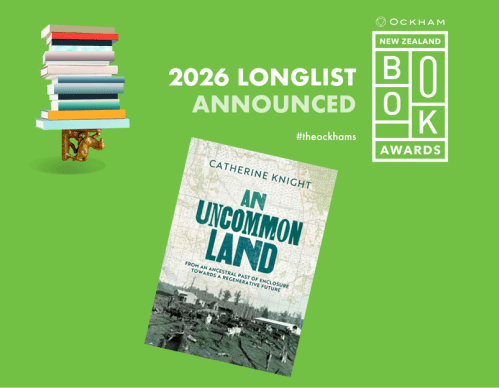
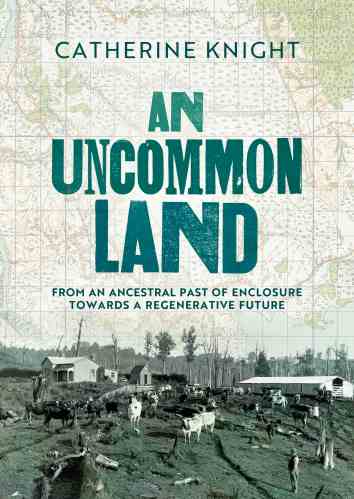
An Uncommon Land is a story of enclosure, dispossession, colonisation and – ultimately – hope for a better future. Through the lens of her ancestors’ stories, Catherine Knight throws light on the genesis and evolution of the commons, its erosion through enclosure and the ascendency of private property in parallel with the rise of capitalism – a history that has indelibly shaped New Zealand society and its landscape.

Like other European settlers, the lives and future prosperity of the author’s ancestors had their foundations in war, land appropriation and environmental destruction – but in their histories lie glimmerings of the potentiality of commons: tantalising hints of an alternative path to a re-commoned, regenerative future.

At this pivotal juncture in our history, we face unprecedented challenges caused by our exploitative actions towards nature and each other. But we have a choice: to continue along the path of untrammelled exploitation and exponential growth, or to reassess the way we engage with the natural world and the rest of society. From a past of enclosure, resource exploitation and denaturing, we could choose a path of re-commoning and regeneration, taking inspiration from our collective history.
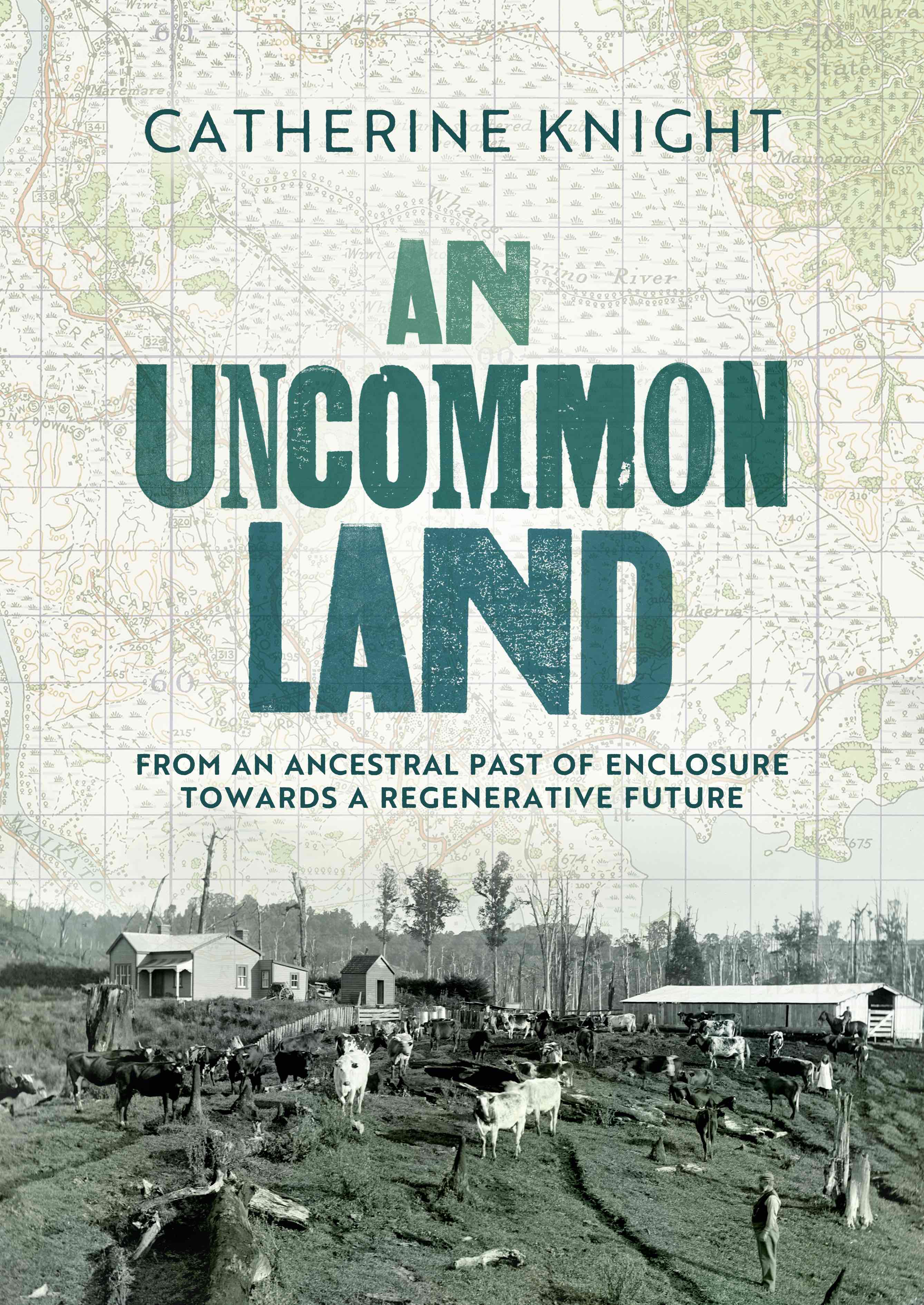
My aim with the book is to invite readers into a conversation. A gentle invitation to reassess the world we live in today by reflecting on our own ancestral past. Is it really so radical to talk about a society which carefully regulates the use of common resources, lives within limits, and values social connection beyond the accumulation of material possessions, when these were natural features of own ancestors lives not so many generations ago?

The book will be available as a beautifully designed paperback book (thanks to my talented designer Matthew Kelly) as well as an e-book. More details on my website and a downloadable flyer here. Can be pre-ordered from Nationwide Book Distributors.

There will be no formal launch, but I would love to hear from groups or organisations wishing to host author talks, panel discussions or similar exploring the themes of commons, enclosure, regenerative economy or post-growth paradigms – this could be standalone, or alongside other authors or thought-leaders – all proposals considered! Feel free to contact me via Substack or via my website.

An uncommon land

Exploring enclosure, colonisation and denaturing through an ancestral past, towards the possibilities of a re-commoned future

This week, after about four years of working intermittently on my latest book ‘An uncommon land’, I handed over my manuscript to my trusted editor. I have been released (for a while at least) from the research and writing that has been all-consuming over the last months. This is when the exciting phase of transformation begins: taking pages of painfully pored-over words and a ragtag collection of images, and crafting them into a book. And, I get to start talking with people about the ideas and reflections that have until now been confined to my mindscape and to the Word doc on my screen.

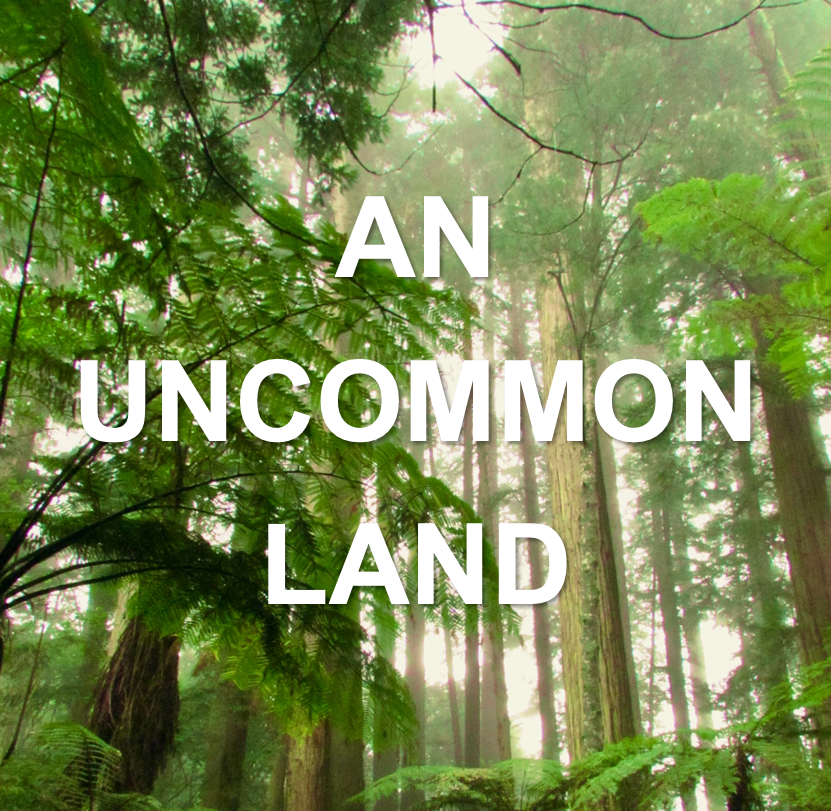
‘An uncommon land’, the title of my book, has dual meaning – one meaning that points to the past, and one meaning that points to the future. I will expand on this in subsequent posts. But, as a taster, here is a blurb about my book:

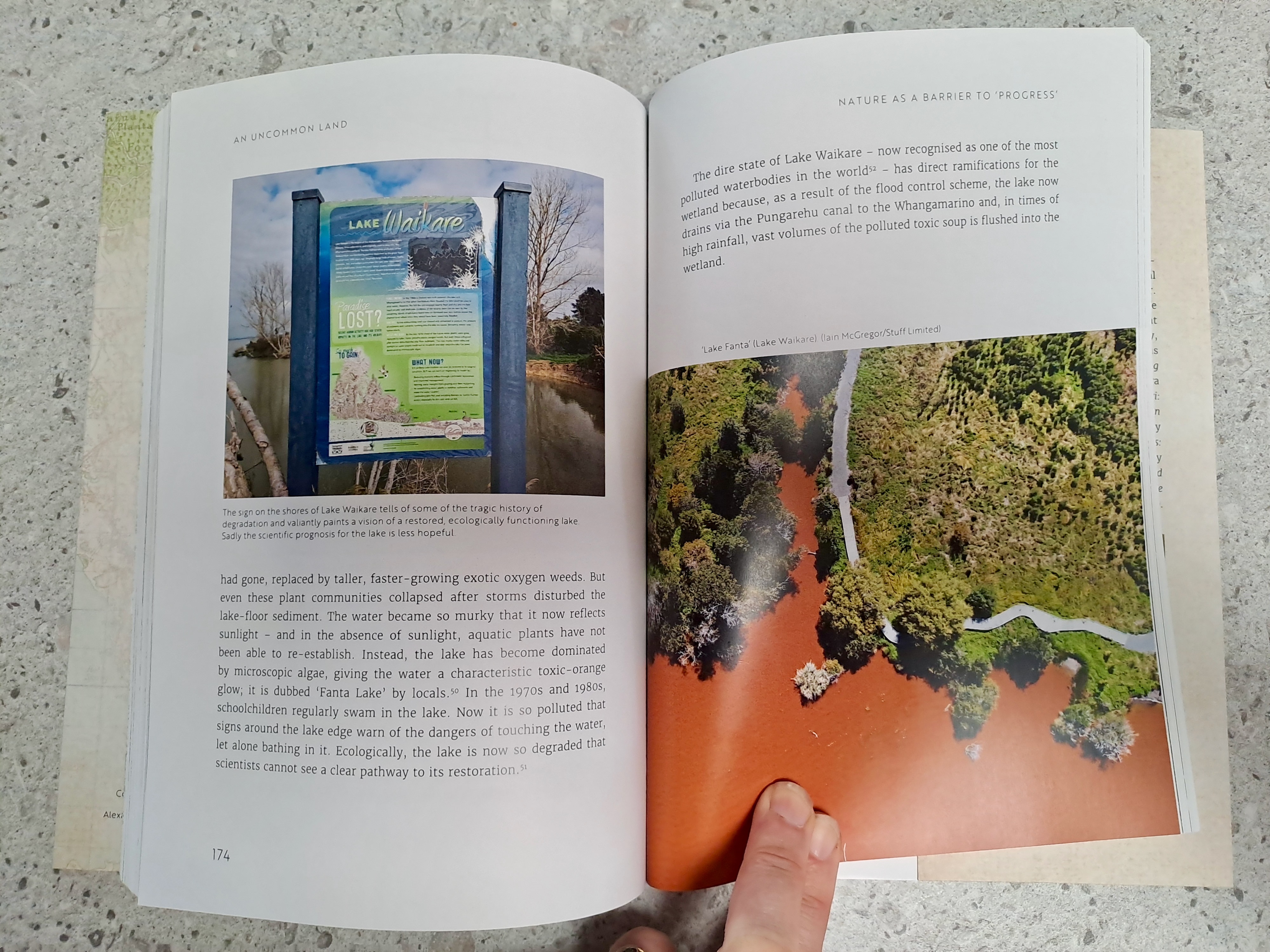
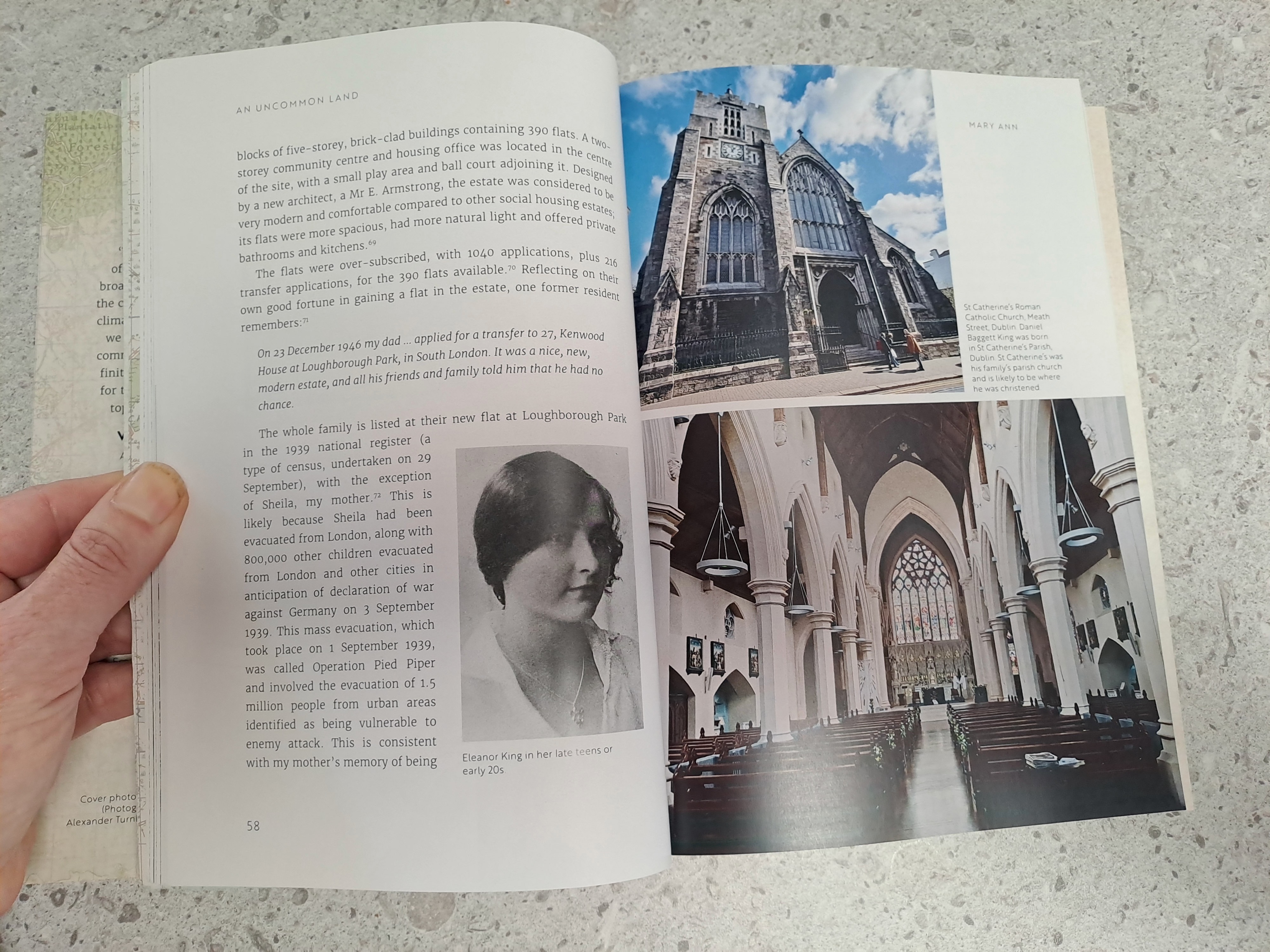
‘An uncommon land’ is a unique exploration of New Zealand’s history using the experience of the author’s ancestors as a lens. In this engaging and richly illustrated book, award-winning author and environmental historian Catherine Knight throws light on the genesis and evolution of the commons, its erosion through enclosure, and the ascendency of private property in parallel with the rise of capitalism – a history that has indelibly shaped New Zealand society.

Like other European settlers, the lives and future prosperity of the author’s ancestors had their foundations in war, land appropriation, and environmental destruction, but in their stories there are also glimmerings of the potentiality of commons – tantalising hints of an alternative path to a re-commoned, regenerative future.

This book comes at a pivotal juncture in our history: the last two centuries have been characterised by land enclosure, the unconstrained destruction of nature, and capital accumulation. As we face unprecedented challenges caused by our exploitative actions towards nature and each other, we have a choice: to continue along the path of exponential growth, or to reassess the way we engage with the natural world and the rest of society. From a past of enclosure, resource exploitation and denaturing, we could choose a path of re-commoning and regeneration, taking inspiration from our collective history.

Over the next weeks and months, I intend to explore the themes traversed in the book through some short writings on Substack. The topics will be wide-ranging and probably somewhat random and unpredictable (even to me). I hope you will join me on this unpredictable, exploratory – and hopefully, thought-provoking – journey from the past into the vast potentiality of a different kind of future.

To build true resilience we must localise and refocus on what matters

My latest piece on Newsroom reflects on the devastating impacts of Cyclone Gabrielle and the North Island floods and argues that “building back better” needs to encompass more than building “better” infrastructure.

“…there is a growing realisation that to make the transition to a low-carbon economy quickly enough to slow the accelerating effects of climate change and ecological breakdown, we must reduce our impact on the planet by consuming less, now. Isolated pockets of change, including the much-vaunted ‘behaviour change’ by the individual (which sits so comfortably within a neoliberal mindset) will not be enough. Only system-wide change will enable us to downscale our economy in time to have any chance of averting catastrophe.”

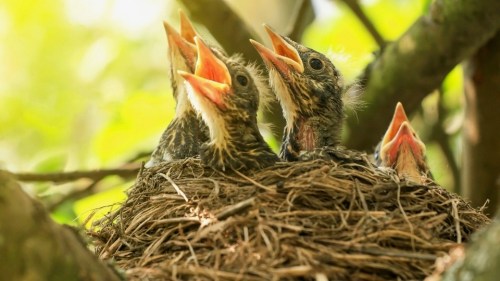
As these catastrophic weather events have shown us, our communities – including our biggest city, for all its edifices of concrete and steel – are hopelessly vulnerable: they are like helpless, naked baby birds wholly reliant on their parents to bring them the sustenance they need to survive. But what if their mother can no longer get to them, what if their nest blows out of the tree? Here the analogy ends, because unlike our hapless nestlings, this is not a condition that must be accepted as ‘nature’. This helplessness has been created over a long period of colonisation, industrialisation and enclosure – processes that will continue if unchecked.”

Read the article here.