Views of Kapiti 8: the kahikatea of Ngatiawa

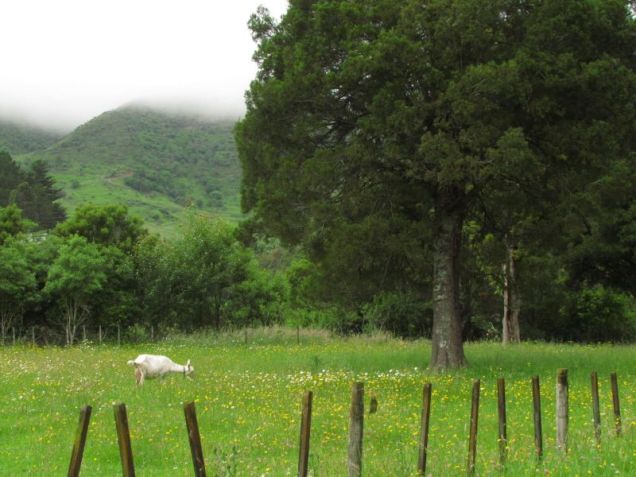
It was a rainy afternoon on the last day of 2011, so the family and I went out on a drive into the countryside to get out of the house. We ventured into the Reikorangi hills to the east of Waikanae, and just at the junction of Ngatiawa and Kents Road [click here to view map], came across this paddock with a few scattered kahikatea in it. The trees are too small to be original, but are likely to have spontaneously regenerated after the forest that clothed the hills here was cleared. Continue reading

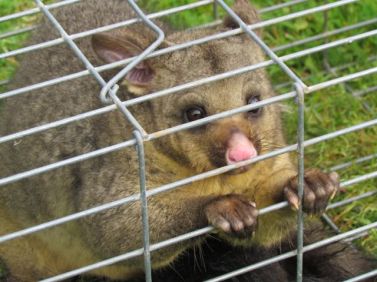
What is cute, furry and ecologically devastating?

Answer: a possum.

Even this little fellow, still not fully grown, would wreak havoc on vegetables and fruit trees, and in an indigenous forest environment, shrubs, trees, bird young and eggs.

Recently, we stayed at our friends’ lifestyle block near Tokomaru, nestled in the foothills of the Tararua Ranges [click here to view map]. Continue reading

Omarupapaku “Old Mother Parker”: the forest that was

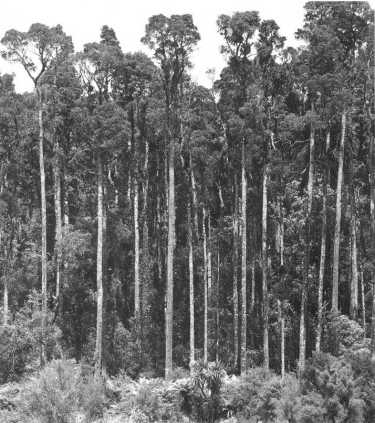
“Round Bush”, an unassuming reserve near the coastal town of Foxton, Manawatu, is a place of great significance – though a casual passer-by would barely notice it, let alone have any sense of this significance.

A description of this remnant swamp forest is thought to be the first recorded account of the botany of the Manawatu. The account was made by E. J. Wakefield, when he passed the mouth of the Manawatu River by ship in February 1840.

He wrote:  “As we ran along within two miles of the shore I saw a remarkable grove of high pine trees, near the mouth of a river called Manawatu, or ‘hold breath’, which flows into the sea about twenty-five miles from Kapiti.” Continue reading

When is a road a “line”? The curious case of Kairanga County

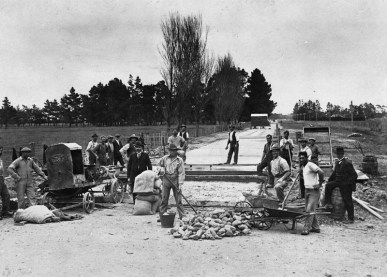
In keeping with the roading theme [see the last post], I have just finished reading The Line of the Road by M.H. Holcroft, a history of the Manawatu County from 1876 to 1976, published in 1977.

The book was published to commemorate 100 years of the Manawatu County Council (as it was at the time). One of the themes which is reflected strongly both in the book and its title, is the importance of roads and roading (and bridges) in the development of the fledgling county – they were critical to the linking of communities, the distribution of goods, food and building and construction materials, and to get people to schools, hospitals and other facilities (where they existed). Continue reading

envirohistory NZ: better and brighter (but without the ads)

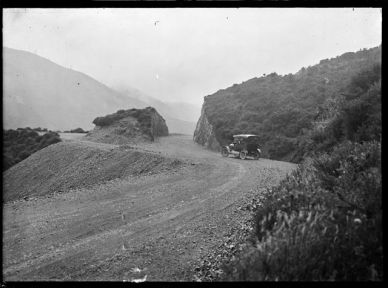
Just like the Rimutaka Road from Wellington to the Wairarapa (pictured), we at envirohistory NZ are always looking for ways to improve ourselves.

The eagle-eyed among you may have spotted a couple of changes, but the other change involves something that you will not see. Continue reading

Wairarapa Moana: a story of dispossession

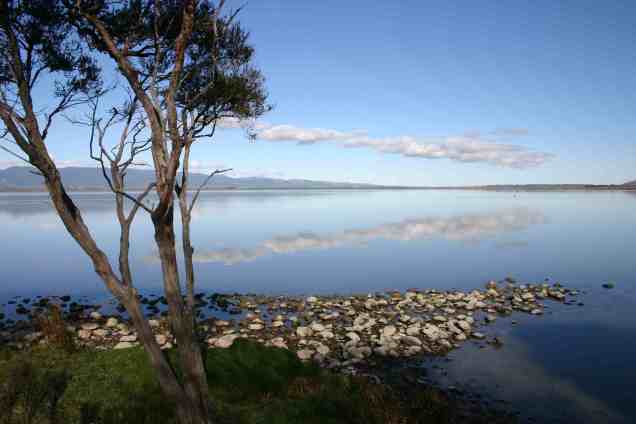
A couple of weeks back, I took the train to the Wairapara. Emerging from the tunnel through the Rimutaka Ranges (which at 8.8 kms is one of the longest train tunnels in New Zealand), the landscape was striking. What impressed me was the sheer scale of the agricultural plains: the indigenous forest that once covered the hills and plains long ago replaced by an orderly patchwork of fields. But a second glance down onto the plains to the east revealed the presence of a large watery expanse: not blue, exactly – more swirls of green and brown – but unmistakably a lake. Continue reading

A history of environmental history in New Zealand

In 2003, Paul Star, an Otago-based environmental historian, published a paper outlining developments in the field of environmental history in New Zealand, how it fits in to the international context, and some thoughts about the areas in which the field would most benefit from further research (“New Zealand Environmental History: A Question of Attitudes”).

It is a great little article, written in Star’s characteristic reader-friendly, jargon-free style, and I would recommend it to anyone with an interest in this field. Continue reading

Manawatu’s environmental past to be documented

envirohistory NZ‘s founder and primary contributor, Catherine Knight, has been awarded a New Zealand History Research Trust Fund Award in History to research the environmental history of the Manawatū. The project, tentatively entitled “Forested hinterland to pastoral province: the environmental transformation of the Manawatū”, will ultimately result in a book. The research will canvass the region’s history from its Māori settlement through to the present day, and will make use not only of historical, archaeological and archival records, but also the latest palaeoenvironmental research. Continue reading

What is forest?

The excellent UK site History and Policy carries a paper by Ben Cowell, written earlier this year, in the wake of the UK government’s proposal to sell off much of the public forest estate. There was a public outcry, which appeared to take the government by surprise. Cowell suggests that had policy-makers been more aware of the history of contestation regarding rights and access to forest, the government would not only have been more prepared, but may also have formulated its proposal differently. Continue reading

Nature study in NZ: a teacher’s reflections on historical approaches

In a recent issue of Education Today, Bill Clarkson, a veteran teacher and environmental educator, wrote about nature study in New Zealand and reviewed some of the pioneering literature which influenced how nature study was taught in New Zealand. These books include “New Zealand Nature Study” by W. Martin (1947) and “Nature Study: handbook for teachers”, by D. Beggs (1966). [Click here to read the full article.] Continue reading