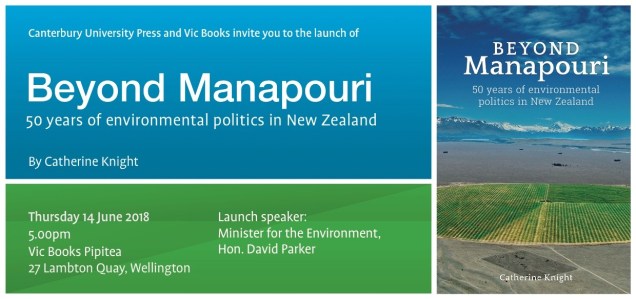
You are invited to the launch of “Beyond Manapouri” 14 June 2018

“Beyond Manapouri” has arrived, and looks amazing!
… but that’s just my opinion, so I canvassed a number of individuals in my community to gauge their reaction to the book.

 Long-time envirohistory NZ followers may remember that back in mid-2016, I decided to ‘retire’ envirohistory NZ and transition to a new website and blog with a slightly different focus (see envirohistory NZ lives on! (but somewhere else)). Since then, I have only blogged intermittently on envirohistory NZ, to mark big happenings, like the release of books. This move coincided more or less with some big life changes (good ones, I hasten to add!) (see Life changes). Continue reading

 The latest “shock” announcement by Environment Minister David Parker, that limits need to be set at a national level to curb further freshwater degradation (and this may mean less cows in some places!) has triggered all the predictable responses:
“Does David Parker hate farmers?”
“Most farmers are already putting a lot of effort into reducing pollution – regulation is unnecessary.” Continue reading

 A new book, Beyond Manapouri: 50 years of environmental politics in New Zealand,traces the history of environmental governance in Aotearoa New Zealand since the heady days of the 1969 Save Manapouri campaign and tackles the reasons for our failure to address our biggest environmental issues.
Dr Catherine Knight, an environmental historian, says her book – published by Canterbury University Press – suggests there are key cultural shifts New Zealanders need to make if real progress is to be made in the environmental sphere. Catherine draws on her own insights as a government ‘insider’ having worked at the coalface of environment policy for nine years.
“We’re on the cusp of significant shifts in our environment and our attitudes towards it – Continue reading

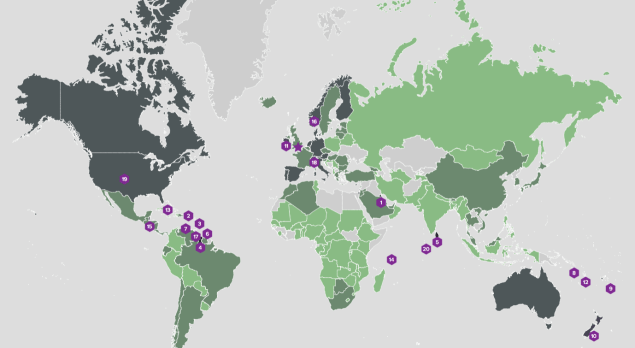 Earlier this year it was revealed that New Zealand has become one of the worst in the world for the generation of waste. This is according to World Bank data, which ranks NZ has tenth worst of all countries surveyed for the generation of urban waster per capita (see map above). Continue reading

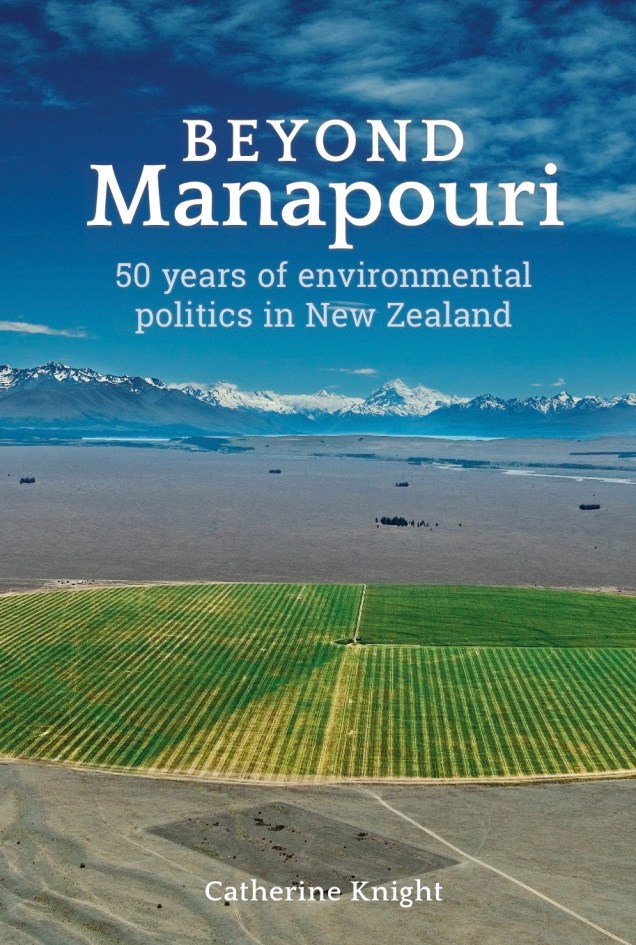 For more information and ordering go to Nationwide Books or www.catherineknight.nz

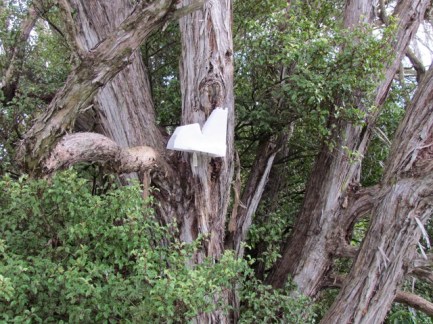 Decisions made by men more than a century and a half ago led to me facing an unpleasant ethical dilemma a few days ago.

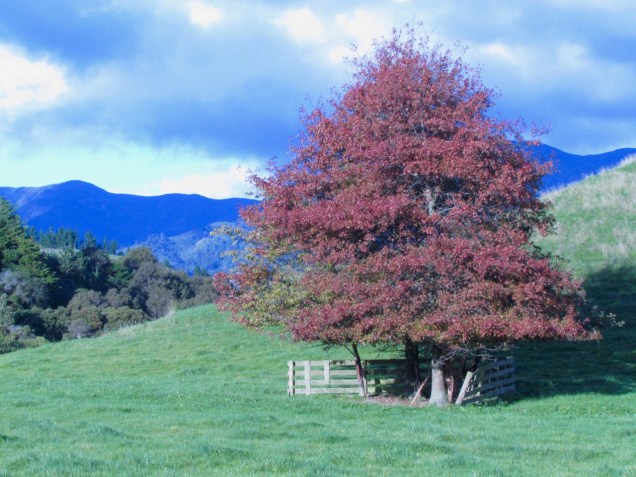 It was mid-autumn when we moved to our new home in the Pohangina Valley, and the valley has been ablaze with autumn colour – one of the advantages of living in a colder climate where seasons are more delineated.
This has been one of my favourite scenes: a vista from our drive, across the farmer’s paddock out to the Ruahine Range. I love the vibrant contrast of colour: the red of the solitary pin oak, the green of the pasture and bush, against the backdrop of blue-tinged mountain range.
This post was first published on www.catherineknight.nz
See also: The influence of seasons on culture and environmental perceptions; More about seasonal change (fungi)

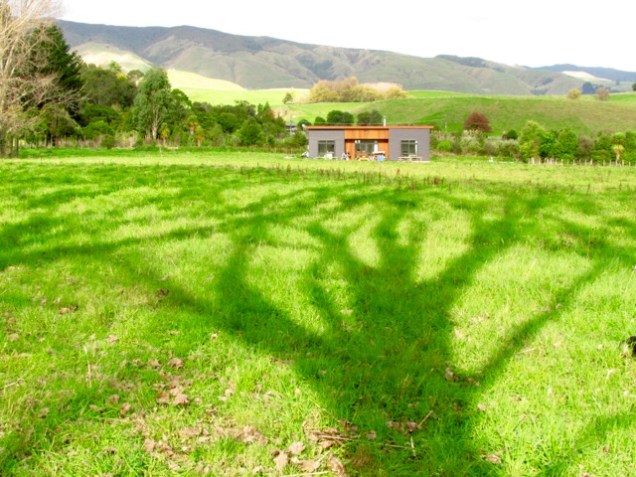 About three weeks ago my family and I made a very big life change. We moved from comfortable, convenient, leafy suburbia on the Kapiti Coast to a 7-acre block of land in rural Manawatu. This involved moving ourselves out of our 213 m2 4-bedroom, double-garaged home into a garage-less house of exactly half that size.
There is a very good reason for us doing this: it wasn’t the plan.

 envirohistory NZ