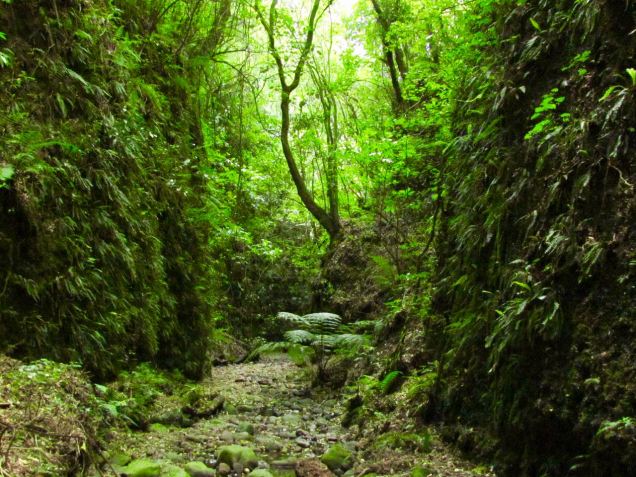
 Do other countries have ‘gullies’? – I am not sure. The dictionary tells me they are also known as ‘small valleys’ and ‘ravines’. ‘Valley’, even of the diminutive kind, seems a bit too bucoIic to me, while ‘ravine’ sounds way too treacherous (though in fairness, some gullies are pretty precipitous). Continue reading
Author: envirohistory NZ

‘Beyond Manapouri’ shortlisted for award
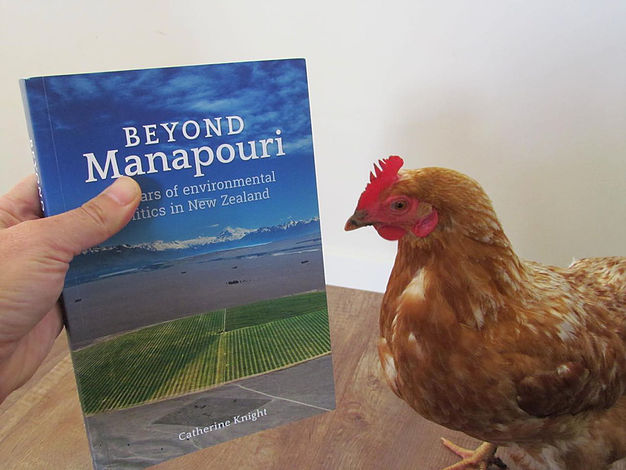
Forget about what Pixie thinks, Beyond Manapouri: 50 years of environmental politics in New Zealand has been short-listed for the New Zealand Heritage Book Awards, alongside some prestigious authors such as Dame Ann Salmond.
Share this:

The meaning of rivers in Aotearoa New Zealand
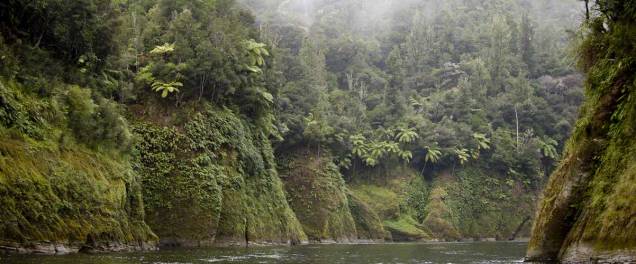 A paper exploring how the perception of rivers has changed over time has just been published in a special issue of the international journal River Research Applications, entitled The meaning of rivers in Aotearoa New Zealand – Past and present”.
This paper examines how attitudes towards rivers in Aotearoa New Zealand have
evolved since the country’s settlement by Europeans, two centuries ago. For most
of our postcolonial history, rivers have been viewed as something to be controlled
and managed—even “improved.” But today, rivers are increasingly being recognized
as embodying a broad range of values from the ecological to the spiritual—not simply
as a “channel of water” that can be exploited for human ends. Although much of this
evolving understanding stems from the advance in scientific knowledge, much too has
its roots in our collective past.
The paper can be viewed here: River Research Applications
Share this:

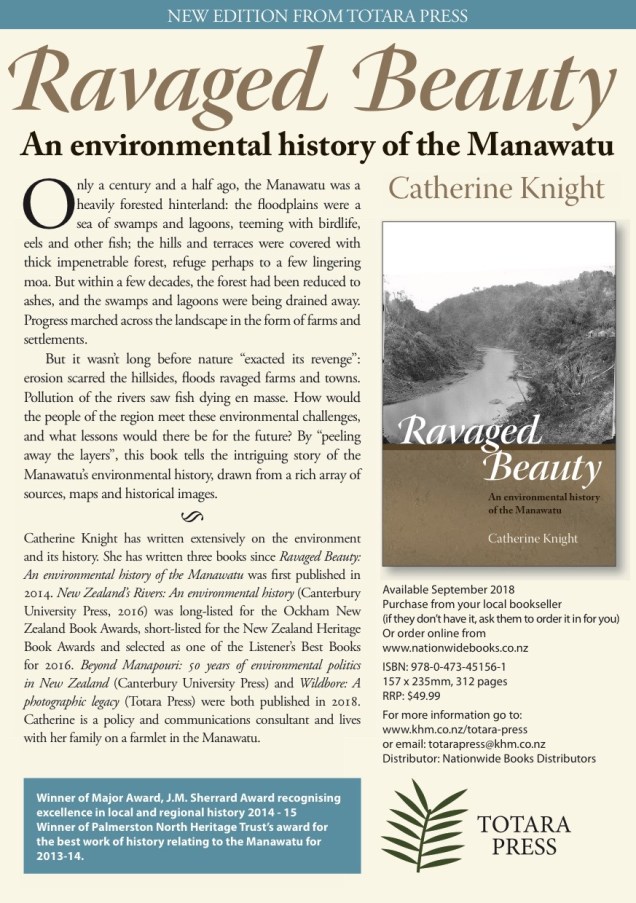
New edition of “Ravaged Beauty” now available
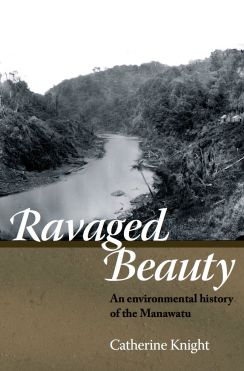 Yes, the rumours are true! The sparkly new edition of “Ravaged Beauty: An environmental history of the Manawatu”, published by Totara Press, is now available! And it looks stunning. The French flaps are back by popular demand, the photographs are almost jumping off the page they look so good, and we have made a few design enhancements to make your reading experience all the more enjoyable.
But best of all? The price remains exactly the same, at $49.99.
Find more details, including flyer, here. Purchase from your local bookstore, or order online from Nationwide Book Distributors.
Share this:

Trees as sacred – what we can learn from “Tonari no Totoro”
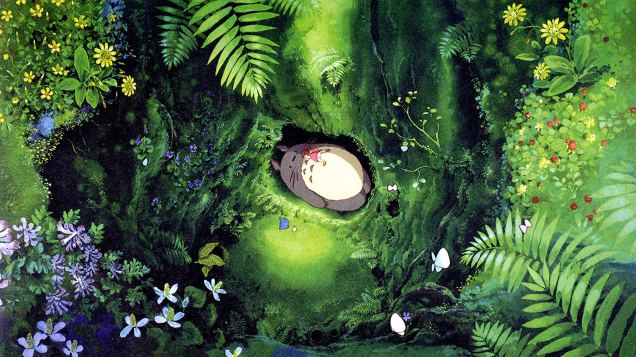 Earlier this week, Jesse Mulligan put a call out to listeners to share stories or descriptions of their favourite tree on his Afternoons show on RNZ. Most anecdotes or descriptions that flowed in were about actual trees, but one listener identified as his or her favourite tree the one in the Japanese anime “Tonari no Totoro” (My neighbour Totoro). Jesse Mulligan was a little bemused by this, but as a Japanophile – and more specifically – a Biophilia-Japanophile (just made that one up) – I could completely understand this person’s sentiment. Continue reading
Share this:

“Wildbore: A photographic legacy” – launch photos
The launch of “Wildbore: A photographic legacy” on Wednesday night was an amazing success, with over 80 people attending, including around 20 people from the wonderful Wildbore clan. Thank you all for coming along and making it such a successful and enjoyable event. Here are some photo highlights.
Share this:

“Ravaged Beauty” – sparkly new edition coming soon!
Share this:

Landscape transformation in New Zealand
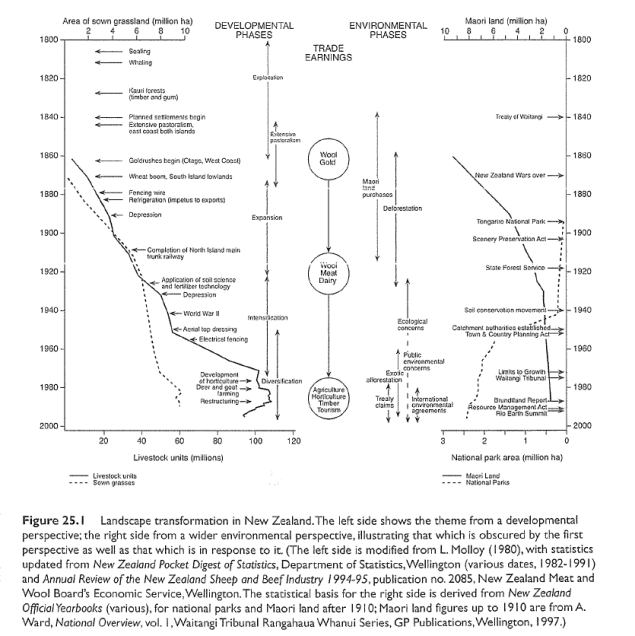 I was recently alerted to this interesting graph showing the various drivers in landscape transformation in Aotearoa New Zealand over the past two centuries. The graph appears in Eric Pawson’s chapter ‘Sustainability and management of the environment’ in The physical environment: A New Zealand perspective, edited by A. Sturman and R. Spronken-Smith (Oxford University Press, 2001). It would be an intriguing to see how the graph looks beyond 2000.
Share this:

‘Beyond Manapouri’ is a must-read for all landscape architects and planners
“Reading this book will likely change your perception of the New Zealand environment. It is a must-read for all New Zealand landscape architects, planners, resource management lawyers and indeed all New Zealanders that want to achieve a better future for their children and their children’s children.”
This was the conclusion of Peter Kensington, planner and landscape architect in a recent review of Beyond Manapouri: 50 years of environmental politics in New Zealand (Canterbury University Press).
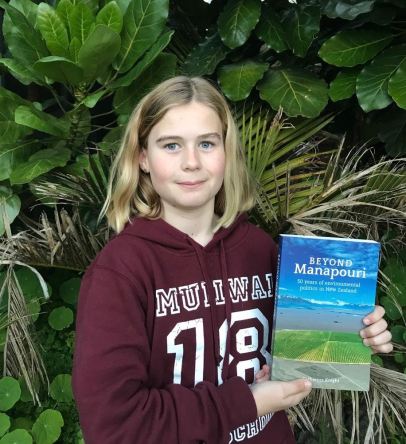
Madi Kensington, aged 11 years old, also reviewed the book, and concluded:
“This book perfectly explains how New Zealand has changed its view on the environment many times over the past 50 years. In the early days, our environment was regarded as something our government didn’t need to worry about, but as the years wore on, things started getting more serious. Knight has explained these issues with perfectly-worded descriptions and given real examples, making for convincing reading.”
To read the full review go to the Landscape Architecture Aotearoa website.
Share this:

Pohangina wetlands: Wildbore cache no.22
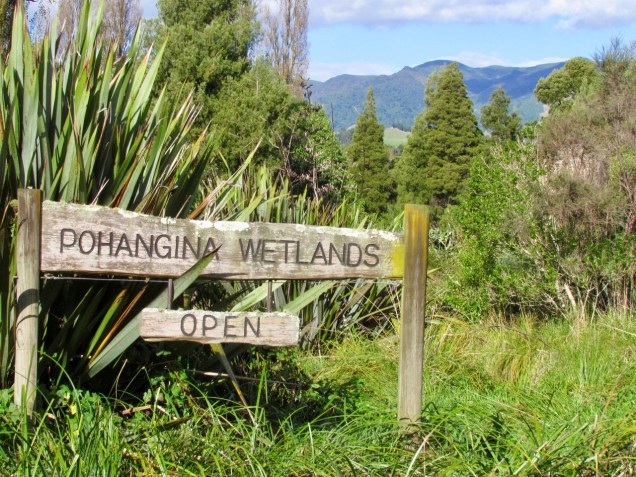
While researching the clues for a cache at Pohangina wetlands the other day, I stumbled across this not-so-fun fact: scientists estimate that more than 98 of percent of kahikatea forest, which grew in lowland, swampier areas, has been lost nationwide since European colonisation of New Zealand. In the Manawatu region, where wetlands once covered much of the river plains extending from Palmerston North out to the coast, more than 90 per cent of wetlands have been lost. This is a tragic legacy of European settlement, but also makes the Pohangina Wetlands all the more special. Continue reading

 envirohistory NZ