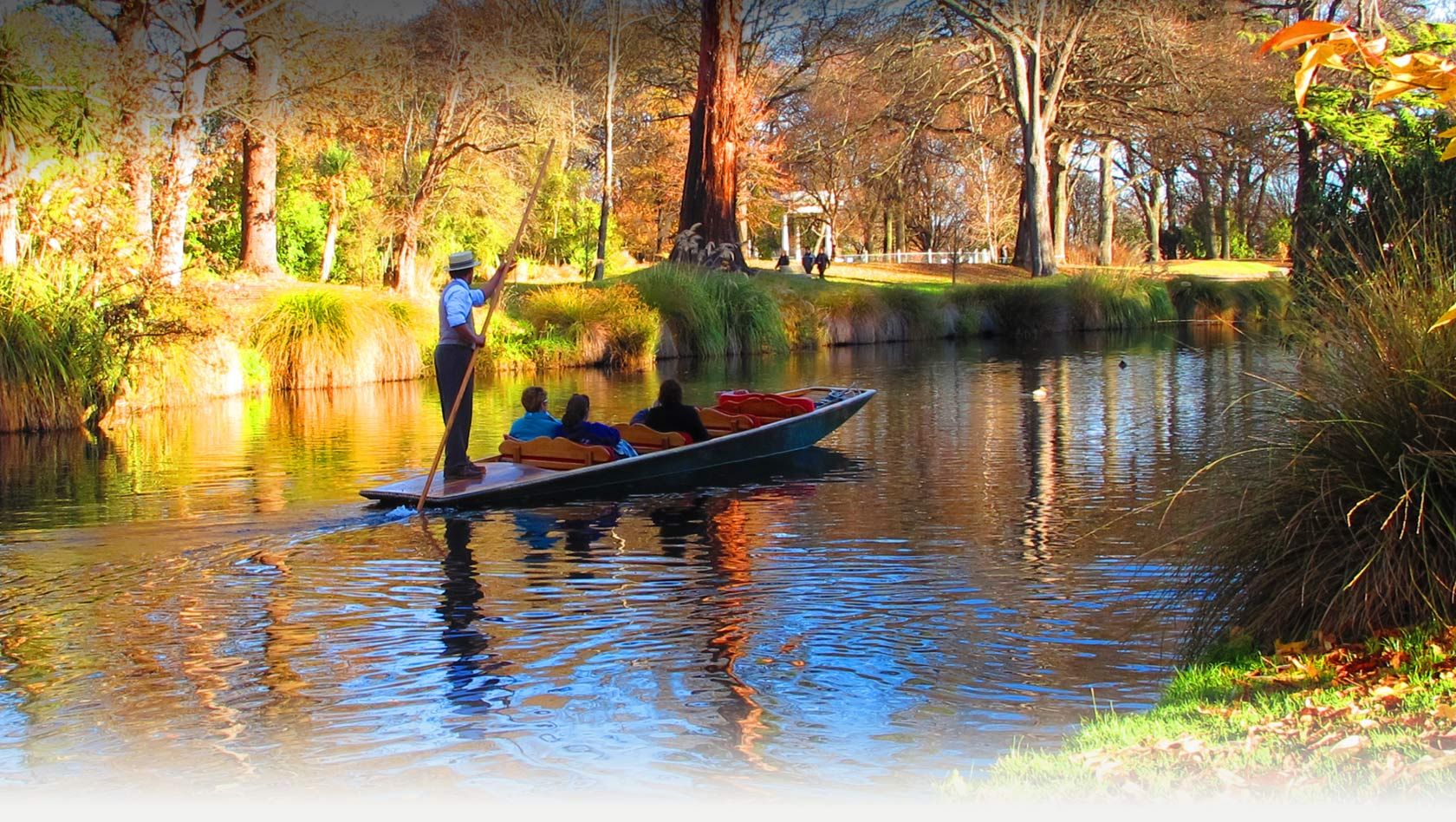
A “pleasant” river, complete with punts: Avon River through Christchurch
Reading Andrew McRae’s paper “Fluvial Nation: rivers, mobility and poetry in Early Modern England”, I was struck by its opening statement.
In 1665, the speaker of the House of Commons, addressing the King and Parliament reflected that: “Cosmosgraphers do agree that this Island is incomparably furnished with pleasant Rivers, like Veins in the Natural Body, which conveys the Blood into all the Parts, whereby the whole is nourished, and made useful.” Continue reading →
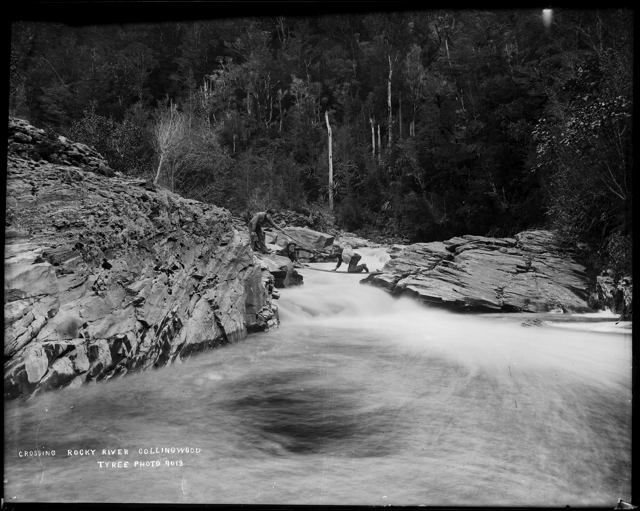
Two men using a plank to cross a river in the Collingwood area. Date unknown. Not to be reproduced without permission from Alexander Turnbull Library, ref: G-979-10×8
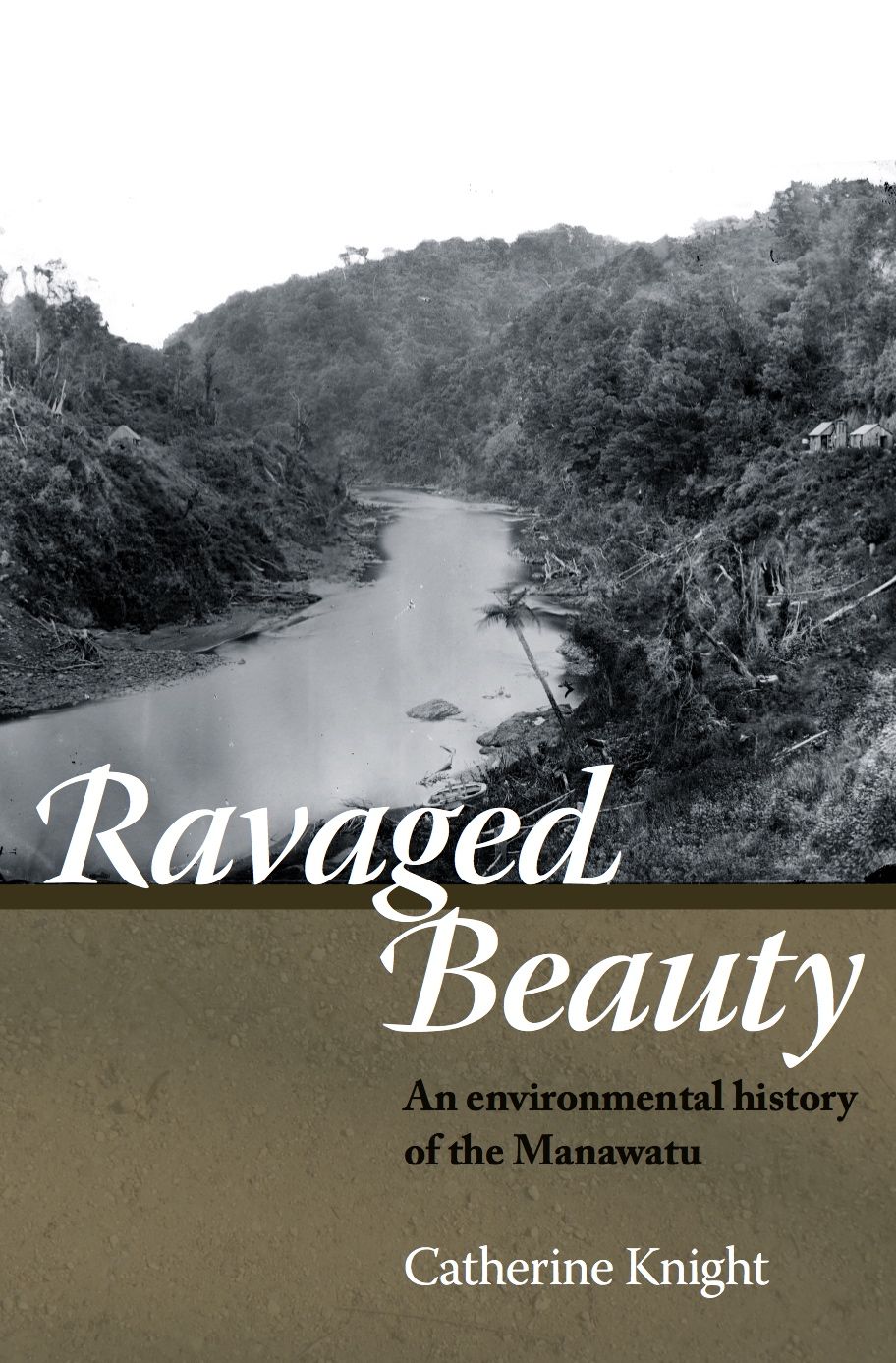
The Manawatu River was a defining feature of the Manawatu Region, which was the subject of my recently published book, Ravaged Beauty. This has led me to research the environmental history of our rivers more broadly. Continue reading →
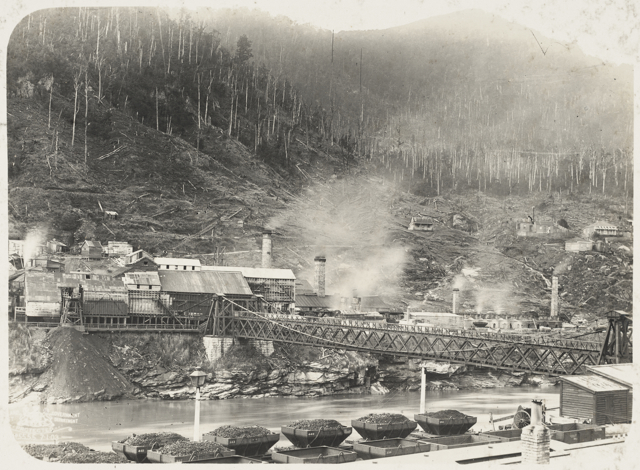
View of the coalmining town of Brunner, by the Grey River, showing the bridge and the mine. Coal ready for transport by rail can be seen just below the photographer. Not to be reproduced without permission from Alexander Turnbull Library, PA1-o-498-36.
Some may argue that too often rivers are treated like drains even today, but a century and a half ago, rivers were drains under this country’s law.
Under the Public Works Act 1876, “drain” was defined to include both artificial channels and “every natural watercourse, stream, and river not navigable” (s. 165). Under the Mines Act, certain rivers could be proclaimed “sludge channels”, as was the case with the Waihou and Ohinemuri Rivers in Waikato. Continue reading →
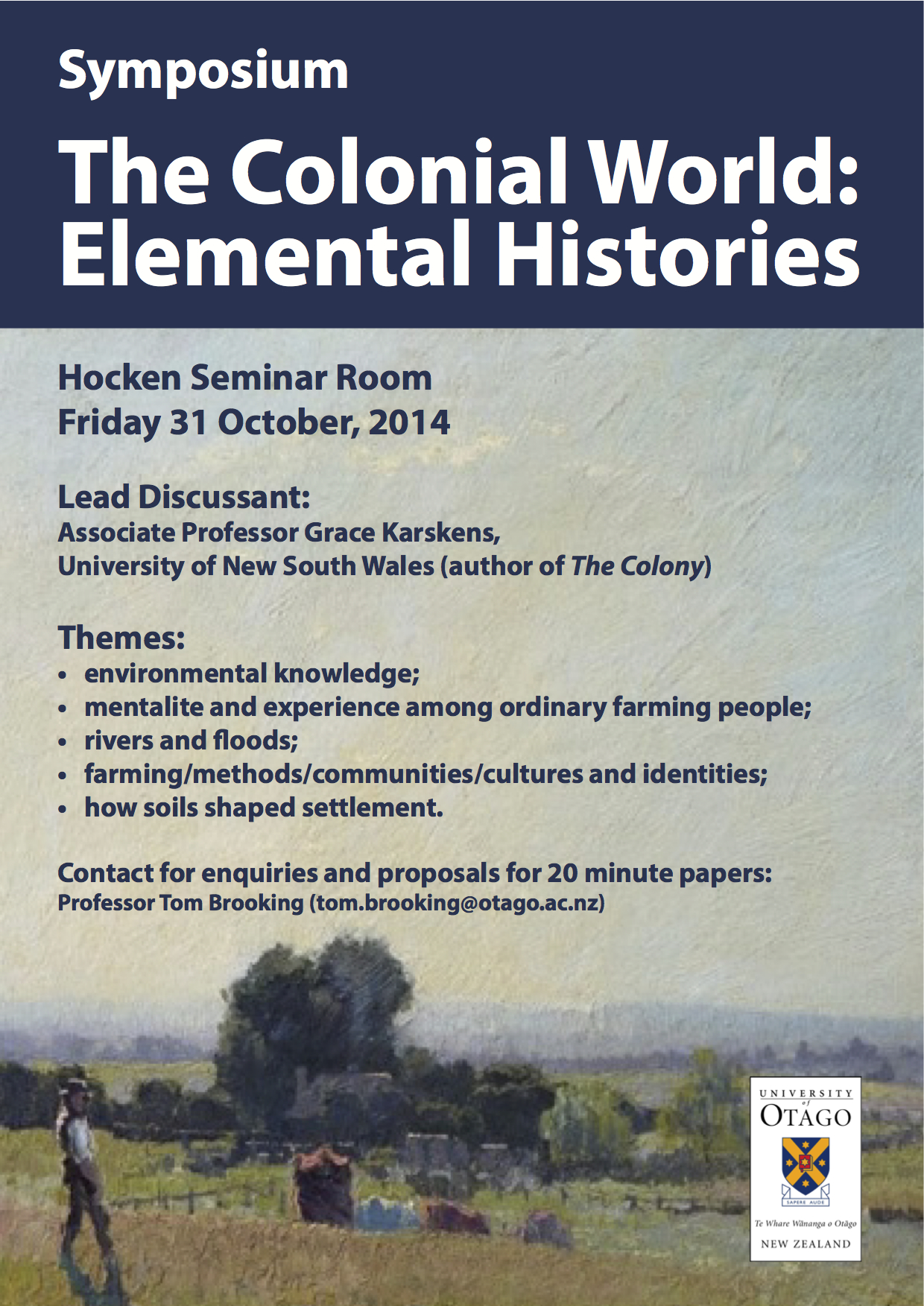
Paper proposals are now being invited for an upcoming environmental symposium at Otago University, Dunedin: The Colonial World: Elemental Histories — download flyer —
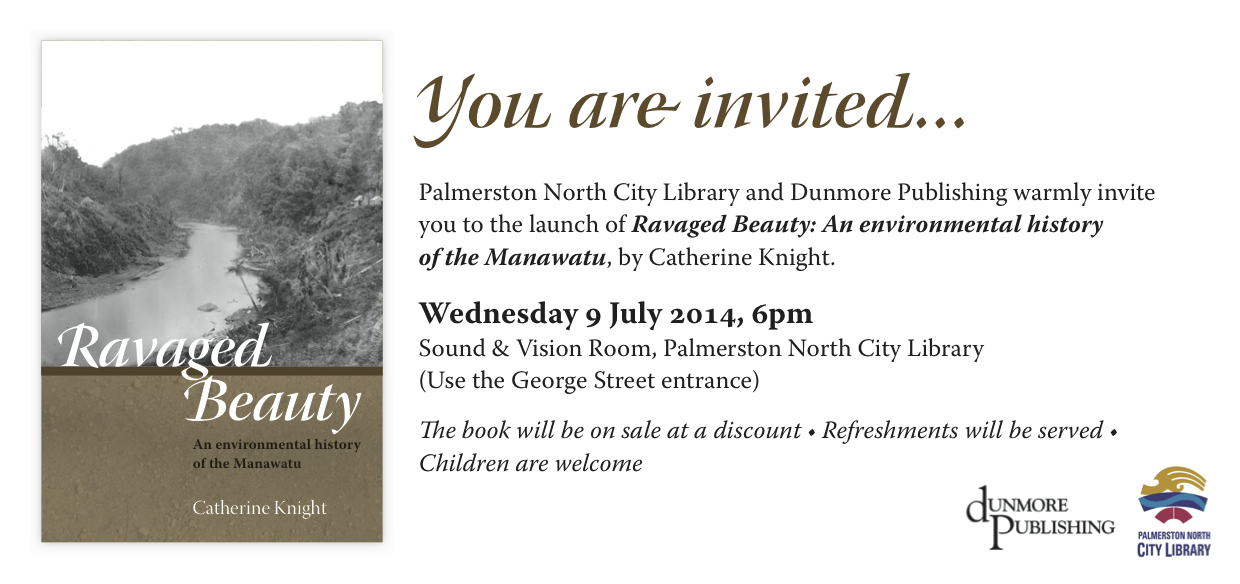
The long-awaited Ravaged Beauty: an environmental history of the Manawatu is available June 2014
.
Ravaged Beautytells the story of one place, from prehistory to today. But its themes are universal. What motivates the human desire to modify and exploit their natural environment, and have people learned anything from the consequences? Read this new book to find out.
.
Only a century and a half ago, the Manawatu was a heavily forested hinterland: the floodplains were a sea of swamps and lagoons, teeming with birdlife, eels and other fish; the hills and terraces were covered with thick impenetrable forest, refuge perhaps to a few lingering moa. Continue reading →
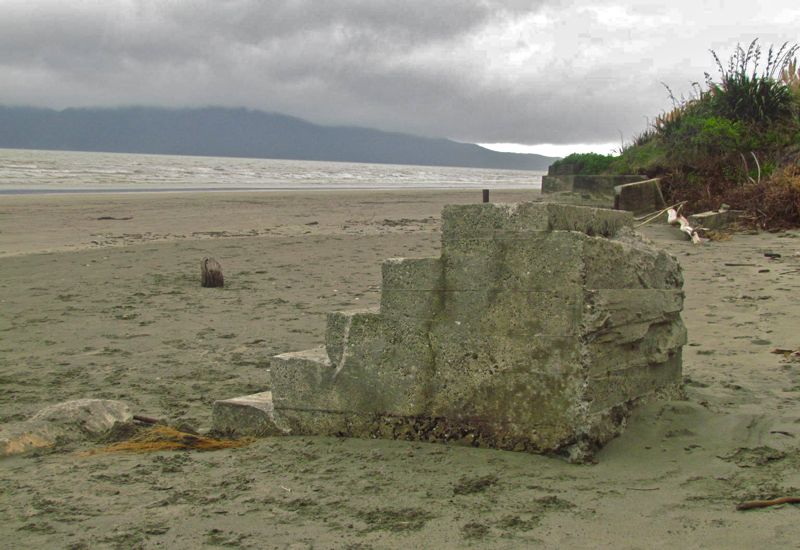
Steps to the backyard of an eroded property on a Kapiti Coast beach, with Kapiti Island in the background.
These concrete steps on a Kapiti beach once connected a seaside backyard with the beach, but now connect only with thin air. They are a poignant (and somewhat whimsical) reminder of the very real effects of coastal erosion.
This coastline, on the west of the North Island of New Zealand, is subject to ceaseless erosion; many properties are literally being “eaten away” by the effects of waves and weather. Continue reading →
This image taken by Charles E. Wildbore circa 1907 shows the rural mail delivery that operated in the Pohangina Valley. It is the background of scorched, leafless tree trunks and limbs that draws the eye of the environmental historian, rather than the mail cart or people in the foreground. Palmerston North City Library, ID 2007N_Poh2_RTL_0852
Why should we study New Zealand’s environmental history? and how is it different from “conventional” history?
These are the questions that Paul Star asks in his essay entitled Environmental history and New Zealand history, first written in 2008, but recently republished on Environment and Nature in New Zealand.
Star offers seven compelling reasons why it is important. And of course, the key difference between environmental history and history is that while peopleare the central players in conventional history, the relationship between people and the environment is the focus in environmental history. Continue reading →
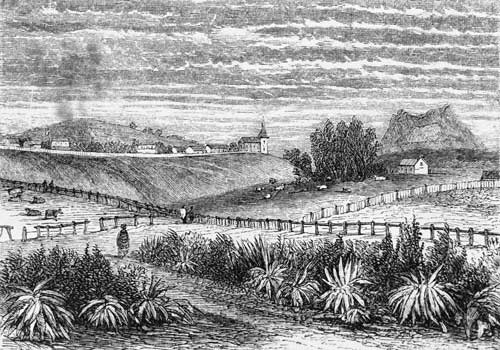
Mission farm The Church Missionary Society mission set up at Waimate, in the inland Bay of Islands, in 1830, included a large farm with sheep, cattle, horses, gardens and orchards. Alexander Turnbull Library Reference: PUBL-0144-1-330 Wood engraving by Cyprian Bridge Permission of the Alexander Turnbull Library must be obtained before any re-use of this image.
The special March issue of Environment and Nature in New Zealand contains seven articles – all by graduates of Otago University’s history department (see also: In search of Arcadia?). As the editor’s introduction states, these essays represent the most concentrated research effort in relation to environmental history of any history department in the country, and are well worth a read.
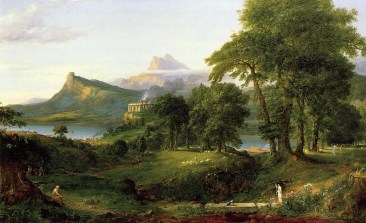
Thomas Cole’s The Arcadian or Pastoral State, 1834
A series of articles were recently published on Environment and Nature in New Zealand, all drawn from essays written between 1989 and 2000 by students in history at the University of Otago.
A prominent theme in the essays covering the colonial period is the disconnect between the expectations of immigrants and the reality of what they found, particularly in respect to the environment. Continue reading →










 envirohistory NZ