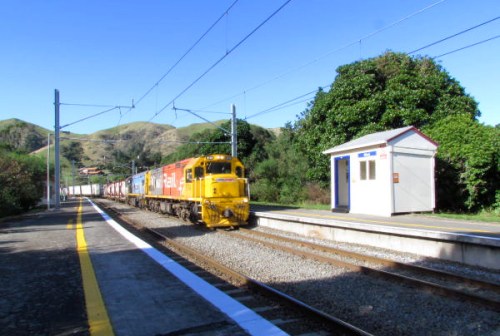
 Having a train-mad two year old means that I get to ride trains a lot. This is fine by me, because trains are a great vantage point from which to gain insights into our environmental history. They bring us closer to how our forefathers saw the world before cars were the main means of transport. Continue reading
Month: April 2011

A historic day for Kapiti: the opening of Whareroa Farm
 Today, the 30th April 2011, was a day of great triumph and celebration for many people in the Kapiti Coast community, with the official opening of 440 hectare Whareroa Farm Reserve, between Paraparaumu and Paekakari [click here to view location]. It is certainly not every day that a new recreational and nature reserve is opened to the public, and Whareroa Farm has only become such a reserve as a result of persistent lobbying by the local community and the ongoing work of one community-based organisation, the Whareroa Guardians Trust. Continue reading
Share this:

The return of the bellbird
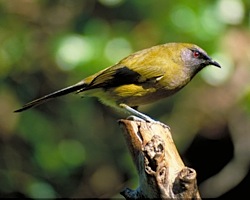 Today, as I was putting my son down for his afternoon nap, I caught the melodic, undulating song of what might have been a tui, but when I looked out of my son’s window the bush on the bank outside, it was the distinctive olive shape of a smaller sized bird that I saw. It was a bellbird – the first that I have ever spotted either around my home, or indeed, in Paraparaumu [click here to view map], the coastal town in which I live.
Share this:

Dividing the landscape: production vs scenery
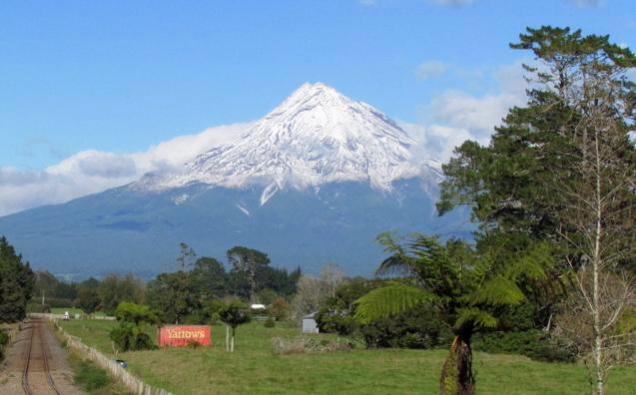 Nowhere tells more starkly of the duality in our relationship towards the natural environment than Taranaki: the dichotomy of the “productive” and “scenic” landscape.
Taranaki is known throughout the world for the almost perfectly conical mountain which rises up through what are otherwise the flattest of plains. This mountain and the region was made famous by its being used as the backdrop for the film, “The Last Samurai”. Indeed, New Zealand was chosen to shoot the movie due to the mountain’s remarkable resemblance to Japan’s Mount Fuji – also a perfectly conical mountain that stands alone on the plains of central Japan. Continue reading
Share this:

Environmental history of the future: could Christchurch become our “Greenest City”?
 Last week, I was privileged enough to attend the Rotorua Lakes Symposium in Rotorua City. This symposium, themed “Fix a lake and grow a city”, brought together scientists, politicians, natural resource managers, landscape architects, academics, tangata whenua, business people and many others to explore ways in which the lakes of Rotorua can be restored to create wealth and wellbeing in the Rotorua district. Continue reading
Share this:

envirohistory NZ podcast – episode 5 out now!
 Episode 5 of the envirohistory NZ podcast series is now out. This episode explores the critical link between environmental history and the decisions we make about how we shape and live within the environment. To illustrate the importance of environmental history in helping to inform environmental policy and planning decisions, this episode reflects on two recent natural disasters – the February 22nd Canterbury earthquake and the March 11 earthquake and tsunami in north-eastern Japan. Continue reading
Share this:

The place of 5000 pennies – Hamurana Springs
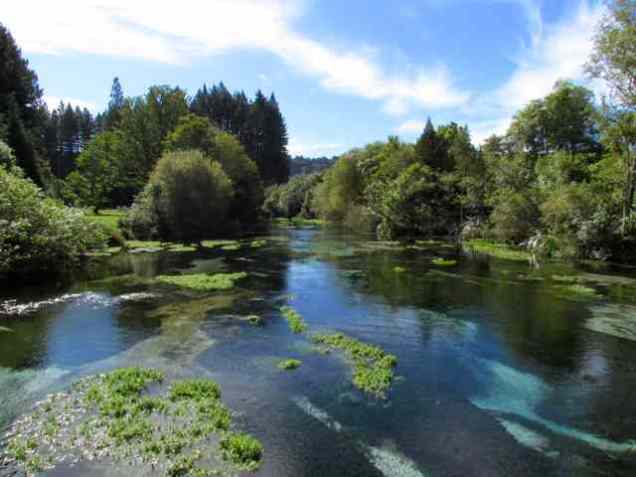 What does the Department of Conservation, a golf club, and a hapu (sub-tribe) have in common?
They are all partners in caring for the Hamurana Springs Reserve, on the northern shores of Lake Rotorua [click here to view location]. The hapu, Ngati Rangiwewehi, a sub-tribe of Te Arawa, has an association with the spring and the river which flows from it dating back to the 1300. Continue reading
Share this:

Two faces of a lake – Lake Rotoiti
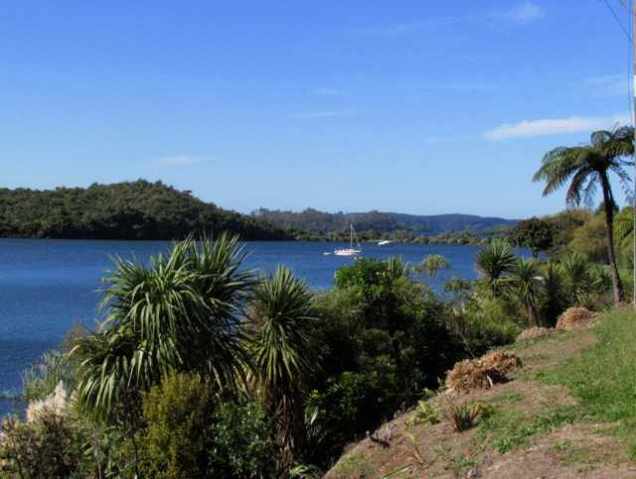 Lake Rotoiti is one of a number of lakes which lie to the east and south of Lake Rotorua, the second largest lake in the North Island. The lakes were created as a result of a volcanic eruption about 240,000 years ago, and were for hundreds of years the ancestral home and source of food and other resources for the Te Arawa people.
Today, the land around the lakes is almost without exception developed – either as urban or rural settlements or farmland – with almost no indigenous forest remaining [click here to view satellite image showing the extent of development around the lake]. Continue reading

 envirohistory NZ